Kimi K3 Architecture Overview and Notes
Source Entity
Hacker News
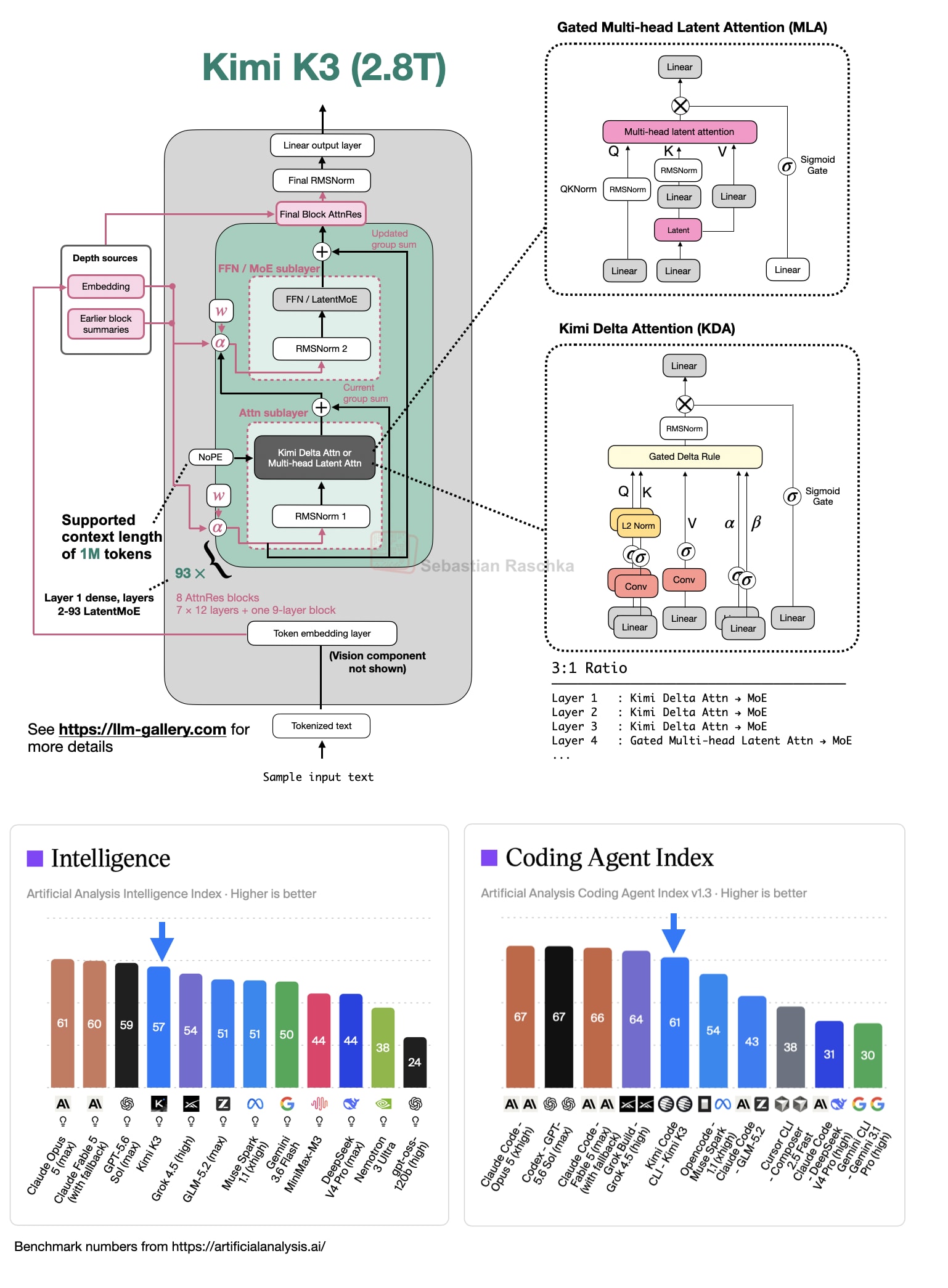
Moonshot AI has released Kimi K3, a massive 2.8T parameter open-weight model that evolves the previous Kimi Linear architecture. The model introduces LatentMoE technology to efficiently manage its scale, signaling a broader trend toward compressed, high-capacity neural architectures.
The Emergence of Kimi K3: A New Frontier in Large Language Models
Moonshot AI has officially unveiled the Kimi K3, a landmark open-weight model that represents a significant leap in parameter density and architectural design. By scaling its predecessor, the Kimi Linear model, from 48 billion parameters to an unprecedented 2.8 trillion, Moonshot AI has established Kimi K3 as the largest open-weight model currently available in the research landscape. This transition from a smaller, experimental baseline to a massive production-grade architecture underscores a strategic pivot toward massive-scale model development.
Architectural Evolution: From Linear to LatentMoE
The most critical innovation within the Kimi K3 architecture is the integration of LatentMoE, a sophisticated component that mirrors the mechanisms found in systems like Nemotron 3 Ultra. While the base structure retains the lineage of the Kimi Linear model, the addition of LatentMoE serves as a crucial optimization layer. By down-projecting large linear layers—a process conceptually similar to Multi-Head Latent Attention—the model manages to maintain efficiency despite its gargantuan 2.8 trillion parameter size.
Scaling Laws and Structural Efficiency
The industry has observed a clear trend among high-performance models, including DeepSeek V4 and Nemotron 3, toward more complex, modular architectures. Kimi K3 fits squarely into this paradigm, where the focus has shifted from simple dense scaling to intelligent compression and routing. The implementation of LatentMoE is not merely an architectural choice but a necessity for handling the computational overhead associated with such a high parameter count, allowing the model to perform complex tasks without the latency penalties traditionally associated with massive dense models.
Strategic Implications for Open-Weight Models
By releasing Kimi K3 as an open-weight model, Moonshot AI is positioning itself as a major competitor in the open-source ecosystem. The sheer scale of 2.8 trillion parameters creates a new benchmark for what researchers and developers can achieve outside of proprietary, closed-source environments. This move democratizes access to state-of-the-art architectures, potentially accelerating innovation across the AI development community as researchers iterate upon the K3 framework.
Future Trends and Market Impact
Looking ahead, the success of Kimi K3 suggests that the future of large-scale AI will be defined by the refinement of Mixture-of-Experts (MoE) and Latent-based routing systems. As models continue to grow, the ability to compress and route information efficiently will be the primary differentiator between successful production models and those that remain stuck in the research phase. The K3 architecture serves as a blueprint for this hybrid approach, balancing raw scale with structural sophistication to push the boundaries of current machine learning capabilities.