Kimi K3 Is Competitive with Fable; Kimi K3 and Fable Is SoTA
Source Entity
Hacker News
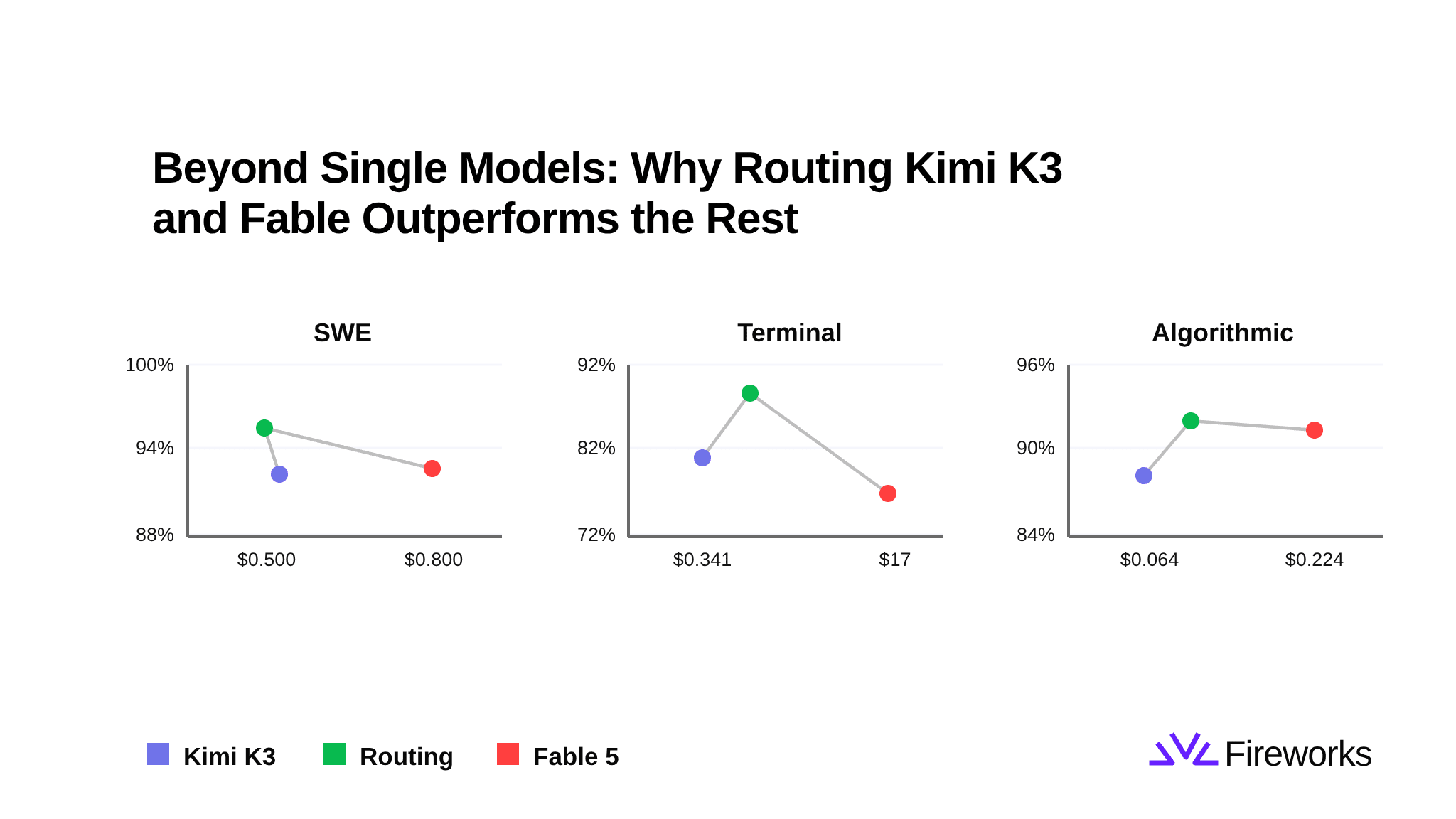
Moonshot AI's new Kimi K3 model demonstrates frontier-level performance, nearly matching Fable 5 in agentic capabilities. By implementing a cost-effective routing strategy, users can achieve high-accuracy results at a significantly lower price point.
The Emergence of Kimi K3: A New Frontier in Agentic AI
Moonshot AI has recently unveiled Kimi K3, a massive 2.8T parameter model that marks a significant leap in the evolution of Large Language Models (LLMs). According to recent performance metrics, Kimi K3 has achieved a score of 57 on the Artificial Analysis Intelligence Index, placing it in the same performance tier as industry benchmarks like Opus 4.8 and GPT-5.5. This release signals a shift in the competitive landscape, where open-weight models are increasingly challenging the dominance of proprietary, closed-source systems.
Benchmarking Performance and Agentic Capability
The true test of Kimi K3 lies in its performance on the AA-Briefcase benchmark, a proprietary evaluation framework designed to test agentic knowledge work. Kimi K3 achieved an Elo rating of 1543, representing a massive 727-point improvement over its predecessor, Kimi K2.6. While it currently sits just behind Claude Fable 5, which holds an Elo of 1574, the narrow margin suggests that the gap between top-tier frontier models is closing rapidly, specifically in complex tasks requiring the generation of spreadsheets, presentations, and UI elements.
The Power of Task Routing
One of the most compelling findings regarding Kimi K3 is its utility within a hybrid ecosystem. By routing tasks between K3 and Fable 5, developers have demonstrated the ability to maintain 93% accuracy while drastically reducing operational costs. This 'routing' strategy allows organizations to leverage the high-end reasoning of Fable 5 for critical operations while offloading secondary tasks to the more cost-effective Kimi K3. This approach is particularly transformative for long agentic loops, where costs can otherwise spiral out of control.
Economic Implications for Large-Scale Operations
Data indicates that utilizing Kimi K3 in tandem with Fable 5 can result in up to 50 times greater cost-effectiveness compared to relying solely on Fable 5 for long agentic processes. With over 1,000 tasks analyzed—ranging from SWE-bench style repo bug fixes to complex terminal operations like security and reverse-engineering—the data suggests that K3 is not merely a budget alternative, but a robust model capable of handling high-complexity workloads at a fraction of the traditional price.
Future Trends in Model Orchestration
The success of Kimi K3 highlights a growing trend toward model orchestration rather than reliance on a single 'god-model.' As models become more specialized and cost-varied, the ability to dynamically route tasks based on complexity will become the standard for efficient enterprise AI. Moving forward, we can expect to see more platforms adopting these hybrid architectures, favoring systems that balance raw intelligence with economic viability. Kimi K3’s trajectory suggests that the future of AI development lies in the synergy between frontier-level performance and accessible, high-scale implementation.