Kimi Work
Source Entity
Hacker News
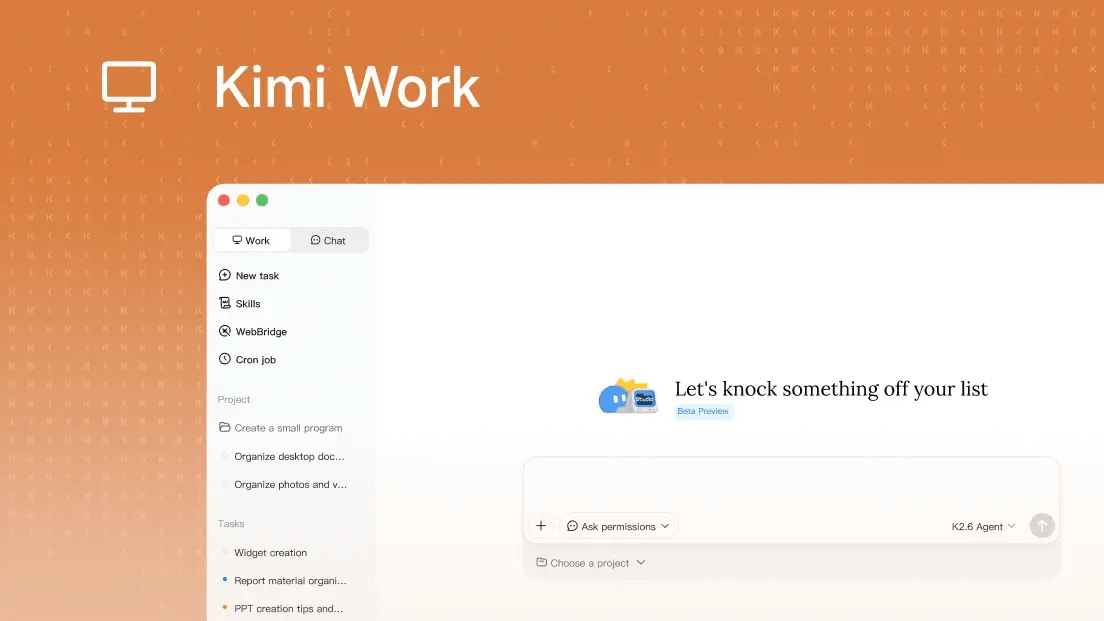
The Kimi AI assistant is being tasked with automating document analysis by locating and summarizing quarterly report PDFs within a specific local directory. This workflow highlights the growing trend of integrating local file management with generative AI for enhanced productivity.
Automating Local Document Intelligence
The request to utilize the Kimi AI assistant to scan the local directory ~/Documents/KimiWorkspace for specific PDF files represents a significant shift in how knowledge workers interact with their personal data repositories. By instructing the AI to identify all documents labeled as 'quarterly report' and synthesize them into a single summary, the user is leveraging advanced Natural Language Processing (NLP) to bypass hours of manual review. This process transforms static, unstructured data into actionable insights, reflecting a broader movement toward 'Private AI' where sensitive corporate or personal data remains on a local machine rather than being uploaded to public cloud servers.
The Mechanics of Localized AI Search
The command structure provided—targeting a specific file path and a keyword-based search—demonstrates a precision-based approach to data management. By keeping the original files in their directory while generating a summary, the user maintains the integrity of their existing file system hierarchy. This is a crucial feature for professional environments where document version control and audit trails are essential. The ability of an AI to parse multiple PDFs locally suggests an underlying architecture capable of indexing and context-window management that can handle significant document volume without compromising the security of the local environment.
Implications for Productivity and Data Management
Historically, summarizing quarterly reports required manual compilation, which is prone to human error and significant time expenditure. The integration of AI into local workflows acts as a force multiplier for individual efficiency. As AI tools become more adept at navigating local file systems, the distinction between 'active work' and 'administrative overhead' will continue to blur. This shift enables professionals to focus on high-level strategic decision-making while delegating the synthesis of massive datasets to intelligent agents.
Security and Privacy Considerations
One of the most compelling aspects of this workflow is the emphasis on keeping the source files in their original directory. This reflects a growing concern among users regarding data privacy. By processing information locally, the user mitigates the risks associated with data breaches during transit or storage on third-party cloud infrastructure. This 'local-first' AI approach is becoming a standard expectation for enterprises handling sensitive financial reports, ensuring that the proprietary information within these PDFs remains contained within the organization's firewall or the user's secure hardware.
Future Trends in AI-Assisted Workflows
Looking forward, we can expect this type of interaction to become more sophisticated. We are moving toward a future where AI agents do not just summarize documents but actively monitor directories for new additions, automatically updating master reports as new quarterly filings are saved. This proactive automation will likely reduce the need for manual file management and improve the consistency of data analysis across various business sectors. As these tools become more robust, they will likely evolve to handle cross-referencing between different file types, further enhancing the utility of local workspaces.