Mounting losses force farmers in Karnataka’s Kolar district to chop down mango trees
Source Entity
India Latest News: Top National Headlines Today & Breaking News | The Hindu
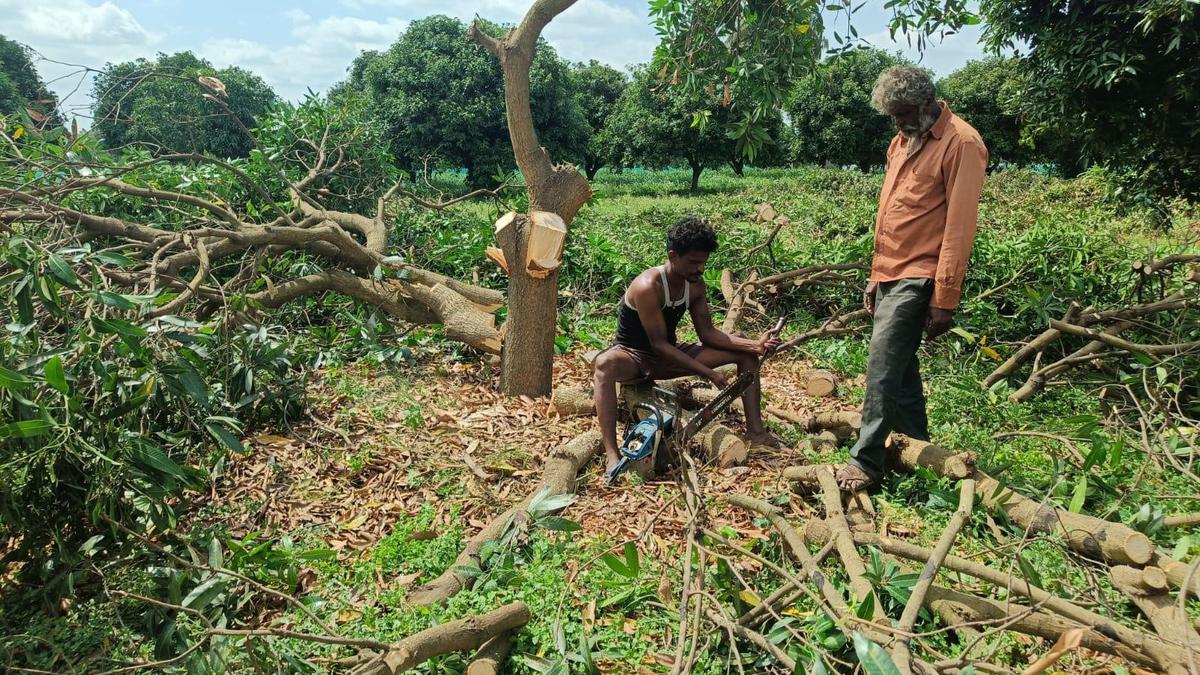
Mango farmers in Karnataka's Kolar district are clearing their orchards after suffering three years of consecutive financial losses. The inability to diversify crops due to the dense shade cast by mango trees has forced many to remove them in favor of alternative cultivation.
The Crisis in Kolar: Mango Farmers Turn to Radical Measures
The agricultural landscape in Karnataka’s Kolar district, long celebrated as the state’s premier hub for mango production, is undergoing a painful transformation. Farmers, once proud stewards of orchards that contribute to 60% of the state's total mango output, have begun the drastic process of felling their trees. This decision, while extreme, is the culmination of three consecutive years of severe financial losses that have rendered traditional mango farming unsustainable for many local households.
The Economic Trap of Monoculture
At the heart of this crisis is the inherent limitation of the mango orchard ecosystem. With approximately 42,000 to 45,000 hectares dedicated to mangoes in Kolar, the reliance on a single crop has created a fragile economic environment. Farmers report that the dense canopy of mature mango trees creates a perpetual shade, effectively blocking the sunlight required for intercropping. This lack of sunlight prevents farmers from diversifying their land use, leaving them entirely vulnerable to market fluctuations and yield failures associated with a single commodity.
Breaking the Cycle of Loss
For farmers like T.V. Ramesh, who has cleared trees on two-and-a-half acres of his land, the choice is not one of preference but of survival. The inability to rotate crops or plant secondary, short-term income sources under the mango canopy means that when the mango harvest fails or prices crash, there is no safety net. By removing these trees, farmers are attempting to reclaim their land for more flexible agricultural practices that might offer a more stable, albeit different, income stream.
Broader Implications for Regional Agriculture
This trend signals a significant shift in the horticultural profile of Kolar. When a region that holds such a dominant market share in a specific crop begins to abandon that crop, it risks disrupting the local supply chain, impacting everything from labor demand to regional processing industries. The loss of these trees is not just an individual financial decision; it is a structural change that could diminish the district's status as a 'Land of Mangoes' for years to come.
Future Outlook and Sustainability
Moving forward, the situation highlights an urgent need for agricultural extension services to assist farmers in land management and crop diversification strategies that account for the unique challenges of shade-heavy orchards. Without intervention or more viable alternatives, the continued removal of these trees could lead to long-term soil degradation and a permanent loss of horticultural heritage in the region. The Kolar experience serves as a stark reminder of the risks associated with agricultural monocultures in an era of unpredictable climate and market volatility.
Verification Required?