'Jam-packed' with cockroaches: Kunal Kamra, Chandrashekhar Azad join CJP protest
Source Entity
TOI NEWS DESK
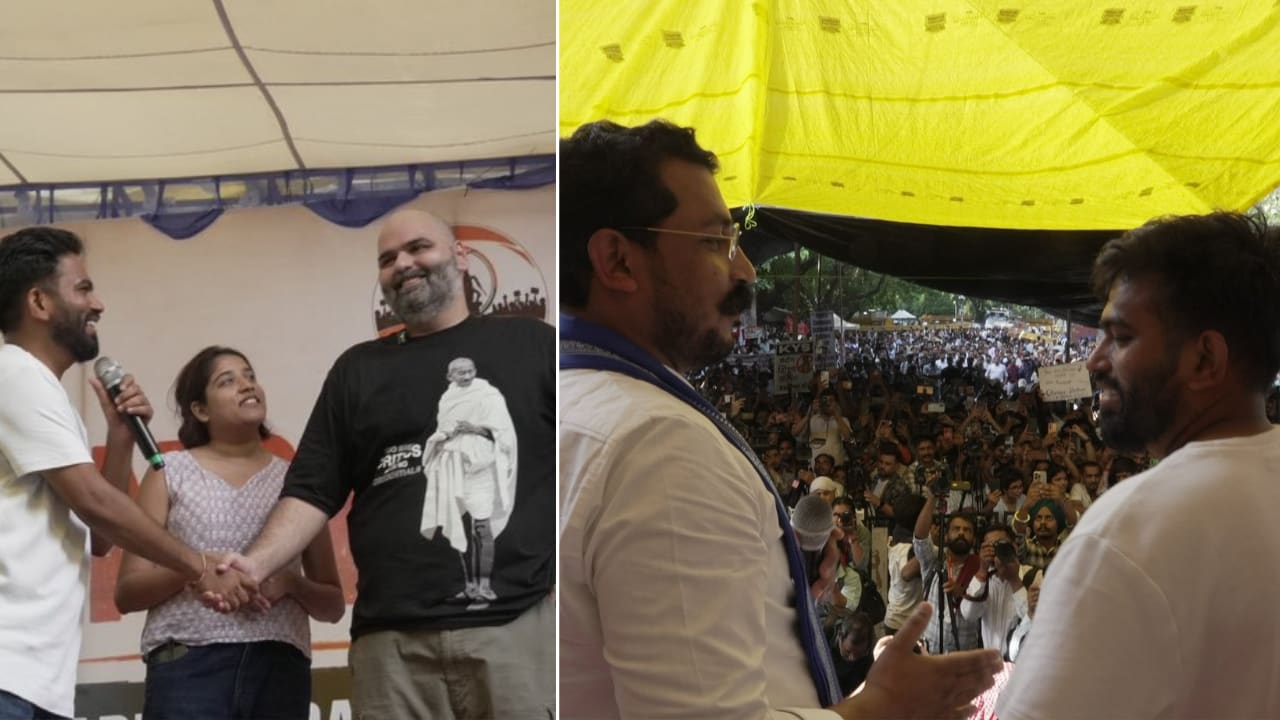
On the 25th day of the Cockroach Janata Party (CJP) protest, prominent figures including satirist Kunal Kamra and political leader Chandrashekhar Azad joined the movement. The protest has gained significant momentum with support from Shashi Tharoor and members of the film industry, while the health of participants remains a critical concern.
The Convergence of Satire and Activism: Analyzing the CJP Protest
The arrival of Kunal Kamra and Chandrashekhar Azad on the 25th day of the Cockroach Janata Party (CJP) protest marks a pivotal escalation in the movement's visibility. By integrating a high-profile satirist and a grassroots political leader, the protest has successfully bridged the gap between intellectual critique and street-level mobilization. This convergence suggests that the movement is no longer a niche gathering but has evolved into a broader coalition of dissent, leveraging both humor and political organization to capture public attention.
The Strategic Alliance of Diverse Figures
The participation of Chandrashekhar Azad brings a specific brand of Dalit-led political mobilization and organizational strength to the CJP protest. His presence signals that the protest's grievances likely resonate with marginalized communities and those fighting for constitutional rights. Conversely, Kunal Kamra's involvement adds a layer of cultural commentary; his ability to use satire to highlight systemic failures serves to make the protest's message more accessible to the urban youth and the digital populace. This duality—combining Azad's political muscle with Kamra's communicative reach—creates a potent synergy that complicates the government's ability to dismiss the movement as merely 'fringe'.
Institutional Support and Intellectual Weight
Furthermore, the extension of support from Shashi Tharoor provides the movement with a degree of intellectual and diplomatic legitimacy. Tharoor, known for his articulation of constitutional values and international standing, elevates the discourse of the CJP from a local grievance to a national conversation about governance and rights. When established political figures and intellectuals align with a protest that uses a provocative name like the 'Cockroach Janata Party,' it indicates that the underlying issues are severe enough to transcend traditional political boundaries and formal decorum.
The Symbolism of the 'Cockroach' and Cultural Appeal
The choice of the name 'Cockroach Janata Party' is a masterstroke of political symbolism. The cockroach is globally recognized as one of the most resilient creatures, capable of surviving extreme conditions and nuclear fallout. By adopting this identity, the protesters are likely signaling their resilience against systemic oppression and their refusal to be eradicated despite political pressure. This narrative of survival is further amplified by the appeal from film personalities to Sonam Wangchuk, whose own history of fasting and environmental activism in Ladakh adds a layer of ecological and regional urgency to the cause.
Health Risks and the Stakes of Prolonged Protest
As the protest enters its 25th day, the mention that 'health remains under close watch' introduces a critical element of urgency. Prolonged protests, often involving hunger strikes, shift the dynamic from a political debate to a humanitarian concern. This physical vulnerability often serves as a catalyst for government intervention, as the potential for a health crisis among high-profile protesters can lead to significant public backlash and international scrutiny. The health status of the participants now acts as a ticking clock, increasing the pressure on authorities to engage in dialogue.
Conclusion: Future Implications for Indian Dissent
In summary, the CJP protest represents a modern iteration of Indian civil disobedience, where the lines between entertainment, activism, and formal politics are blurred. The involvement of figures like Kamra, Azad, and Tharoor suggests a trend toward 'intersectional protesting,' where diverse social and political actors unite under a singular, often satirical, banner to challenge the status quo. As the movement continues, the focus will likely shift from mere visibility to specific policy demands, with the health of the protesters serving as the primary lever for forcing a resolution.