Former BJP MP for Ladakh accuses Wangchuk and others of misleading the people of the UT
Source Entity
India Latest News: Top National Headlines Today & Breaking News | The Hindu
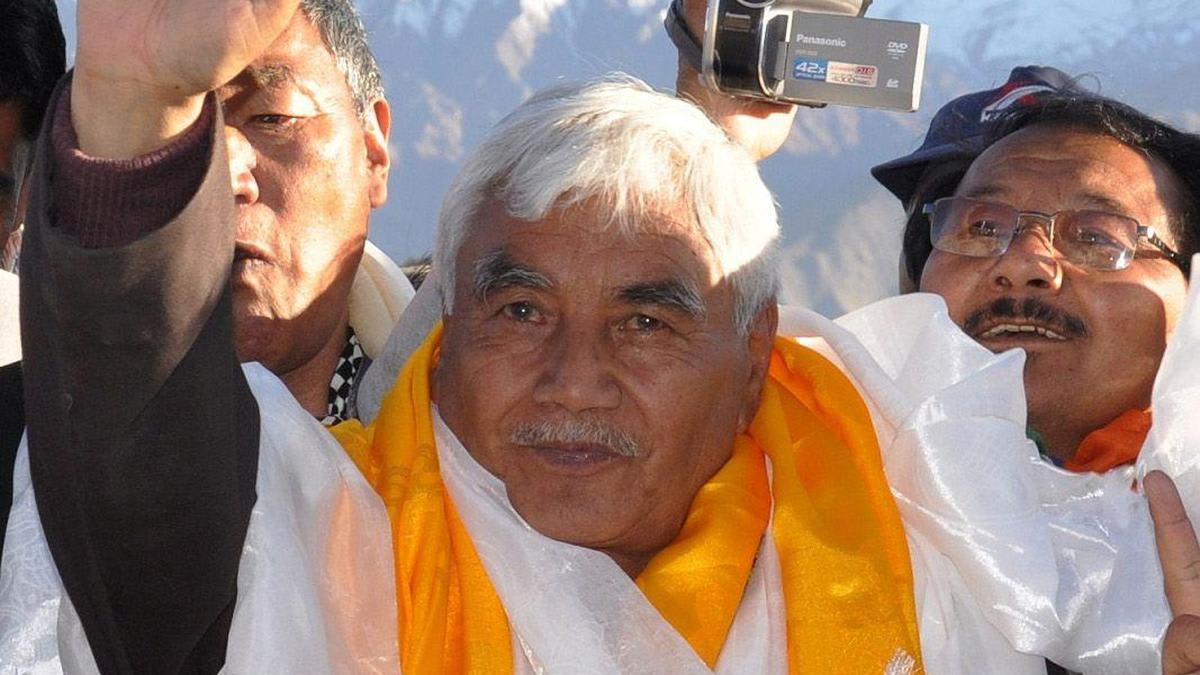
Former BJP MP Thupstan Chhewang has disputed claims by activist Sonam Wangchuk and other leaders regarding the status of recent MHA talks. While civil society groups call the September 9 meeting a disappointment, Chhewang maintains it was productive and attributes delays to internal differences.
Tensions Emerge Over Ladakh's Political Future
Recent developments regarding the political status of Ladakh have revealed a growing rift within the region's leadership. Thupstan Chhewang, a former Bharatiya Janata Party (BJP) MP and a pioneering figure in the post-Article 370 movement for Ladakh, has publicly challenged the narrative surrounding the September 9 discussions between Ladakh civil society, the Ministry of Home Affairs (MHA), and the Union Territory (UT) administration. This conflict highlights the complex challenges in negotiating constitutional safeguards for the region.
Divergent Interpretations of the MHA Dialogue
The core of the dispute lies in the characterization of the recent sub-committee meeting. While prominent activist Sonam Wangchuk and members of the Leh Apex Body (LAB) and Kargil Democratic Alliance (KDA) have expressed frustration, labeling the meeting a “disappointment,” Chhewang maintains that the interaction was “fruitful.” This disconnect suggests that the stakeholders involved hold vastly different expectations regarding the pace and substance of negotiations, complicating the path toward a unified regional strategy.
Historical Context of the Movement
To understand the current friction, one must look back to 2020, when Ladakh was separated from the erstwhile state of Jammu and Kashmir. Thupstan Chhewang was among the first leaders to initiate a movement seeking constitutional safeguards to protect the region's unique identity, land, and employment. His involvement in the September 9 meeting, conducted at the specific invitation of the MHA, places him at the center of a delicate balancing act between the government’s bureaucratic processes and the public’s desire for rapid political resolution.
The Role of Internal Dissent
Chhewang has explicitly addressed the perception of stagnation, arguing that the delays in reaching a concrete settlement are not solely the fault of the MHA but are exacerbated by internal differences within the Ladakhi civil society itself. By shifting the focus toward these internal divisions, he suggests that the path to a consensus is hindered as much by local fragmentation as it is by administrative bottlenecks, challenging the narrative that the government is solely responsible for the lack of progress.
The Sui Generis Model and Future Implications
Adding to the complexity is the proposal of a sui generis model for Ladakh, as mentioned by Chief Secretary Ashish Kundra. This unique, custom-tailored framework is intended to address the specific grievances of the region, yet the lack of a unified front among local leaders threatens to undermine its implementation. If civil society groups cannot reconcile their internal disagreements, the government may find it difficult to finalize a model that satisfies all stakeholders, potentially leading to further political volatility in the region.
Concluding Perspectives
The standoff between veteran political voices like Chhewang and activist-led movements like those of Sonam Wangchuk reflects the high stakes involved in defining Ladakh's political trajectory. Whether these groups can bridge their differences will likely determine the success of the ongoing MHA negotiations. Without a shared vision, the aspiration for constitutional safeguards remains fragile, leaving the region at a critical juncture in its administrative and political evolution.
Verification Required?