Florida Learjet crash: New close-up footage reveals huge crater left by deadly impact
Source Entity
Latest News: Todays Latest News Headlines from India & World | Hindustan Times
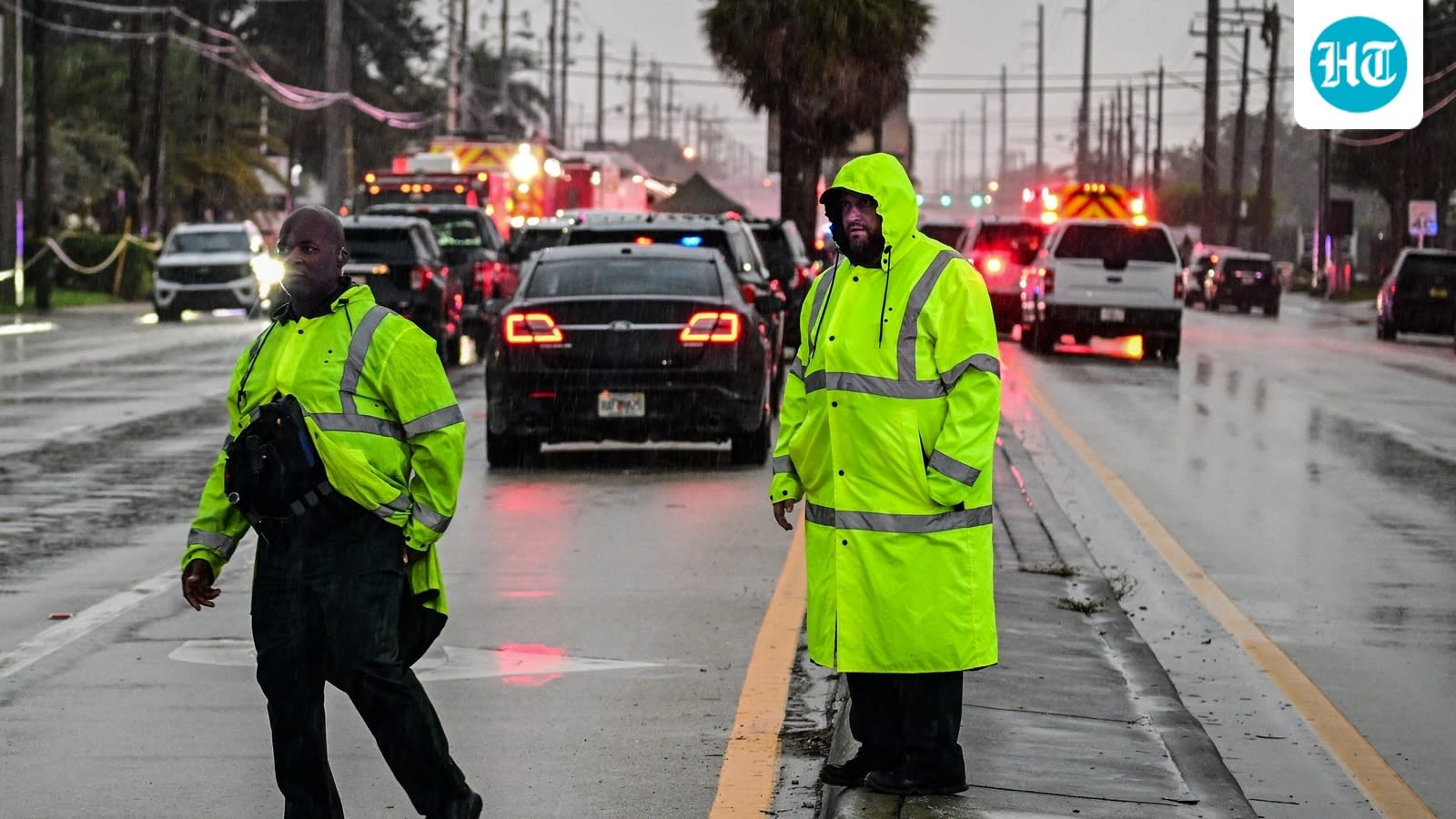
A Learjet 60 business jet crashed in Greenacres, Florida, on Sunday, resulting in the deaths of all nine people on board. The aircraft was en route from Texas to the Bahamas when it rapidly lost altitude and impacted a residential area.
The Florida Learjet 60 Tragedy: An Overview
On Sunday afternoon, a catastrophic aviation incident occurred in Greenacres, Palm Beach County, Florida, when a Learjet 60 business jet crashed into a residential area. The flight, which had departed from Austin-Bergstrom International Airport in Texas, was en route to North Eleuthera Airport in the Bahamas. Tragically, all nine individuals on board perished in the incident, which has been described by U.S. Transportation Secretary Sean Duffy as a "horrific tragedy."
Sudden Descent and Impact
According to flight-tracking data retrieved from platforms such as Flightradar24 and ADS-B Exchange, the aircraft was cruising at an altitude of approximately 35,000 feet before it began a rapid and alarming descent. The jet ultimately crashed near Military Trail and the Cresthaven area at approximately 12:50 p.m. local time. The impact was significant enough to create a large crater in the road, scattering debris across the vicinity of a mobile home community and a busy roadway.
Proximity to Sensitive Locations
The location of the crash, situated in Palm Beach County, has drawn attention due to its proximity to significant landmarks. The site is located approximately nine miles from Mar-a-Lago, the resort of President Donald Trump. While there is no current indication that the proximity to the resort played a role in the accident, the geographic details underscore the impact of the crash occurring in a densely populated region of South Florida.
Immediate Response and Investigation
In the wake of the crash, emergency responders rushed to the scene, where the aircraft had reportedly burst into flames upon impact. Initial reports suggest that the pilot may have managed to narrowly avoid striking nearby residential homes, potentially preventing a higher casualty count on the ground. The Federal Aviation Administration (FAA) has mobilized a team to assist the National Transportation Safety Board (NTSB) in a comprehensive investigation into the cause of the disaster.
Regulatory and Safety Implications
The Learjet 60, registered as N722BD and operated by LR60271 LLC, will be the subject of intense scrutiny by federal investigators. The NTSB will examine the aircraft's maintenance records, the flight crew's logs, and the cockpit voice recorder to determine whether the rapid descent was caused by mechanical failure, pilot error, or external environmental factors. This incident serves as a grim reminder of the inherent risks associated with private aviation and the rigorous safety standards required to maintain flight integrity.
Future Trends in Aviation Safety
As the NTSB investigation unfolds, the aviation industry will likely monitor the findings to determine if specific modifications or training protocols are needed for the Learjet 60 fleet. The investigation will also highlight the importance of real-time flight data monitoring in identifying anomalies before they lead to irreversible outcomes. For now, the focus remains on the recovery of the victims and the meticulous process of uncovering why this flight, destined for the Bahamas, ended in a residential neighborhood in Florida.
Multiple Citing Sources
Verification Required?