The shrinking landscape of linguistic diversity in the age of LLMs
Source Entity
Hacker News
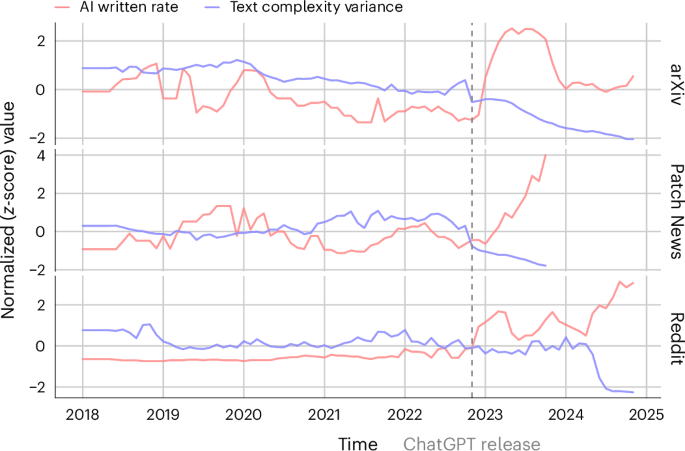
The rapid advancement of Large Language Models (LLMs) raises critical questions regarding linguistic homogenization and personality modeling. As these tools become ubiquitous, their impact on human expression and global discourse warrants rigorous scholarly examination.
The Intersection of Linguistic Diversity and Algorithmic Influence
The rapid proliferation of Large Language Models (LLMs) has sparked a critical academic discourse regarding the preservation of linguistic diversity. As these models become the primary engines for digital communication, there is a mounting concern that the nuanced, idiosyncratic nature of human language may be flattened into a standardized, machine-optimized output. This phenomenon mirrors the concerns raised in George Orwell’s Nineteen Eighty-Four, where the narrowing of vocabulary directly correlates with the restriction of thought, suggesting that the architecture of our tools fundamentally shapes the breadth of our expression.
Computational Psychometrics and Personality Mapping
Research into computational linguistics has long sought to correlate written language with individual personality traits. Studies such as those by Park et al. (2015) and Mairesse et al. (2007) demonstrate that linguistic cues are highly predictive of psychological profiles. When LLMs are trained on massive, aggregated datasets, they effectively internalize these patterns. This creates a feedback loop where the model not only predicts language but begins to enforce a 'normative' linguistic standard based on the most frequent patterns found in its training data, potentially obscuring individual difference and cultural variance.
The Challenge of Self-Referentiality
As LLMs begin to generate a significant portion of the internet's content, the risk of self-referentiality becomes acute. If future models are trained on data primarily generated by their predecessors, the linguistic diversity of the internet may undergo a rapid contraction. This 'model collapse' could lead to a homogenization of thought and style, as the models reinforce their own biases and statistical preferences, effectively stripping language of the organic evolution that characterizes human interaction.
Computational Methods and Meta-Analysis
Meta-analytic studies, such as the work by Moreno et al. (2021), underscore the increasing precision of computational methods in measuring personality through text. While these tools offer profound insights into human behavior, they also highlight the dangers of over-reliance on algorithmic interpretation. By codifying personality into measurable linguistic markers, we risk reducing the complexity of the human experience to a series of data points that LLMs can easily categorize and replicate.
Systemic Vulnerabilities and Future Trends
Recent technical instability, such as the reported downtime for platforms like ChatGPT and Codex, reveals the fragility of our reliance on centralized AI infrastructure. This downtime serves as a reminder that the digital landscape is not immutable. As we move toward a future where LLMs facilitate a vast majority of our written communication, the potential for catastrophic loss of linguistic nuance—and the systemic risk posed by centralized, homogenous AI systems—must be addressed through robust research into data diversity and model transparency.
Multiple Citing Sources