Linkdaze’s smart calendar is built to run a household, not just track a schedule
Source Entity
Lauren Forristal
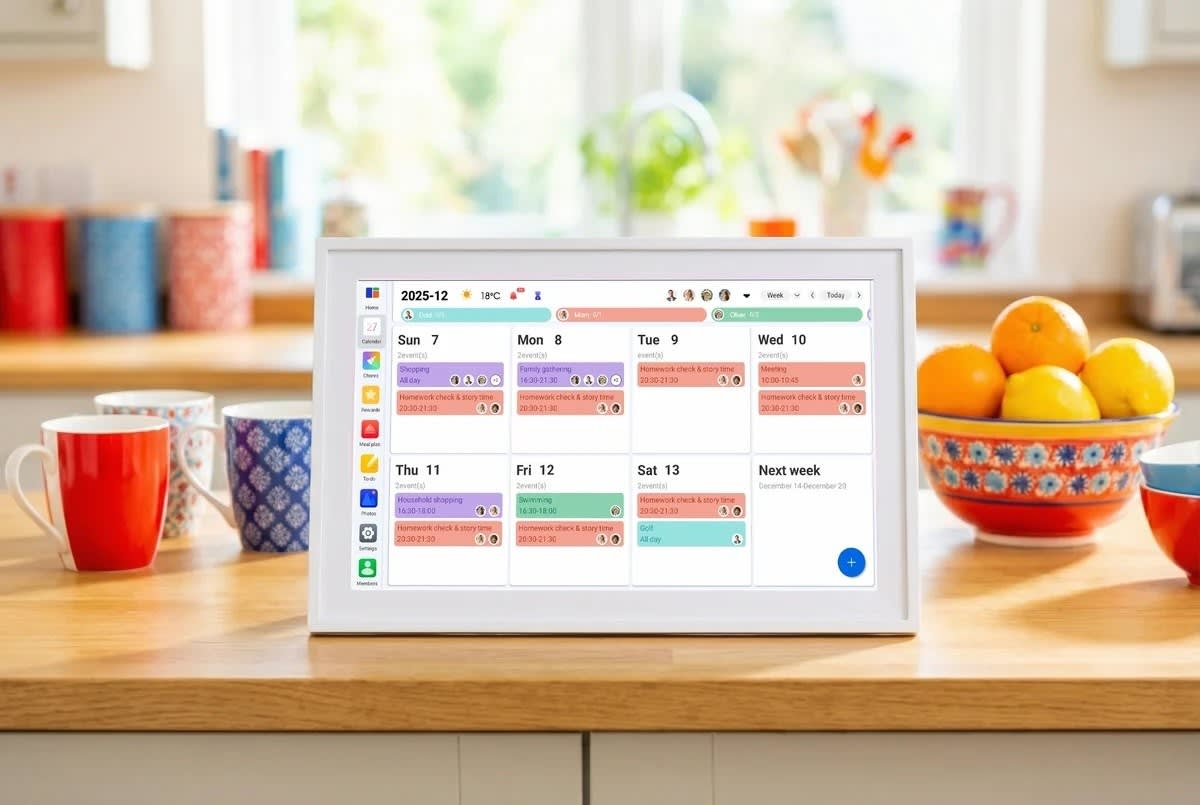
Linkdaze offers a family-focused smart calendar tablet designed to streamline complex household scheduling. The device differentiates itself by integrating multiple third-party calendar services and providing advanced features like AI meal planning without requiring a subscription.
The Evolution of Household Management
As the complexities of modern family life increase, the traditional paper calendar has become increasingly inadequate. With the back-to-school season serving as a recurring stress test for household logistics, the demand for centralized coordination tools has surged. Linkdaze’s smart digital calendar enters this space not merely as a scheduling tool, but as a dedicated touchscreen interface designed to manage the collective life of a household rather than the isolated agenda of a single individual.
Seamless Integration Across Platforms
A primary challenge in family organization is the fragmentation of digital ecosystems. Family members often operate within different silos—some relying on Google, others on iCloud, Outlook, or specialized platforms like Cozi. Linkdaze addresses this by prioritizing broad compatibility. By synchronizing these disparate services into one central hub, the device eliminates the friction of forcing family members to abandon their preferred personal platforms in favor of a new, unified system.
Subscription-Free Value Proposition
In an era where smart home hardware is frequently locked behind recurring subscription models, Linkdaze differentiates itself through its pricing architecture. By offering a comprehensive suite of features without placing them behind a paywall, the company is positioning its hardware as a one-time investment. This approach is particularly attractive to families who are already managing tight budgets during high-expenditure periods like the start of the school year.
AI-Driven Utility
Beyond basic scheduling, the inclusion of an AI-powered meal planner elevates the device from a passive display to an active household assistant. By automating routine decisions, such as meal preparation, the system addresses the 'mental load' often associated with household management. This integration suggests a trend toward smart home devices that offer high-level utility rather than just simple notifications or reminders.
Broader Implications and Future Trends
The shift toward dedicated hardware for household management reflects a growing recognition of the home as a collaborative enterprise. As households continue to juggle work, school, sports, and chores, the reliance on centralized, always-on hardware is likely to grow. Linkdaze represents the current frontier of this trend, proving that hardware that solves specific, high-friction domestic problems holds significant potential for mass adoption.
Conclusion
Linkdaze effectively bridges the gap between disparate digital calendars and the physical reality of a busy home. By focusing on accessibility, cross-platform synchronization, and integrated AI features that remain free of subscription burdens, the device provides a pragmatic solution to the logistical chaos of modern parenting and family life. As technology continues to integrate into the home, tools like these will become essential infrastructure for the organized, modern household.