The Forgetful CPU (Linux on M4)
Source Entity
Hacker News
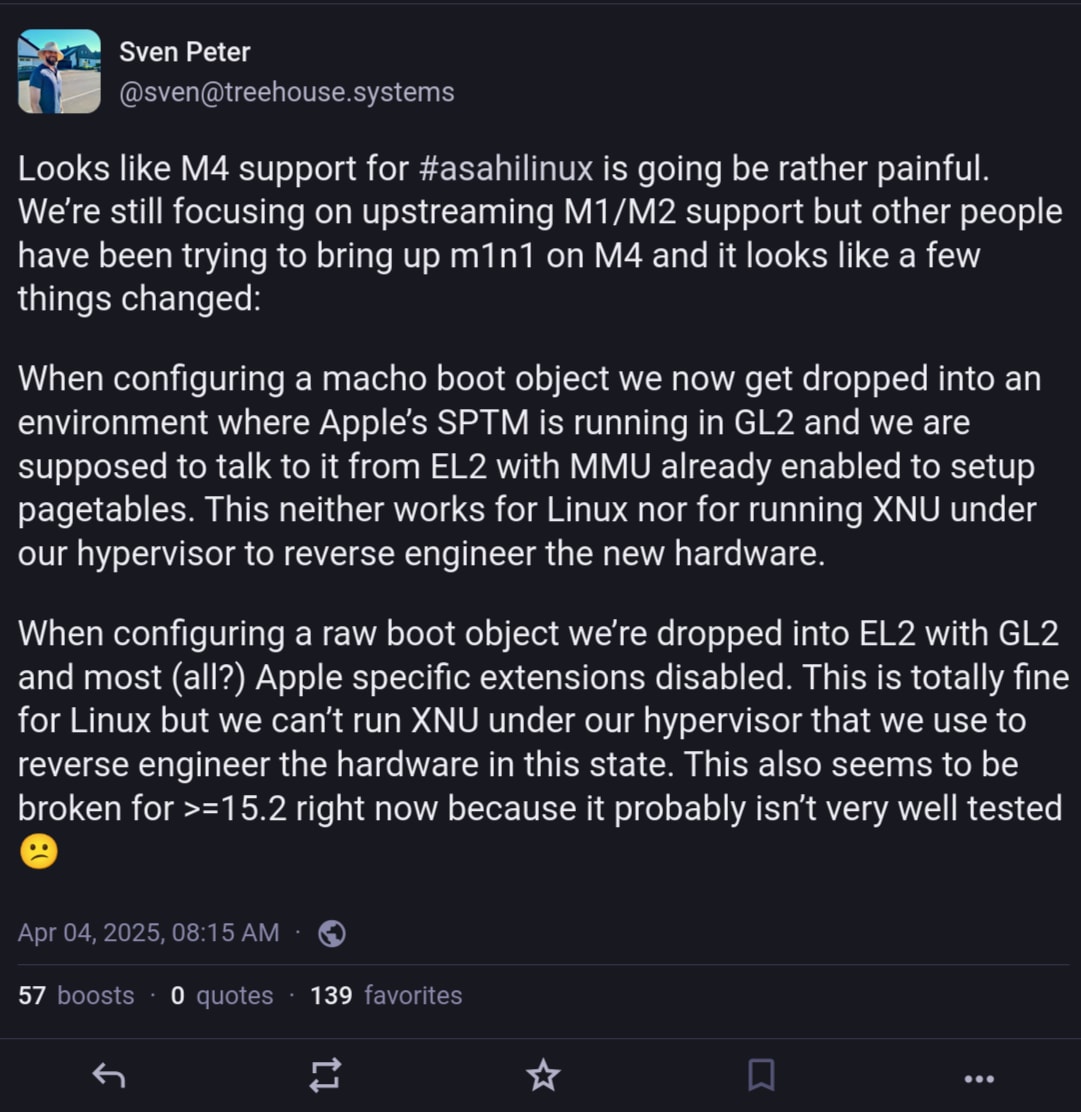
A developer successfully booted Linux on the new M4 Mac mini, building upon the foundational work of the Asahi Linux project. This achievement highlights the ongoing efforts to bring mainline Linux support to Apple Silicon hardware.
The Linux on M4 Milestone
The recent effort to boot Linux on the M4 Mac mini represents a significant milestone in the ongoing quest to make open-source operating systems fully compatible with Apple's custom silicon. The developer behind this initiative, building on the established framework of the Asahi Linux project, successfully navigated the complexities of the M4 architecture to achieve a functional boot sequence. This process was not merely a simple porting exercise but a deep dive into the hardware's specific nuances.
Building on Asahi Linux Foundations
The success of this project is inextricably linked to the extensive groundwork laid by the Asahi Linux team. For years, this group has been reverse-engineering the proprietary Apple Silicon architecture to create drivers and support systems for Linux. The developer explicitly credits this collective effort, noting that the transition from M1 and M3 architectures to the M4 required a nuanced understanding of how Apple continues to evolve its System-on-Chip (SoC) design.
The Challenge of the M4 Architecture
Acquired in November 2024, the M4 Mac mini served as the testbed for this exploration. The developer approached the task as a calculated gamble, anticipating similarities to previous iterations of Apple Silicon. However, as more technical details regarding the M4 SoC emerged over several months, it became clear that the hardware required specific adjustments. The "forgetful" nature of the CPU, hinted at in the project title, underscores the technical hurdles involved in managing state and memory during the boot process on proprietary hardware.
Broad Implications for Open Source
This development holds broader implications for the Linux ecosystem. As Apple continues to iterate on its silicon, the ability for the community to maintain a functional Linux port ensures that users have the freedom to choose their operating system regardless of the underlying hardware. Supporting mainline Linux on modern Apple machines is a testament to the resilience of the open-source community in the face of increasingly closed-hardware ecosystems.
Future Trends and Community Support
The developer’s call for donations to the Asahi Open Collective highlights the resource-intensive nature of this research. Bringing Linux to Apple Silicon is not a one-time fix; it is a continuous process of adapting to every new chip generation Apple releases. As the M4 becomes more prevalent, the community will likely refine these boot processes, eventually leading to more stable, daily-driver-ready builds for enthusiasts and developers alike.