Lithuania ready to 'fight back' but has evacuation plans in face of Russia threats, PM tells BBC
Source Entity
BBC News
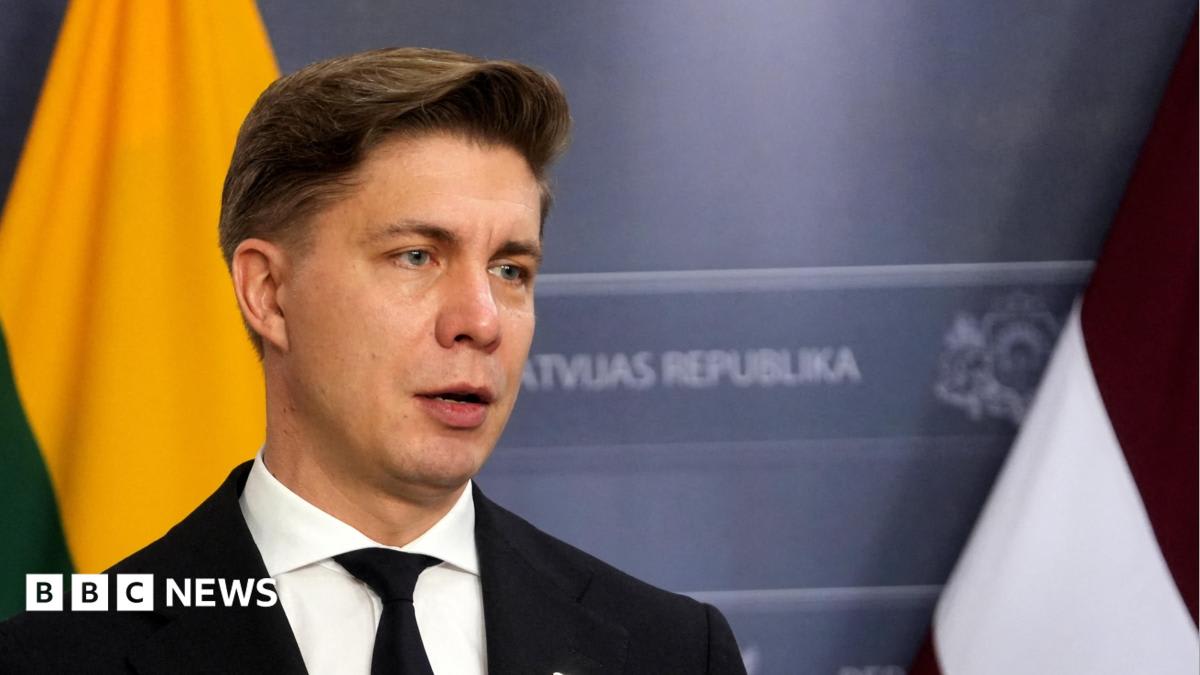
Lithuanian Prime Minister Sinkevičius has confirmed the nation is preparing for potential Russian aggression by developing evacuation strategies while maintaining a firm stance to defend its sovereignty. The government is balancing proactive civilian safety measures with a clear commitment to resist any military incursion.
Lithuania’s Strategic Posture Amidst Rising Regional Tensions
Lithuania, a key NATO member situated on the Baltic Sea, finds itself at the forefront of the escalating geopolitical friction between the West and the Russian Federation. Prime Minister Mindaugas Sinkevičius recently articulated the gravity of the situation, noting that the Lithuanian populace lives under a state of constant apprehension due to the proximity of the Russian enclave of Kaliningrad and the recurring, provocative incursions of drones into their sovereign airspace. This atmosphere of persistent threat has forced the government to shift from a posture of passive observation to one of active, comprehensive defense planning.
The Dual Approach: Resilience and Resistance
In his communication with the BBC, Prime Minister Sinkevičius outlined a dual-track policy that emphasizes both the will to resist and the responsibility to protect. By explicitly stating that Lithuania would 'fight back' and 'engage' in the event of an attack, the Prime Minister is reinforcing the credibility of NATO’s Article 5 commitments while asserting national agency. This rhetoric is essential in a region where historical memory of occupation remains a potent political force, driving the government to signal that any potential aggressor would face significant, organized resistance rather than a swift collapse.
Humanitarian Preparedness and Evacuation Logistics
Beyond military posturing, the administration is prioritizing the safety of its most vulnerable citizens through structured evacuation planning. The Prime Minister’s acknowledgment of plans to move elderly citizens out of urban centers 'smoothly' highlights a pragmatic approach to modern warfare. By focusing on the logistics of urban evacuation—such as preventing traffic gridlock—the government is attempting to mitigate the chaotic impacts that typically accompany the initial stages of a conflict, ensuring that domestic stability is not compromised by panic.
The Geopolitical Significance of Kaliningrad
Lithuania’s geography makes it uniquely vulnerable, as it shares a land border with the Russian exclave of Kaliningrad, a heavily militarized region that serves as a strategic outpost for Moscow. The presence of this enclave creates a constant security dilemma for Vilnius, as it complicates defense logistics and offers a staging ground for potential regional destabilization. The government’s admission that it is preparing for a 'variety of scenarios' underscores the complexity of securing a border that is effectively an intersection of two opposing military alliances.
Future Trends and Regional Stability
The situation in Lithuania serves as a microcosm for the broader security environment in Eastern Europe. As drone incursions continue to test the limits of airspace sovereignty, the trend toward increased civilian-military cooperation in civil defense is likely to accelerate. Lithuania's transparent communication regarding its preparedness plans, while maintaining a level of necessary operational secrecy, suggests a future where Baltic states will continue to integrate advanced early-warning systems and civilian safety drills into their national defense strategies to deter further aggression.