Why has Maharashtra declared drought in 265 talukas and what do farmers get? | Explained
Source Entity
India Latest News: Top National Headlines Today & Breaking News | The Hindu
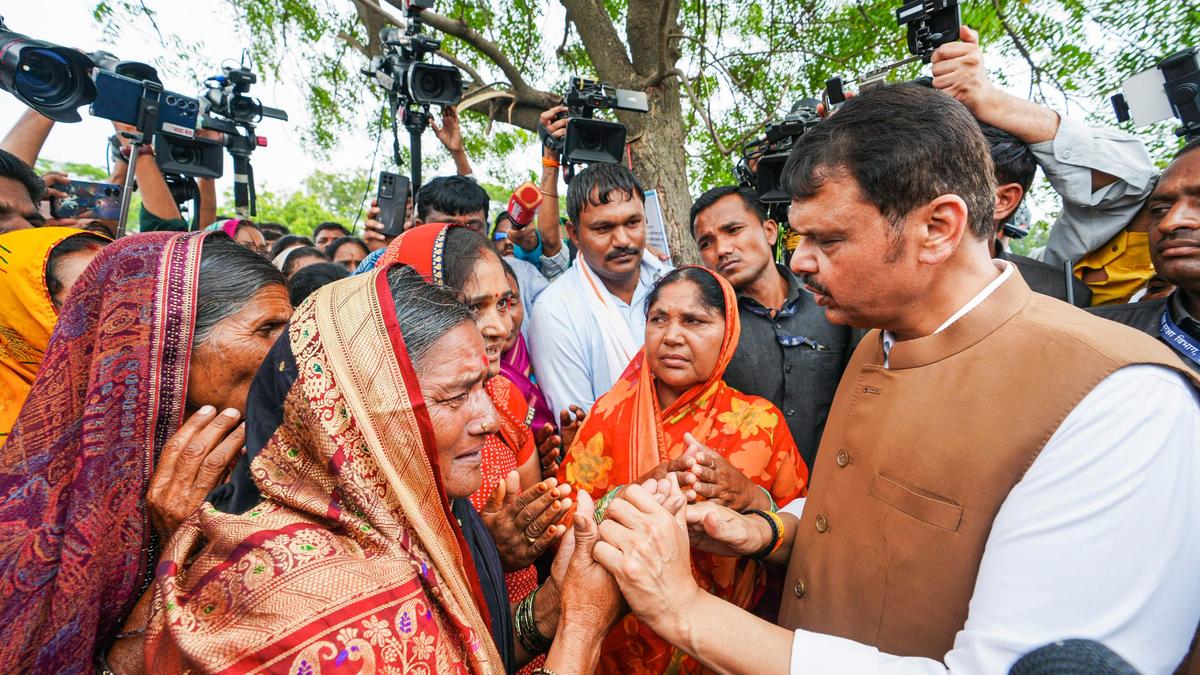
Maharashtra has declared drought in 265 talukas following an 18% rainfall deficit and prolonged dry spells. The government has triggered the 2016 Drought Management Code to provide immediate relief measures to affected farmers and students.
Maharashtra’s Drought Crisis: An Analysis of the 2026 Kharif Season
The government of Maharashtra has officially declared a state of drought across 265 of its 358 talukas, a significant administrative response to a challenging monsoon season. Data indicates that between June 1 and September 26, the state received only 798.2 mm of rainfall against a historical average of 970.9 mm, resulting in an 18% deficit. This declaration, issued under the Drought Management Code of 2016, marks the activation of 'Trigger-1,' allowing for immediate relief measures without the need for individual applications from affected citizens.
The Anatomy of the Rainfall Deficit
While the 18% deficit provides a quantitative overview of the state's water stress, the reality on the ground is nuanced. In regions like Sakri taluka in the Dhule district, the crisis is not defined merely by a lack of total rainfall, but by the distribution of precipitation. Farmers witnessed an initial arrival of monsoon rains that raised hopes for a productive kharif season, only to be followed by a prolonged dry spell during the critical growth phases of their crops. This pattern of erratic rainfall highlights the increasing vulnerability of rain-fed agriculture in the state.
Immediate Relief and Administrative Response
The activation of the 2016 Drought Management Code is designed to provide rapid socio-economic support. Residents in the 265 affected talukas—including farmers, agricultural labourers, and students—are now eligible for twelve specific relief measures. These measures are designed to mitigate the immediate impact of crop failure and income loss. The government is currently conducting surveys to assess the extent of the damage, with further financial resolutions expected to address compensation for crop losses in the coming weeks.
Political and Social Implications
The scale of the drought, affecting 32 out of 36 districts, has drawn significant political attention. Opposition parties have voiced concerns, arguing that the list of drought-affected talukas should be expanded to include additional areas currently excluded from the relief net. There is also mounting pressure on the administration to expedite the disbursement of aid, with demands that relief reach affected families before the Diwali festival, a period that typically sees high household expenditure.
Future Trends and Resilience
The ongoing crisis in Maharashtra serves as a grim reminder of the volatility inherent in modern agricultural cycles. As the state grapples with the aftermath of the 2026 kharif season, the focus must shift toward long-term resilience. The reliance on the Drought Management Code is a necessary reactive measure, but the recurring nature of these dry spells suggests a need for enhanced irrigation infrastructure and climate-resilient crop planning to insulate the rural economy from future monsoon failures.
Conclusion
In summary, the declaration of drought in 265 talukas is a critical intervention by the Maharashtra government to stabilize a distressed agricultural sector. By acknowledging the severity of the rainfall deficit and the localized impact of dry spells, the state has initiated a framework to support the most vulnerable segments of its population. As the government transitions from immediate relief to damage assessment, the efficacy of these measures will remain a central point of public and political discourse.
Verification Required?