Astra and Opus just passed Turing’s other test
Source Entity
Tim Fernholz
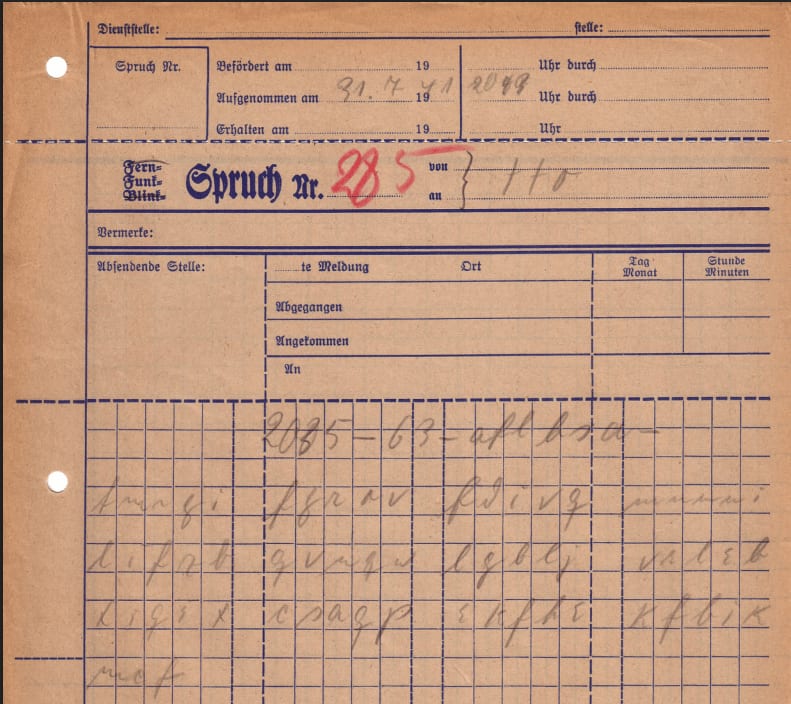
Modern AI models from OpenAI and Anthropic have successfully decrypted long-unsolved Nazi Enigma messages. This achievement highlights the evolution of cryptanalysis, moving from mechanical solutions like the Bombe to advanced neural network processing.
The Digital Successor to the Bombe
Alan Turing’s legacy is defined by two primary contributions: the theoretical framework for artificial intelligence and the practical, high-stakes application of cryptanalysis during World War II. While the 'Turing Test' remains a philosophical benchmark for machine consciousness, his work at Bletchley Park on the Bombe machine was a tangible, life-saving endeavor. The recent success of cryptanalysts using large language models (LLMs) like Astra and Opus to crack long-unsolved Enigma messages marks a poignant intersection between these two facets of Turing's life work.
Overcoming Historical Obstacles
During the war, the Bombe was instrumental in deciphering the German Enigma code, providing the Allies with critical intelligence. However, not every message was successfully decrypted. Many remained locked in history due to human error, such as mistranscriptions or incorrect settings applied by the original German operators. These 'unsolved' messages have long been considered a digital graveyard of historical data, resistant to standard computational brute-forcing because the errors introduced a level of complexity that deterministic machines could not easily navigate.
The Role of LLMs in Pattern Recognition
Recent efforts by developers, including the use of OpenAI’s Astra and Anthropic’s Opus models, have bypassed these traditional limitations. Unlike the Bombe, which relied on rigid logical deduction of rotor settings, modern LLMs excel at probabilistic pattern recognition. By instructing these models to analyze databases of encoded text, researchers are now able to 'read through' the noise of mistranscriptions, essentially performing a semantic and structural reconstruction that early mechanical computers could never achieve.
Philosophical and Technical Implications
This development suggests that we are entering a new era of historical research where AI acts as a sophisticated forensic tool. The ability of these models to handle incomplete or corrupted data sets mirrors the way humans reconstruct meaning from fragmented context. It effectively validates the idea that AI is not just a tool for generating new content, but an unparalleled engine for excavating the past. By solving what Turing’s team could not, these modern models have effectively passed a new kind of test—one of historical utility rather than just conversational mimicry.
Future Trends in Cryptanalysis
As we look forward, the application of LLMs to archival data will likely expand. There are vast repositories of encrypted historical communications, from diplomatic cables to wartime intelligence, that remain unread. The success with Enigma messages serves as a proof-of-concept for a broader movement to utilize neural networks to process historical archives. This evolution signifies a shift in how we interact with historical records, turning static, unreadable data into active, searchable knowledge.
Conclusion
The marriage of modern machine learning and mid-century cryptanalysis is more than a technical novelty; it is a completion of a circle started in the 1940s. While Alan Turing could only have dreamed of the computational power available today, the core objective remains the same: extracting truth from complexity. As Astra and Opus continue to unlock these historical mysteries, they cement their place as the digital descendants of the Enigma-breakers, proving that the most significant 'Turing Test' may not be about talking like a human, but about solving problems that humans have long deemed impossible.