Maharashtra declares four more talukas drought-hit; total rises to 308
Source Entity
India Latest News: Top National Headlines Today & Breaking News | The Hindu
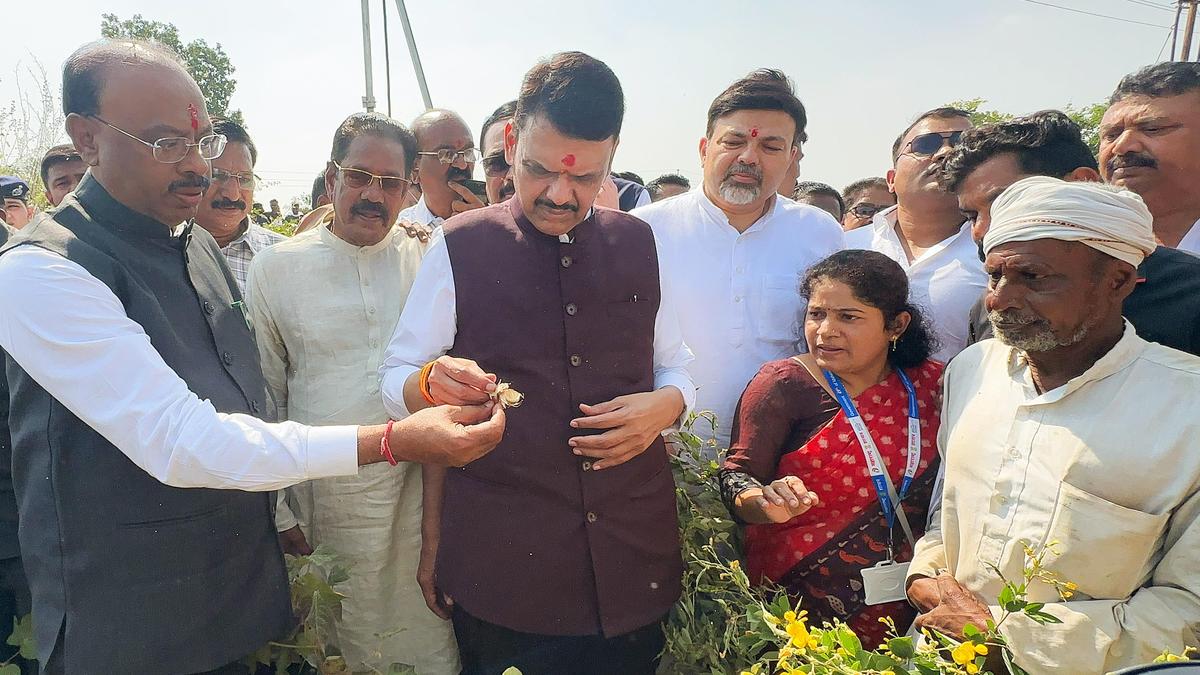
The Maharashtra government has expanded its drought-hit list to 308 talukas, incorporating four additional regions including parts of the Konkan belt. The state has already disbursed ₹4,701.6 crore to nearly 9.5 million farmers to mitigate crop losses and water scarcity.
Maharashtra Expands Drought Mitigation Efforts
Escalating Agrarian Crisis in Maharashtra
The Maharashtra government has officially declared four additional talukas—Chiplun, Wada, Vikramgad, and Dindori—as drought-hit, pushing the state’s total count to 308 out of 358 talukas. This significant expansion highlights the deepening agrarian crisis across the state, as the cabinet sub-committee on drought relief, led by Revenue Minister Chandrashekhar Bawankule, continues to respond to mounting reports of water scarcity and extensive crop failures. The inclusion of these regions, particularly in the Konkan belt, underscores the severity of the current climate patterns affecting the state.
The Paradox of the Konkan Region
Notably, the inclusion of Chiplun, Wada, and Vikramgad in the Konkan region is a development of significant concern. Historically, the Konkan region is known to receive the highest annual rainfall in Maharashtra. The fact that these traditionally water-surplus areas are now being classified as drought-affected points to a dramatic shift in meteorological trends and localized water management challenges. This anomaly suggests that even regions traditionally insulated from water scarcity are now vulnerable to the broader climatic shifts impacting the state's agricultural stability.
Financial Intervention and Relief Distribution
To support the farming community, the state government has already mobilized substantial financial aid, having distributed ₹4,701.6 crore to approximately 94.3 lakh farmers. This massive fiscal intervention is aimed at providing immediate liquidity to rural households facing the brunt of lost harvests. By addressing the economic fallout of the drought, the government is attempting to stabilize the rural economy, which relies heavily on the success of seasonal crops that are currently under threat from insufficient water availability.
Ongoing Assessment and Future Vulnerability
Beyond the 308 declared talukas, the government is currently assessing the status of nine additional regions, including Hatkanangale, Karveer, Gadhinglaj, Pen, and Mahad. The fact that the committee is actively reviewing these proposals suggests that the final count of drought-hit areas may still increase. This ongoing process indicates a proactive, albeit reactive, approach to disaster management that relies on field-level reports of crop losses rather than static historical data.
Long-Term Implications for State Policy
The current drought situation poses a significant challenge to Maharashtra’s long-term agricultural policy. With over 85% of the state’s talukas now under the drought-hit classification, the reliance on traditional monsoon patterns is becoming increasingly untenable. Future policy trends will likely necessitate a shift toward more resilient crop varieties, improved irrigation infrastructure, and sustainable water conservation techniques that can mitigate the impact of irregular rainfall patterns, even in historically high-precipitation zones.
Verification Required?