From Sonia Gandhi’s ‘Belonging’ to Govind Pansare’s ‘Shivaji Kon Hota’: 8 books that shook Maharashtra politics
Source Entity
Zeeshan Shaikh
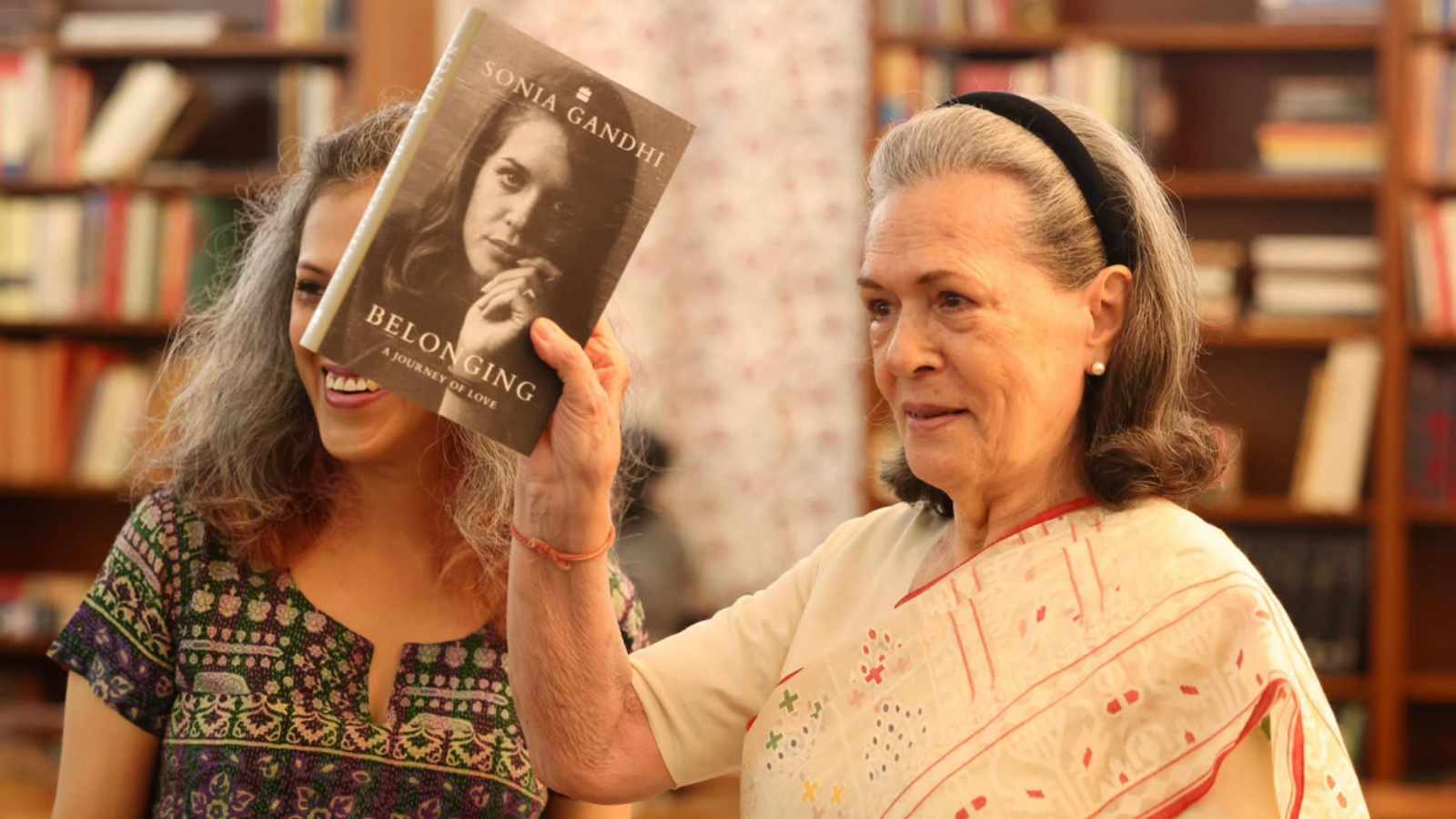
The Eknath Shinde-led Shiv Sena has sparked a political firestorm by protesting Sonia Gandhi's memoir due to its critical portrayal of V.D. Savarkar. This incident highlights a long-standing pattern in Maharashtra politics where literature and historical interpretation become battlegrounds for ideological supremacy.
The Intersection of Literature and Political Turbulence in Maharashtra
Maharashtra’s political landscape has long been defined by a volatile intersection of historical interpretation and contemporary identity politics. The recent protests led by the Eknath Shinde-led Shiv Sena against Sonia Gandhi’s memoir, Belonging: A Journey of Love, serve as a modern manifestation of a recurring phenomenon. By targeting the memoir’s remarks on V.D. Savarkar, the Shiv Sena has once again signaled that the defense of political icons is a central pillar of its ideological mandate, effectively framing the book not merely as a literary work, but as a challenge to the state's cultural narrative.
The Historical Precedent of Literary Controversy
This is far from an isolated incident. The history of Maharashtra is punctuated by intense public reactions to academic and literary texts. The most notable historical precedent remains the 1987-88 controversy surrounding Dr. B.R. Ambedkar’s Riddles in Hinduism. In that instance, the inclusion of chapters analyzing Hindu deities triggered a massive clash between Dalit organizations and right-wing groups. This historical context underscores a consistent trend: in Maharashtra, literature that critiques established religious or political figures is frequently treated as a provocation that demands immediate, often performative, public opposition.
The Role of Iconography in Political Legitimacy
At the heart of the current row is the status of V.D. Savarkar, a figure who occupies a complex and highly charged space in the Indian political imagination. For the Eknath Shinde-led Shiv Sena, defending Savarkar is an exercise in maintaining continuity with the party’s historical roots and its claim to represent the authentic voice of Hindutva. The act of tearing copies of Sonia Gandhi’s book is a symbolic gesture aimed at delegitimizing the author’s perspective while reinforcing the party’s role as the primary guardian of Maharashtra’s nationalist icons.
Escalation and the Viral Dimension
Modern political discourse in the state has been further complicated by the emergence of social media, which acts as a force multiplier for these controversies. The current row over the memoir intensified significantly when a viral video of the protest sparked a secondary dispute involving an image of Balasaheb Thackeray. This illustrates how quickly localized protests can spiral into broader, chaotic debates that transcend the original content of the book, drawing in unrelated political sentiments and further polarizing the electorate.
The Broader Implications for Discourse
The persistent pattern of responding to literature with protests highlights a concerning trend regarding the space for intellectual debate in the public sphere. When political parties utilize the contents of a book to mobilize their base, it inevitably narrows the scope for nuanced historical or critical analysis. The recurring cycle of protests suggests that the interpretation of history in Maharashtra is not a static academic pursuit, but a dynamic, high-stakes political battleground where the stakes are defined by the perceived preservation of heritage and the rejection of dissenting narratives.
Future Trends and Conclusion
Looking ahead, it is likely that the convergence of political identity and literary criticism will continue to define Maharashtra's political season. As long as historical figures remain central to the legitimacy of modern political parties, any literature that challenges these icons will almost certainly be met with similar resistance. The current controversy serves as a reminder that in the state's political arena, the written word is rarely treated with neutrality; instead, it is viewed as a catalyst for ideological mobilization, ensuring that historical debates remain as relevant and contentious as contemporary policy issues.