Bal Thackeray photo row: Shiv Sena (UBT) workers protest against Shaina NC in Mumbai
Source Entity
ABHISHEK MISHRA
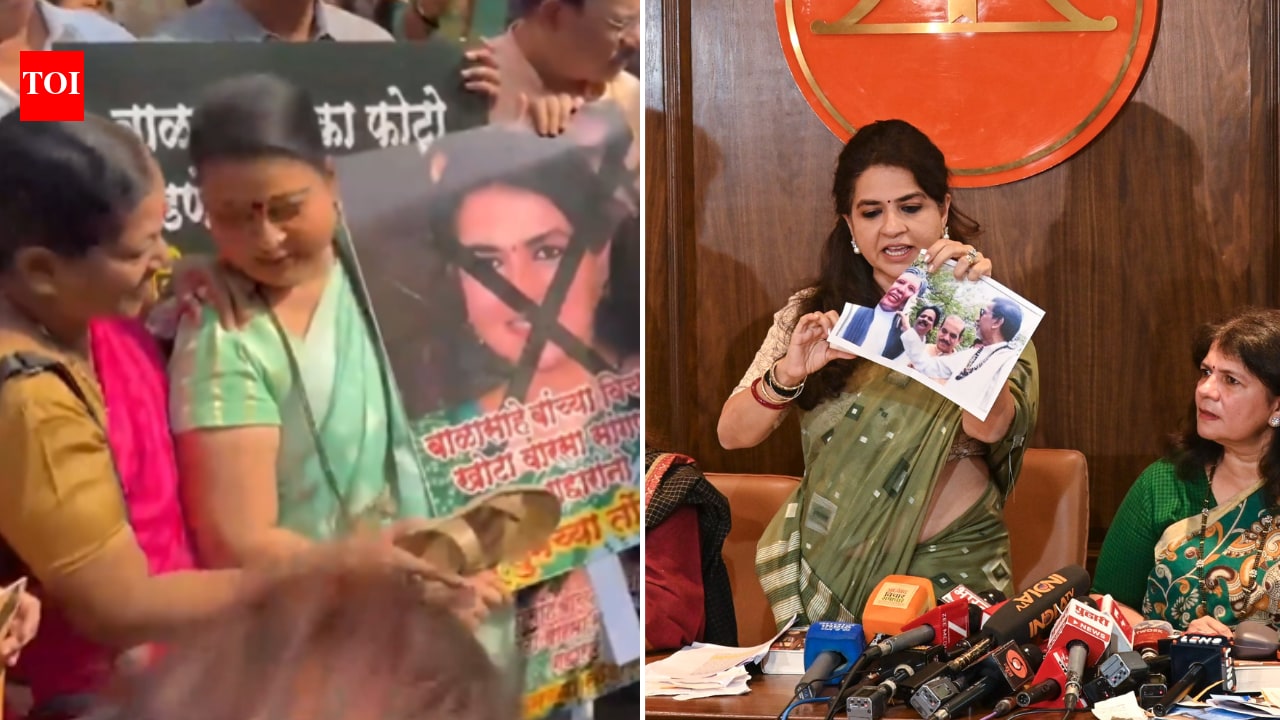
Members of the Eknath Shinde-led Shiv Sena staged a protest in Mumbai by tearing pages from Sonia Gandhi’s memoir, 'Belonging: A Journey of Love.' The party demands a state-wide ban on the book, alleging that it contains derogatory references to Hindutva ideologue V.D. Savarkar.
Political Turmoil Erupts Over Memoir Content
The political landscape in Maharashtra has been rocked by a high-profile protest involving the Eknath Shinde-led Shiv Sena, which has taken aggressive action against the recently released memoir of Congress leader Sonia Gandhi, Belonging: A Journey of Love. On November 18, 2026, six party spokespersons held a press conference in Mumbai where they physically tore pages from the book, citing what they described as 'derogatory' references to Hindutva icon Vinayak Damodar Savarkar. This act of protest has rapidly escalated into a broader debate regarding historical narratives, political decorum, and the limits of free expression in the state.
The Core Grievance: Savarkar and Marathi Identity
The Shiv Sena faction led by Eknath Shinde views the alleged depictions of Savarkar in the memoir not merely as a critique of a historical figure, but as an affront to Marathi identity and the broader Hindutva ideology. By targeting the book, the party is positioning itself as the primary defender of Savarkar’s legacy. The demand for publisher HarperCollins to withdraw the specific pages, coupled with a formal request for the Maharashtra government to ban the book, highlights the party's intent to utilize administrative power to suppress content they deem offensive to their core constituency.
Symbolic Defiance and Internal Factionalism
The protest has further exacerbated the rift between the rival Shiv Sena factions. Reports indicate that the protest took a complex turn when Shaina NC, a prominent Shinde-led Shiv Sena member, tore a page containing a photograph of Bal Thackeray. This specific action drew sharp criticism from the Shiv Sena (UBT), who accused her of disrespecting the party founder. The internal friction is palpable, as the Shinde faction defended the move, claiming the focus was actually on the image of Congress leader Mani Shankar Aiyar, effectively turning the protest into a battlefield for competing claims over the legacy of Bal Thackeray.
Historical Narratives as Political Weapons
This incident underscores a recurring trend in Indian politics where historical figures are mobilized as symbols to consolidate voter support. The Congress party has condemned the act of tearing pages, arguing that such physical destruction cannot alter or erase historical narratives. This clash reflects the ongoing struggle between political parties to control the 'official' version of history, particularly in the lead-up to critical electoral cycles where the identity of the state remains a central theme.
Broader Implications for Free Speech
The demand for a state-wide ban on a literary work raises significant concerns regarding the freedom of publication and the role of the state in moderating discourse. By attempting to force a publisher to remove specific content under threat of prohibition, the Shiv Sena is testing the boundaries of political censorship. If the Maharashtra government proceeds with a ban, it could set a contentious precedent for how memoirs and historical accounts are treated when they clash with the sensitivities of ruling political alliances.
Conclusion
The controversy surrounding Belonging: A Journey of Love is unlikely to subside quickly, as it is deeply intertwined with the existing political animosities in Maharashtra. As the Shiv Sena (Shinde faction) doubles down on its demands and the Congress continues to defend the integrity of the memoir, the incident serves as a stark reminder of how historical interpretation remains a volatile tool in modern political theater. The outcome of this protest—whether it leads to a ban or settles into a long-standing legal and political dispute—will likely influence future interactions between the media, publishing houses, and political parties in India.
Multiple Citing Sources