‘Stones, shoes thrown at my car’: Mamata faces protest at TMC worker’s home
Source Entity
TOI NEWS DESK
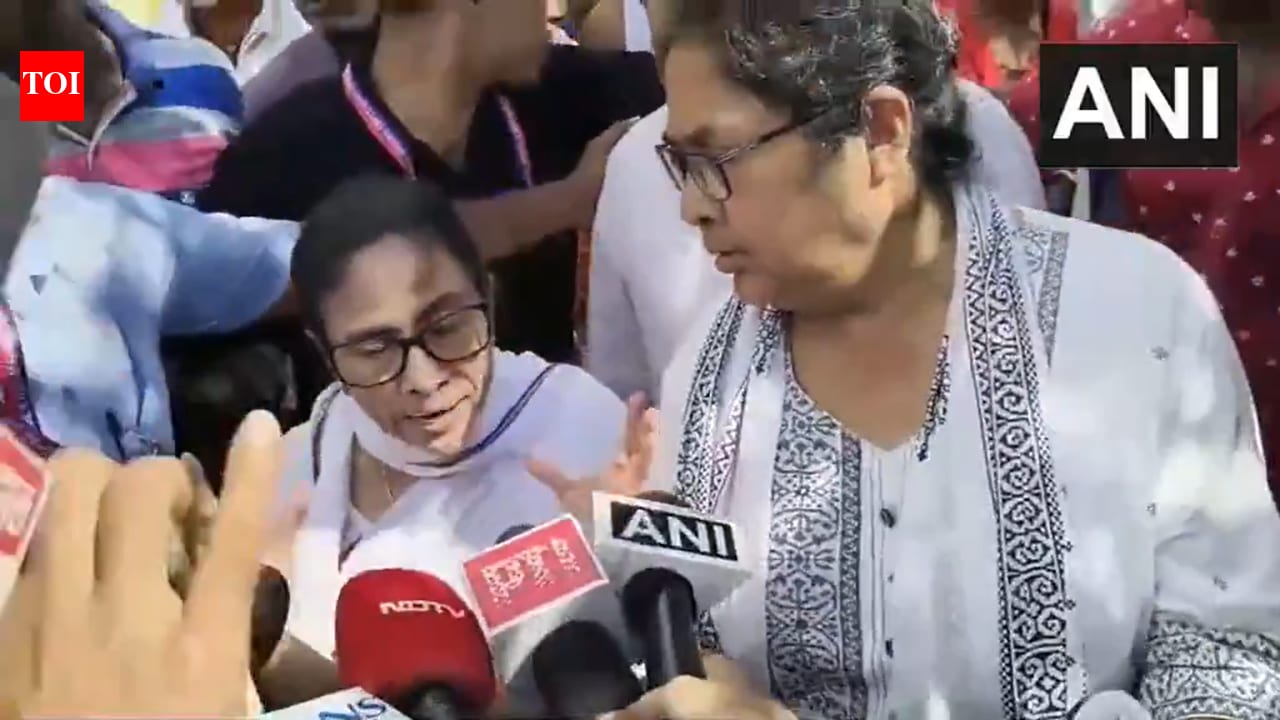
Former West Bengal CM Mamata Banerjee faced hostile protests and vehicle vandalism during a visit to the family of a deceased TMC worker in Halisahar. Banerjee alleged that BJP supporters orchestrated the attack while criticizing local police for their handling of the situation.
Political Unrest in Halisahar: An Analysis of the Mamata Banerjee Incident
The Incident and Escalation
On Sunday, August 9, 2026, former West Bengal Chief Minister Mamata Banerjee experienced a highly volatile reception during her visit to Halisahar in the North 24 Parganas district. The visit, intended to offer condolences to the family of a deceased Trinamool Congress (TMC) worker, Birju Keot, devolved into a security crisis. Keot had recently died while in police custody following his arrest on charges of extortion and corruption, a situation that had already heightened local tensions before the TMC leader's arrival.
The Nature of the Protest
As Banerjee moved through the area, she was met with vocal opposition from local residents. The protest quickly escalated from slogan-shouting to physical aggression directed at her motorcade. Banerjee reported that her vehicle was targeted with stones and shoes, describing a situation in which she felt her life was in immediate danger. This physical assault on a political figure of her stature underscores the depth of the grievances held by the local population regarding the circumstances of the custodial death.
Allegations and Political Blame
In the immediate aftermath, Mamata Banerjee categorically blamed Bharatiya Janata Party (BJP) supporters for inciting and executing the violence. She asserted that the incident was not a spontaneous expression of local frustration but a calculated political attack. Furthermore, she expressed sharp criticism toward the local police, implying a failure in maintaining law and order or, at worst, complicity in the security breach that allowed the attack on her vehicle to occur.
Custodial Context and Public Sentiment
The backdrop of this incident is the arrest of Birju Keot, the husband of former TMC councillor Jenny Sharma Keot. His arrest on corruption and extortion charges, followed by his subsequent death in police custody, serves as the primary catalyst for the unrest. The fact that this occurred in the Barrackpore sub-divisional area—a region often marked by intense political friction—suggests that the incident is symptomatic of deeper systemic issues regarding police accountability and political rivalry in West Bengal.
Broader Implications for West Bengal Politics
This event highlights the precarious nature of political outreach in polarized regions. When a leader visits the home of a deceased party worker under such contentious circumstances, the potential for civil unrest is significant. The incident reflects a growing trend where custodial deaths serve as rallying points for political opposition, leading to the erosion of traditional political decorum and the rise of direct, often violent, confrontation.
Conclusion and Future Outlook
As investigations into both the custodial death of Birju Keot and the attack on Mamata Banerjee’s motorcade proceed, the state faces a period of heightened instability. The accusations leveled by Banerjee against the BJP and the police suggest that this incident will likely become a central theme in upcoming political discourse. The ability of the state machinery to restore order and address the underlying allegations of police misconduct will be critical in preventing further escalation in the North 24 Parganas district.