‘We booked these seats on purpose’: Man refuses to swap reserved train seats so family can sit together
Source Entity
Latest News: Today's Latest News Headlines from India & World | Hindustan Times | Hindustan Times
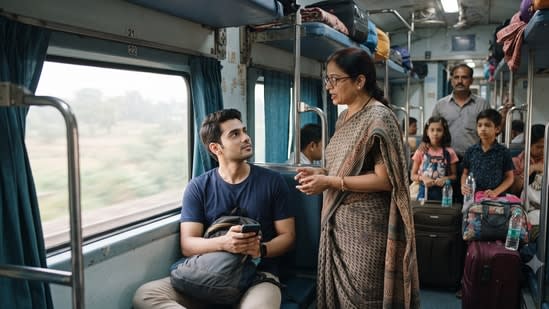
A man refused to swap his reserved train seat with a family, sparking a debate on passenger etiquette.
The Collision of Rights and Etiquette: Analyzing the Train Seat Dispute
The recent incident involving a man's refusal to swap his reserved train seat to accommodate a family has evolved from a simple travel inconvenience into a broader sociological debate. At its core, the conflict represents a clash between two competing philosophies of public space: the strict adherence to contractual rights (the reserved ticket) and the traditional social contract of communal kindness and empathy. This tension is amplified by the high-stress environment of modern travel, where seating arrangements often dictate the quality of a passenger's journey.
The Logic of Intentional Booking
One of the most striking elements of this case is the man's assertion that he "booked these seats on purpose." In the context of modern rail travel, seat selection is rarely arbitrary. Passengers often spend significant time selecting specific seats to ensure a window view, proximity to luggage racks, access to power outlets, or a position in a quieter carriage to avoid distractions. When a passenger explicitly chooses a seat for a specific utility, a request to swap is not merely a request for a seat, but a request to forfeit the specific benefit they paid for or planned around. This highlights a growing trend toward "optimization" in travel, where passengers prioritize their personal environment to manage anxiety or productivity.
The Expectation of Familial Altruism
Conversely, the family's request is rooted in a long-standing social expectation that passengers should prioritize the needs of children and caregivers. From this perspective, the logistical difficulty of managing children across separate rows is viewed as a more significant hardship than the loss of a specific seat preference. The emotional weight of this argument relies on the idea of "communal grace," where the collective well-being of a family unit is seen as more important than an individual's preference. This creates a moral dilemma: does the legal right to a reserved seat supersede the social obligation to help a struggling family?
The Role of Social Media as a Moral Arbiter
This event has gained traction largely because it serves as a "Rorschach test" for internet users. By sharing this story online, the incident is stripped of its immediate nuance and turned into a binary debate on "entitlement" versus "selfishness." Social media platforms often amplify these stories because they trigger strong emotional responses regarding fairness and social norms. The debate reflects a wider cultural shift where the boundaries of public etiquette are being renegotiated in real-time, often leading to polarized views on whether individual boundaries should be porous in the face of perceived need.
Systemic Failures in Seat Allocation
Beyond the interpersonal conflict, this event underscores the systemic frustrations associated with automated booking systems. Many rail operators use algorithms that scatter family members across a carriage if they do not book with extreme precision or pay premium fees for guaranteed grouping. When the system fails to keep families together, the burden of resolution is shifted from the service provider to the passengers. This creates an environment of friction where strangers are forced to negotiate their personal space, often leading to the kind of confrontation seen in this instance.
Conclusion: The Balance of Empathy and Autonomy
Ultimately, the refusal to swap seats is a reminder of the fragile balance between personal autonomy and social cohesion. While the man was within his rights to keep the seat he reserved, the resulting backlash suggests that society still values altruism over strict contractualism in public settings. As travel continues to become more crowded and digitized, these micro-conflicts are likely to increase, necessitating a clearer understanding of where individual rights end and community responsibility begins. The incident serves as a poignant example of how a small, localized decision can mirror the larger tensions of modern societal interaction.
Verification Required?