Manipur shuts down over killing of 4 Tangkhul Nagas
Source Entity
PRABIN KALITA
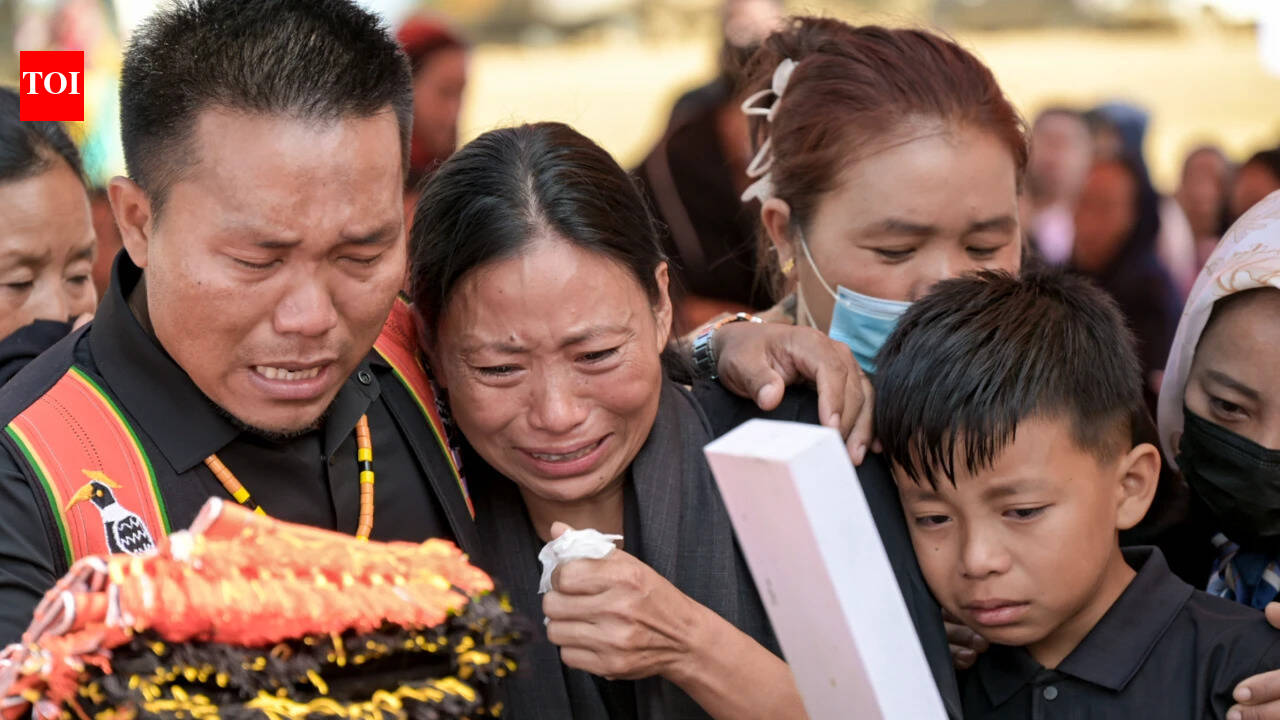
Six Liangmai Naga civilians were finally laid to rest in Manipur 187 days after their abduction and murder. The burial followed a prolonged protest by Naga organizations and families, who demanded justice and the review of security agreements with armed groups.
The Tragic Laying to Rest of Six Liangmai Naga Civilians
On November 16, 2026, the state of Manipur witnessed a somber conclusion to a 187-day ordeal as the bodies of six Liangmai Naga civilians were finally laid to rest in the Kangpokpi district. These individuals had been abducted and subsequently murdered, with their remains recovered on June 10, 2026. For over six months, their families and various Naga organizations kept the bodies at the Jawaharlal Nehru Institute of Medical Sciences (JNIMS) in Imphal, refusing to conduct final rites as a form of protest against the lack of accountability and the prevailing security climate in the region.
A History of Unrest and Protest
The burial process was preceded by deep-seated anguish, with United Naga Council (UNC) president N.G. Lorho characterizing May 13, 2026—the date of the initial abductions—as the "darkest day in Manipur’s history." The refusal to claim the bodies served as a powerful, albeit harrowing, mechanism for the community to demand state and central government intervention. This civil disobedience highlighted the profound lack of trust between ethnic groups and the administrative machinery tasked with maintaining law and order in a region historically plagued by insurgent activity and inter-communal violence.
The Role of Security Agreements
Central to the conflict was the demand by Naga civil bodies for the abrogation of the 2008 Suspension of Operations (SoO) agreements with 25 Kuki-Zomi armed groups. These agreements, designed to bring militant groups into a ceasefire framework, have become a focal point of contention. Critics argue that these frameworks have not adequately protected civilians from the very groups that are technically under a truce. The demand for their abrogation reflects a broader regional frustration regarding the efficacy of current security protocols in preventing ethnically motivated violence.
Diplomatic Efforts and Resolution
The impasse was partially broken following a tripartite meeting held in Guwahati on September 26, involving representatives from the Union government, the Manipur state government, and Naga organizations. This negotiation provided the necessary assurances of justice that allowed the families to finally perform the last rites. However, the closure of this specific case does not signal an end to the region's volatility, as indicated by the simultaneous reports of a shutdown in Manipur following the separate killing of four Tangkhul Nagas.
Broader Implications and Future Trends
The events in Manipur underscore a fragile security landscape where civilian lives are frequently caught in the crossfire of long-standing ethnic tensions. The prolonged nature of the protest—spanning 187 days—demonstrates a growing trend of civil society organizations utilizing institutional pressure to force state action. Moving forward, the government faces the dual challenge of maintaining peace through security pacts while ensuring that these pacts do not provide immunity for violence against the civilian population. Future stability will likely depend on the government’s ability to deliver tangible justice and reform the security frameworks that have clearly failed to prevent such tragedies.
Multiple Citing Sources