‘Independence is our birthright’: Rubio vows American resolve as US launches war to ‘dismantle’ ICC?
Source Entity
Latest News: Today's Latest News Headlines from India & World | Hindustan Times | Hindustan Times
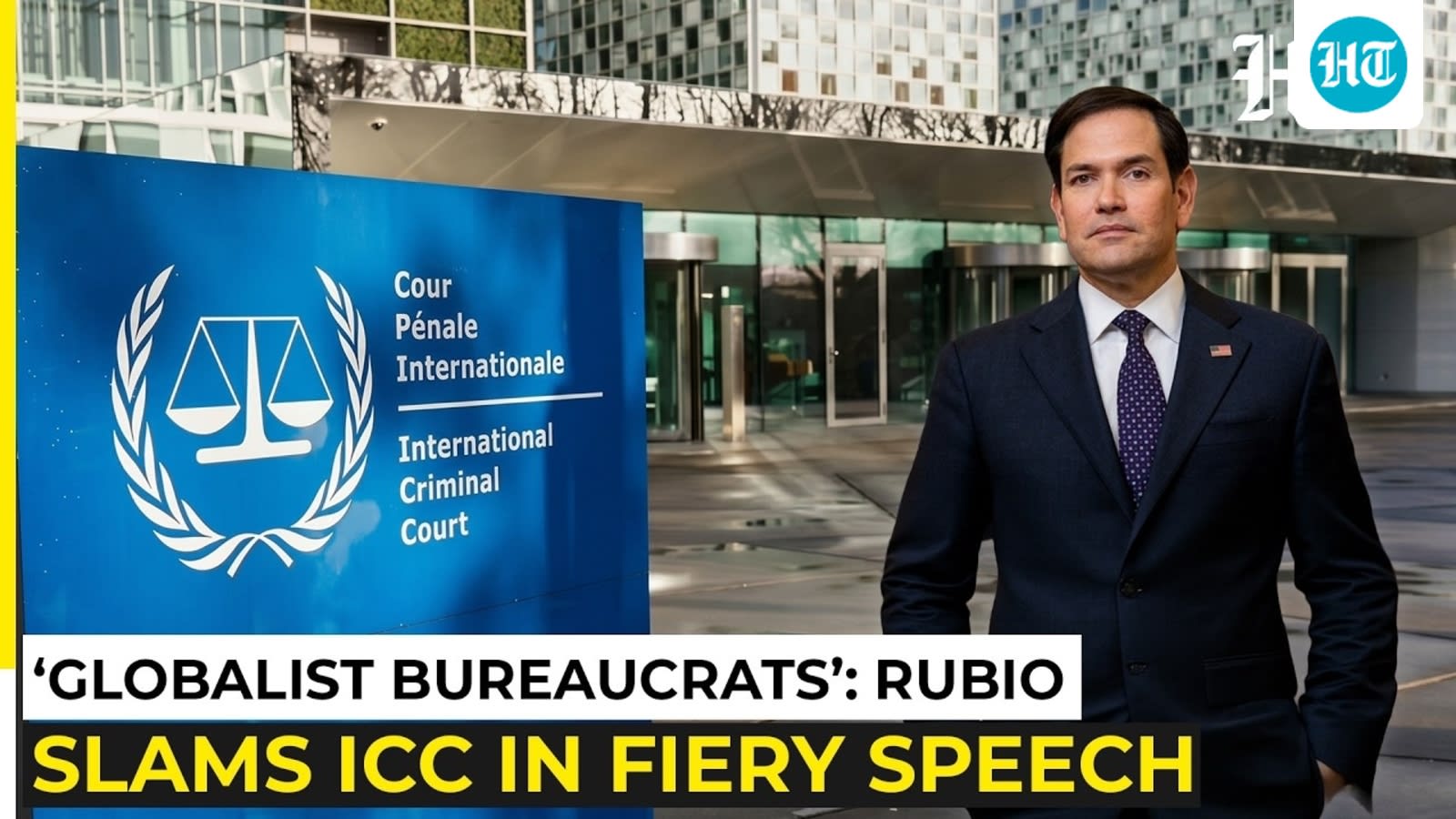
U.S. Secretary of State Marco Rubio launched a strong attack on the International Criminal Court (ICC), accusing it of undermining American sovereignty and attempting to impose international authority over U.S. laws. Speaking in Washington, D.C., Rubio said the ICC and its supporters are waging a legal campaign against the United States through international statutes rather than military force. He argued that Americans should only be judged by their own legal system and warned against what he described as foreign institutions interfering in national affairs. Watch Rubio's full remarks and the latest developments surrounding the U.S.-ICC dispute.
The Clash of Sovereignty: Analyzing Marco Rubio's Offensive Against the ICC
In a provocative declaration that signals a hardline shift in American diplomacy, U.S. Secretary of State Marco Rubio has framed the International Criminal Court (ICC) not as a vehicle for global justice, but as an existential threat to American sovereignty. By invoking the phrase "Independence is our birthright," Rubio is positioning the current dispute as a fundamental struggle for national autonomy against what he perceives as an overreaching international bureaucracy. This rhetoric suggests that the United States views the ICC's attempts to exercise jurisdiction over U.S. personnel as a form of "legal warfare," shifting the conflict from the battlefield to the courtroom.
Historical Context of U.S.-ICC Tensions
To understand the depth of Rubio's remarks, one must look at the long-standing and contentious relationship between the United States and the Rome Statute, the treaty that established the ICC. The U.S. has never been a state party to the treaty, fearing that the court could be used for politically motivated prosecutions of American soldiers and officials serving abroad. This tension reached a fever pitch during the first Trump administration, which imposed unprecedented sanctions on ICC officials to deter investigations into U.S. actions in Afghanistan. Rubio's current stance is an intensification of this "America First" legal philosophy, treating international statutes as optional or intrusive rather than binding.
The Doctrine of Legal Sovereignty vs. International Law
At the heart of Rubio's argument is the principle of Westphalian sovereignty—the idea that a state has exclusive authority over its own territory and citizens. By claiming that Americans should only be judged by their own legal system, Rubio is rejecting the ICC's principle of "complementarity," which allows the court to step in when national courts are deemed "unwilling or unable" to prosecute war crimes. From Rubio's perspective, the U.S. judicial system is not only capable but is the only legitimate authority for its citizens. This creates a profound ideological divide: the ICC views itself as a court of last resort for humanity, while the U.S. State Department, under Rubio, views it as a foreign entity attempting to supersede the U.S. Constitution.
Broader Geopolitical Implications
This escalation has significant implications for the "rules-based international order" that the U.S. has historically championed. By openly vowing to "dismantle" the influence of the ICC, the U.S. may be signaling a broader retreat from multilateralism. This creates a paradoxical diplomatic environment where the U.S. may continue to support ICC interventions in adversarial nations while shielding its own citizens from the same standards. Such a dual-track approach risks alienating European allies who are staunch supporters of the ICC and could embolden other global powers to similarly disregard international legal norms under the guise of national sovereignty.
Predicting Future Trends in U.S. Diplomacy
Looking forward, it is likely that the U.S. will employ a combination of economic pressure, diplomatic isolation, and potentially new legislative barriers to neutralize ICC probes. We can expect a surge in bilateral agreements (often referred to as "Article 98 agreements") where the U.S. pressures other nations to promise they will not hand over U.S. citizens to the ICC. Furthermore, Rubio's rhetoric suggests that the U.S. may move beyond mere non-cooperation toward an active campaign to delegitimize the court's authority on the world stage, potentially using U.S. financial leverage over member states to curtail the court's operational capacity.
Conclusion: A New Era of Unilateralism
Secretary Rubio's attack on the ICC represents more than a legal disagreement; it is a manifesto for a new era of American unilateralism. By framing the ICC's actions as a "legal campaign" against the United States, the administration is preparing the American public for a protracted confrontation with international institutions. Whether this leads to the actual dismantling of the court's influence or a renewed negotiation over jurisdiction, it is clear that the U.S. is currently prioritizing absolute national sovereignty over the collective aspirations of international criminal justice.
Verification Required?