Kejriwal Vs Modi over E20: who should bear the cost of ethanol blending? Fuel controversy explodes
Source Entity
Latest News: Today's Latest News Headlines from India & World | Hindustan Times | Hindustan Times
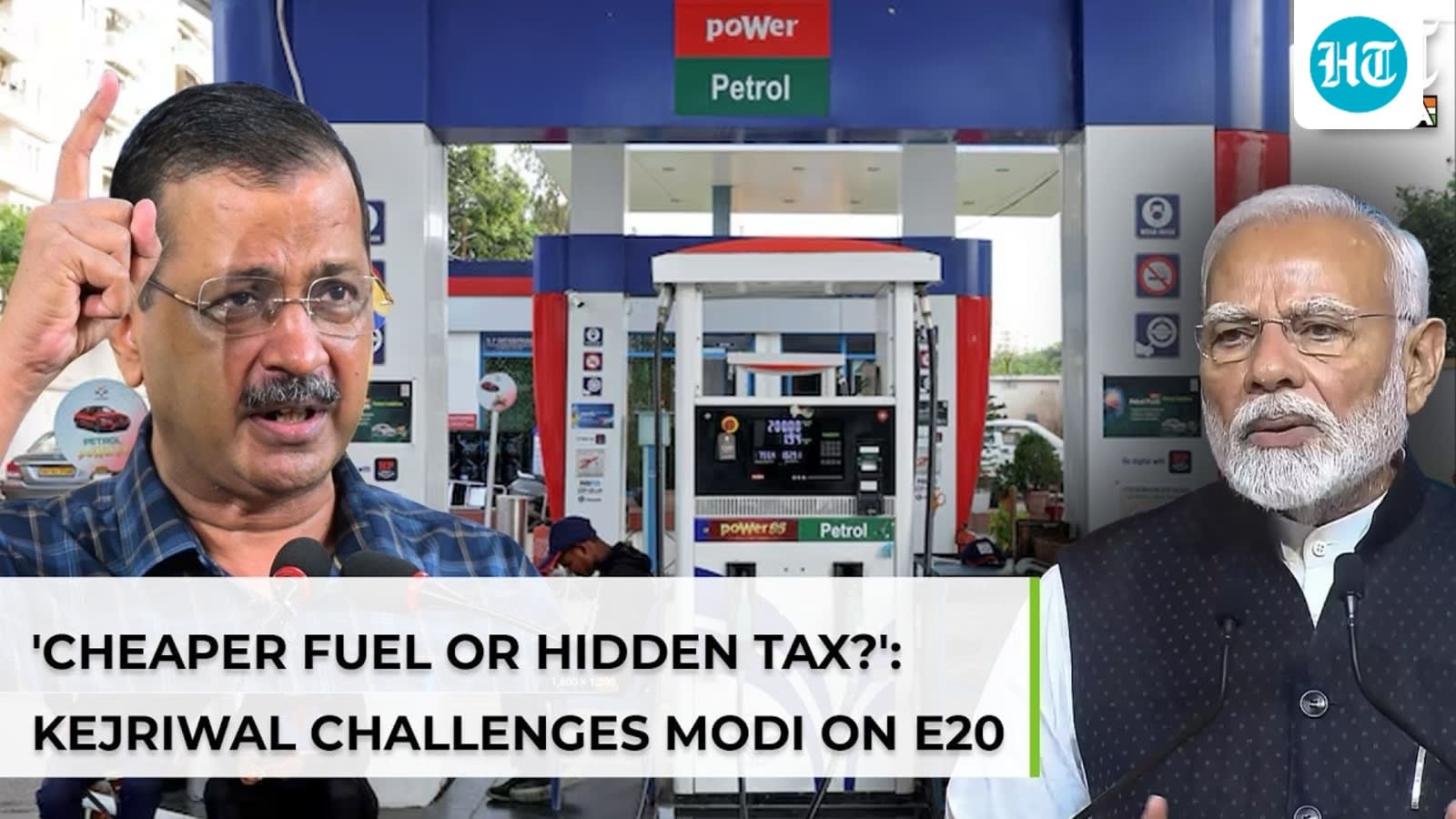
AAP National Convener Arvind Kejriwal has urged Prime Minister Narendra Modi to reduce the price of E20 fuel, arguing that it delivers lower mileage than regular petrol and should therefore cost less. Kejriwal said he has sought an appointment with the Prime Minister to discuss the issue. He also appealed to citizens affected by rising fuel costs to make videos and share them on social media, claiming public pressure is needed to push the government into action. Watch his full remarks and the latest political reaction over the E20 fuel pricing debate. HT India is your one-stop destination for breaking news, sharp insights and compelling narratives on politics, culture, economy, crime and viral stories. From metropolises to the countryside, we break down the news, debates, and big moments shaping India and what it means for every Indian.
The E20 Fuel Pricing Standoff: A Political and Economic Analysis
The Indian political landscape has seen a new flashpoint emerge over the pricing of E20 fuel, as AAP National Convener Arvind Kejriwal directly challenges Prime Minister Narendra Modi on the economic burden placed on commuters. At the heart of the controversy is the transition to ethanol-blended petrol, a strategic move by the central government to reduce dependency on foreign oil imports. However, Kejriwal argues that the transition is currently skewed against the consumer, creating a situation where citizens pay a premium for a fuel that offers diminished performance.
The Technicality of Mileage and Cost
To understand the depth of this dispute, one must look at the chemical properties of E20 fuel, which contains 20% ethanol and 80% gasoline. Ethanol has a lower energy density compared to pure petrol, meaning that for every liter of fuel consumed, a vehicle typically generates less energy. This results in a noticeable drop in mileage, particularly in older internal combustion engines not specifically optimized for high ethanol blends. Kejriwal's core argument is centered on this efficiency gap; if the fuel provides fewer kilometers per liter, he contends that the price per liter should be proportionally lower to ensure that the cost-per-kilometer remains fair for the end-user.
Strategic Goals vs. Consumer Reality
From a broader policy perspective, the push for E20 is a cornerstone of India's National Policy on Biofuels. The government's objective is twofold: to slash the massive import bill for crude oil and to provide a lucrative alternative revenue stream for sugarcane farmers and grain producers who supply the ethanol. While these macroeconomic goals are vital for national security and agricultural stability, the current controversy highlights a friction point where strategic national interests clash with the immediate financial realities of the urban middle class. The debate is no longer just about environmental sustainability, but about who bears the financial cost of this green transition.
Political Mobilization in the Digital Age
Beyond the economic arguments, Kejriwal's approach signals a strategic use of digital activism. By urging citizens to record videos of their experiences with E20 fuel and share them on social media, the AAP leader is attempting to bypass traditional media channels and create a grassroots 'viral' movement. This tactic aims to translate a technical fuel-efficiency issue into a visible public grievance, thereby putting direct pressure on the Prime Minister's Office (PMO). This reflects a modern political strategy where personal consumer frustration is weaponized to challenge central government policy.
Future Trends and Potential Resolutions
The resolution of this conflict likely lies in either a targeted subsidy for ethanol-blended fuels or a more aggressive push for vehicle manufacturer compliance. As India moves toward its goal of widespread E20 adoption, the government may be forced to consider a tiered pricing model to incentivize the shift without penalizing the driver. Furthermore, this debate may accelerate the transition to Flex-Fuel Vehicles (FFVs) that can handle higher blends without loss of efficiency, though such a transition requires significant infrastructure and manufacturing shifts.
Conclusion
The clash between Arvind Kejriwal and Prime Minister Modi over E20 pricing is more than a political spat; it is a reflection of the growing pains associated with India's energy transition. While the shift toward biofuels is an environmental and strategic necessity, the demand for price parity based on mileage highlights a critical gap in the implementation process. Whether the government yields to public pressure or maintains its current pricing structure will set a precedent for how future green energy mandates are rolled out across the country.
Verification Required?