Supreme Court Justice Barrett says 'the threat level is really high' in budget testimony
Source Entity
US Top News and Analysis
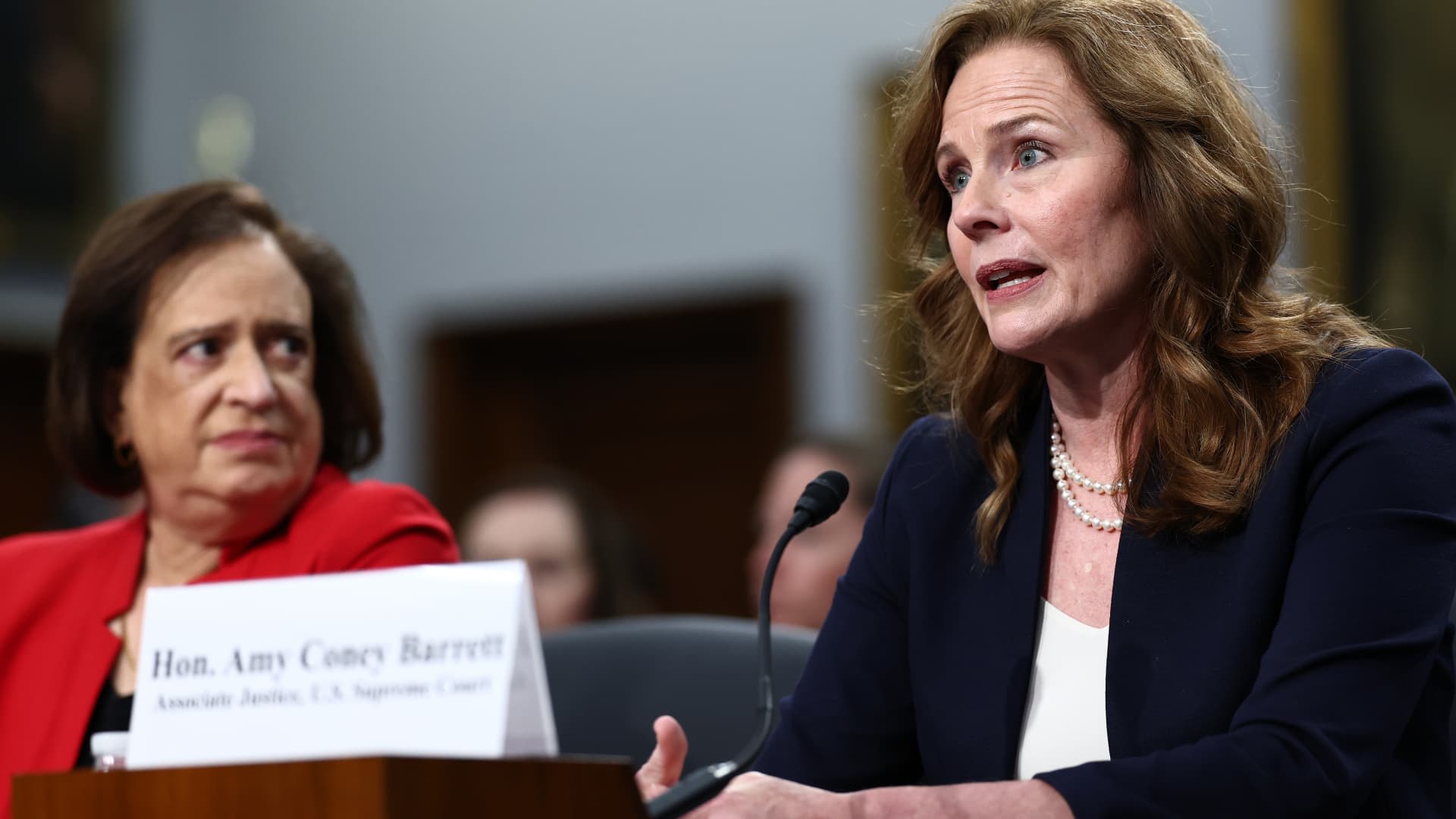
Supreme Court Justices Amy Coney Barrett and Elena Kagan testified before Congress regarding the high court's budget request, with Justice Barrett explicitly warning that the threat level against the judiciary is 'really high,' necessitating increased funding for security.
Judicial Security Under Scrutiny: Analysis of the Supreme Court's Budgetary Testimony
In a rare public appearance before legislative budget committees, Supreme Court Justices Amy Coney Barrett and Elena Kagan provided testimony regarding the high court's financial requirements. The central theme of the testimony was not merely administrative overhead, but a critical plea for enhanced security measures. Justice Barrett's stark assertion that the "threat level is really high" signals a profound shift in the perceived safety of the nation's highest judicial officers, moving the conversation from routine budgetary requests to a matter of urgent national security.
The Escalation of Threats to the Judiciary
Justice Barrett's warning reflects a broader, troubling trend of increasing hostility toward the judicial branch. In recent years, the Supreme Court has become a lightning rod for political polarization, with high-stakes rulings on social and political issues sparking intense public reaction. The "high threat level" mentioned by Barrett likely encompasses a spectrum of risks, ranging from digital harassment and doxing to physical threats against the justices and their families. This atmosphere of intimidation poses a direct challenge to the independence of the judiciary, as the physical safety of judges is paramount to their ability to render impartial decisions without fear of retribution.
A Unified Front Across Ideological Lines
One of the most significant aspects of this testimony is the joint appearance of Justice Barrett, a conservative appointee, and Justice Kagan, a liberal appointee. By standing together to request increased security funding, the justices are sending a clear message to Congress: the threat to the court is non-partisan. This unified front suggests that the risks are not limited to justices of a specific ideological leaning, but are instead a systemic byproduct of a volatile political climate. This bipartisan consensus is crucial for securing the necessary appropriations from a divided Congress, as it frames the issue as one of institutional preservation rather than political favoritism.
Historical Context and the Shift in Security Needs
Historically, the Supreme Court operated with a level of relative anonymity and security that is no longer sustainable. While the Marshal of the Court has always managed security, the scale and nature of threats have evolved. The aftermath of the January 6th Capitol riot and the subsequent rise in protests at the private residences of justices have fundamentally altered the security landscape. The request for higher spending likely targets the expansion of protective details, enhanced surveillance technology, and more robust perimeter security, reflecting a transition from a "passive" security posture to an "active" defensive strategy.
Broader Implications for Democratic Stability
The need for increased security funding is a symptom of a deeper crisis in democratic norms. When the highest court in the land must testify about "high threat levels" to secure its budget, it indicates a breakdown in the social contract regarding the acceptance of judicial authority. If the judiciary is perceived as a political entity rather than a legal one, the potential for violence increases. The long-term implication is a potential "chilling effect" where the fear of physical harm could subconsciously influence the judicial process, or lead to a court that is so insulated from the public that it loses its perceived legitimacy.
Future Trends in Judicial Protection
Looking forward, it is likely that we will see a permanent increase in the security apparatus surrounding the Supreme Court. This may include the introduction of new legislation specifically aimed at protecting judicial officers and their families from harassment and threats. Furthermore, as digital threats evolve, the budget will likely shift toward cybersecurity and intelligence gathering to preempt physical attacks. The conversation is moving toward a model of judicial protection that mirrors the high-level security provided to the executive branch, marking a permanent change in how the American judiciary interacts with the public sphere.
Summary
The testimony provided by Justices Barrett and Kagan serves as a stark reminder of the precarious position of the judiciary in a polarized era. By highlighting a "really high" threat level, the Court is calling for an immediate investment in safety to ensure the continued functioning of the third branch of government. The request for increased funding is not merely a financial matter, but a necessary response to a climate of increasing volatility that threatens the safety of the justices and the stability of the legal system.