Margaret Hamilton, whose software helped land Apollo 11 on the Moon, dies at 90
Source Entity
BBC News
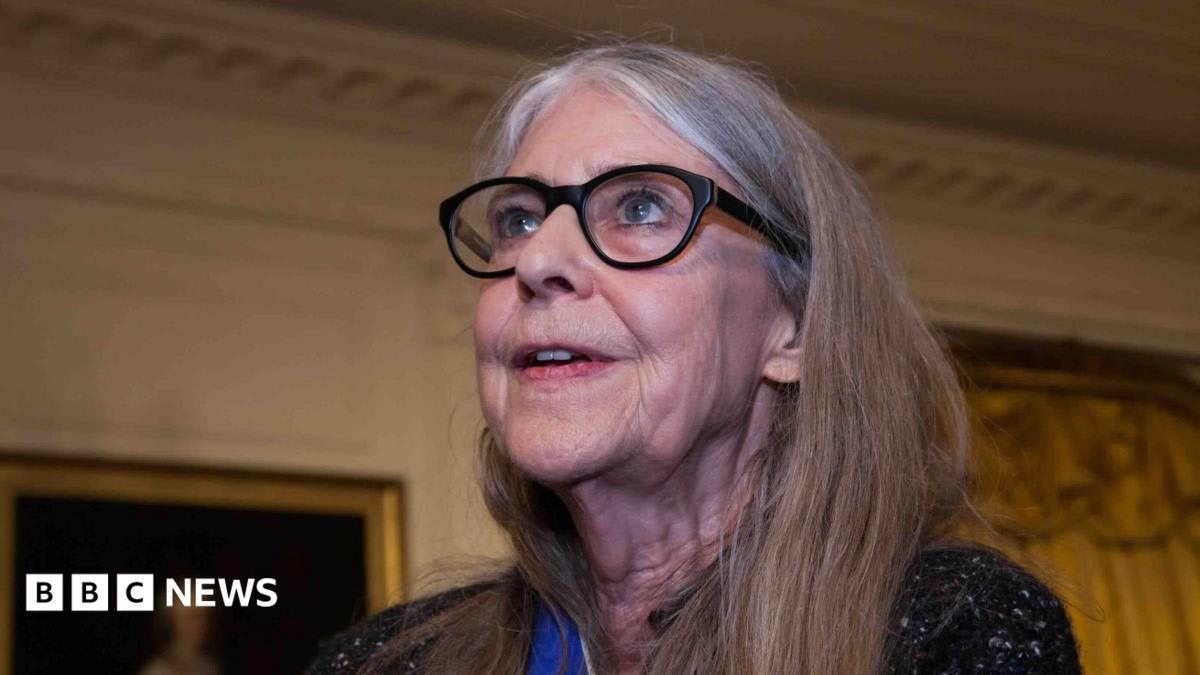
Pioneering computer scientist Margaret Hamilton, who led the software development for NASA's Apollo missions, has passed away at 90. Her groundbreaking work at MIT established the field of software engineering and ensured the success of human lunar exploration.
The Legacy of a Software Pioneer: Margaret Hamilton (1934–2024)
Margaret Hamilton, the visionary computer scientist who spearheaded the software engineering efforts for NASA’s Apollo program, has passed away at the age of 90. Her death, confirmed by the Massachusetts Institute of Technology (MIT), marks the end of an era for a woman who was instrumental in humanity’s first steps on the Moon. Serving as the leader of the Software Engineering Division at MIT’s Instrumentation Lab, Hamilton was not merely a participant in the space race; she was a foundational architect of the very discipline of software engineering.
Defining a New Discipline
During her tenure at MIT from 1959 through the mid-1970s, Hamilton recognized that the complex systems required for space flight necessitated a rigorous, formalized approach to coding. At a time when 'software' was often viewed as a secondary concern to hardware, Hamilton coined the term 'software engineering' to give the field the legitimacy and discipline it deserved. Her leadership during the Apollo missions ensured that the guidance computer—a machine with less processing power than a modern calculator—could reliably handle the immense pressures of lunar navigation.
Critical Contributions to Apollo
The software architecture designed by Hamilton and her team was essential for the safety and success of the Apollo 11 mission. Her team’s focus on robust, error-detecting systems allowed the Apollo Guidance Computer to prioritize critical tasks during the tense moments of the lunar landing. This foresight prevented catastrophic system failures, effectively turning the software into a reliable partner for the astronauts rather than a point of vulnerability. Her work remains a gold standard for mission-critical computing.
Beyond NASA: The Entrepreneurial Spirit
Following her influential tenure at MIT, Hamilton transitioned into the private sector, becoming a successful computing entrepreneur and CEO. This move demonstrated her versatility and her commitment to advancing the field of computer science beyond government-funded research. Her transition from academic leadership to corporate innovation underscored her belief that software was the engine of future industry, a prediction that has since become the defining reality of the 21st-century global economy.
A Lasting Cultural and Scientific Impact
Recognized for her immense contributions, Hamilton was awarded the Presidential Medal of Freedom by Barack Obama in 2016. The citation highlighted how she forever changed human history by defining new forms of software architecture. With over 130 publications to her name, her academic and technical output serves as a foundational library for generations of engineers. Her legacy is not just in the code that touched the lunar surface, but in the institutionalization of software development as a rigorous scientific pursuit.
Conclusion: A Legacy of Innovation
The passing of Margaret Hamilton is a moment to reflect on the silent heroes of the space age. Her career trajectory—from MIT researcher to industry pioneer—mirrors the rapid evolution of technology itself. By bridging the gap between theoretical computer science and practical, life-saving application, Hamilton ensured that the Apollo missions were not just a triumph of engineering, but a triumph of logical, resilient software design that remains a cornerstone of modern technological progress.