Meta officials meet Congress leaders amid allegations of bias in content moderation
Source Entity
India Latest News: Top National Headlines Today & Breaking News | The Hindu
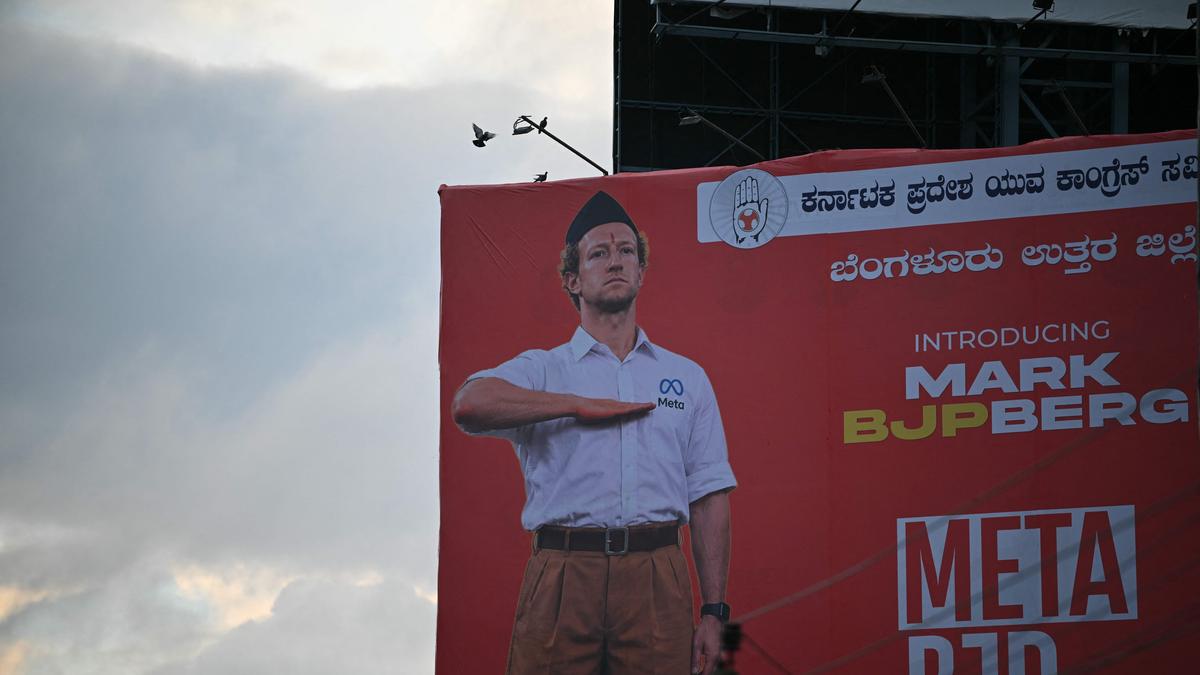
Meta executives met with Congress leaders in Delhi to address allegations of political bias and content moderation concerns. The discussions followed widespread protests by the Indian Youth Congress regarding the suspension of accounts and restricted political visibility.
Meta-Congress Dialogue: Navigating Content Moderation and Political Neutrality
The Context of the High-Level Meeting
On November 24, 2026, representatives from Meta, including Aman Jain and Natasha Jog, held a significant meeting with Congress party leaders, represented by social media head Supriya Shrinate. This engagement occurred against a backdrop of intensifying friction, as the Indian Youth Congress (IYC) staged demonstrations across key cities including Hyderabad, Mumbai, and Gurugram. The protests were fueled by allegations that Meta’s platforms were disproportionately restricting Congress-affiliated content while allowing similar material from BJP leaders to circulate freely.
Addressing Allegations of Algorithmic Bias
The core of the conflict lies in the perceived political bias within Meta’s content moderation algorithms. For years, major social media platforms have faced scrutiny regarding how they balance free expression with the enforcement of community guidelines. In this instance, the IYC’s vocal opposition highlights a growing trend where political entities are increasingly wary of the 'black box' nature of moderation decisions. By meeting with Congress, Meta aimed to address these concerns directly, potentially seeking to de-escalate the public fallout that has impacted the company’s reputation in the Indian political landscape.
Compliance with IT Rules and AI Controls
Beyond the specific political grievances, Meta utilized the meeting to reiterate its commitment to India's IT Rules. The company outlined its technical framework for content restrictions, which has become increasingly complex due to the integration of AI-generated content controls. As deepfakes and automated political propaganda become more prevalent, Meta’s reliance on AI to flag or suppress content is likely a point of friction, as these automated systems may lack the nuance required to distinguish between legitimate political discourse and policy violations.
The Impact of Public Protests on Corporate Strategy
The protests outside Meta’s offices represent a shift in how political organizations interact with Big Tech. By taking their grievances to the physical offices of the tech giant, the IYC forced a high-level response. Meta executives, in turn, conveyed their concerns regarding these demonstrations and the media portrayal of CEO Mark Zuckerberg. This mutual frustration underscores the precarious position tech platforms occupy in a vibrant, highly polarized democracy like India, where their moderation policies are viewed through the lens of political partisanship.
Future Implications for Digital Political Discourse
While neither party issued an official comment, the meeting signals a critical juncture for digital governance in India. As we look toward future election cycles, the ability of companies like Meta to maintain transparency in their moderation policies will be paramount. If these platforms cannot convince political stakeholders of their neutrality, they risk increased regulatory scrutiny and further public unrest. The resolution—or lack thereof—from this meeting will likely set a precedent for how tech giants engage with political parties regarding the equitable application of community standards in the digital age.
Multiple Citing Sources
Verification Required?