Meta’s Muse hits Mac, letting the AI take actions on your computer
Source Entity
Sarah Perez
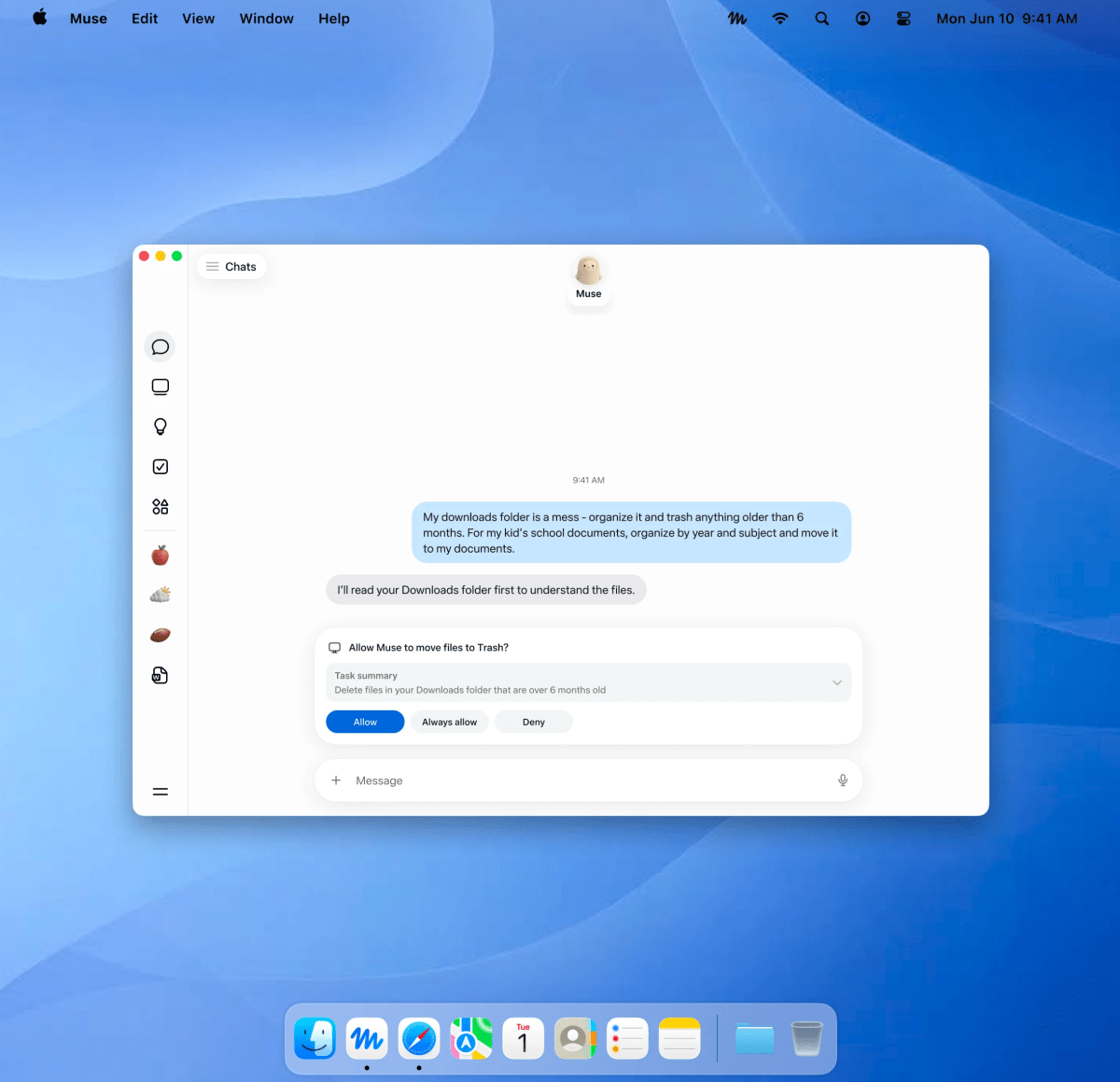
Meta has launched its AI assistant, Muse, for macOS, enabling it to interact directly with native applications like Mail, Calendar, and Files. The tool emphasizes user privacy through an opt-in permission model and confirmation requirements for sensitive actions.
Meta Expands AI Ecosystem with Muse for macOS
Meta has officially extended the reach of its AI assistant, Muse, to the macOS platform. This development marks a significant shift in how users interact with artificial intelligence, moving from simple chat-based interfaces to an agent-based model capable of executing tasks directly within desktop applications. By integrating with core system tools like Mail, Calendar, Notes, and the file system, Muse aims to function as a digital assistant that performs work rather than just generating text.
The Shift Toward Agentic AI
The introduction of Muse on Mac follows a successful rollout on mobile and web platforms earlier this month, where it rapidly ascended the U.S. App Store charts. This trajectory suggests a high demand for AI tools that offer utility beyond traditional search queries. By enabling the assistant to interact with native applications, Meta is positioning Muse to handle complex workflows that require cross-application data synthesis, a key differentiator from standard chatbot interfaces that operate in isolated windows.
Prioritizing User Autonomy and Security
A central component of the Muse launch is the emphasis on user control. Recognizing the inherent privacy concerns involved in granting an AI access to personal files and communications, Meta has implemented an opt-in architecture. Users must explicitly grant permissions for the assistant to access specific data sets. Furthermore, the system includes a safeguard mechanism that forces the AI to request confirmation before executing sensitive tasks, ensuring that the user remains the final decision-maker in the loop.
Strategic Implications for Productivity
This integration into the Mac ecosystem places Meta in direct competition with established productivity suites and operating system-level AI assistants. By allowing the AI to manage calendars, draft messages, and organize files, Meta is attempting to reduce the cognitive load on users by automating repetitive administrative digital tasks. This evolution mirrors broader industry trends where major technology firms are racing to embed 'agentic' capabilities directly into the operating system environment.
Future Trends and Market Outlook
The rapid adoption of Muse highlights a growing comfort among consumers with AI-driven automation. As these agents become more sophisticated, we can expect them to handle increasingly complex multi-step workflows. However, the success of this technology will ultimately depend on its reliability and the user's trust in the security of their data. Meta’s approach—combining broad functional access with strict opt-in controls—reflects a calculated attempt to balance utility with the necessary safeguards required for widespread adoption in professional and personal environments.