What drove Michigan AQI to 616? Scientists issue major climate warning, 'There really isn't any…'
Source Entity
Latest News: Todays Latest News Headlines from India & World | Hindustan Times | Hindustan Times
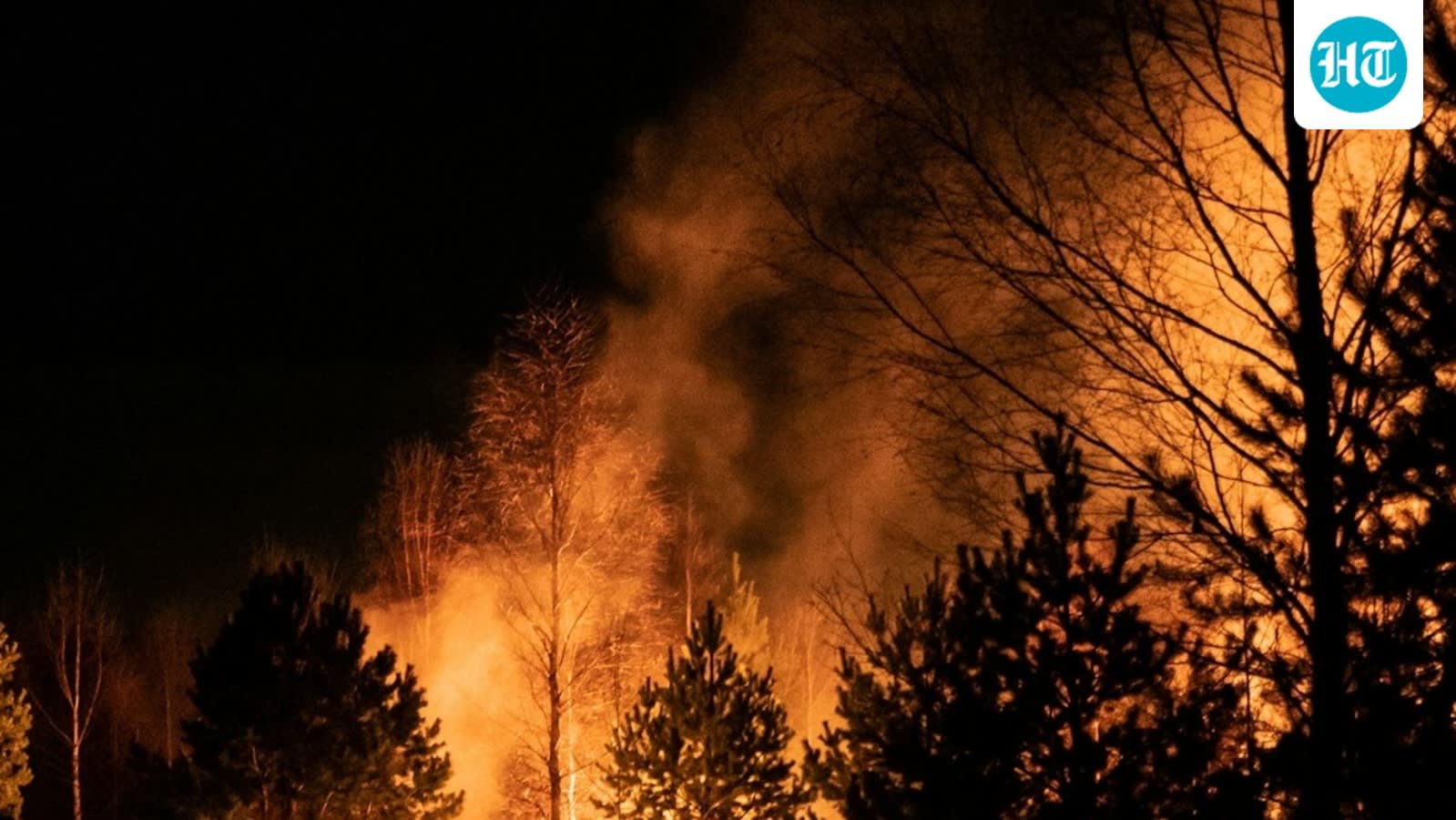
Record-breaking wildfire smoke from Canada caused Michigan's Air Quality Index to hit a hazardous 616 in July. This event highlights the growing regional impact of transboundary pollution driven by climate change.
The Anatomy of an Air Quality Crisis
In mid-July, the Midwest experienced an unprecedented environmental event as the Air Quality Index (AQI) in Michigan surged to an alarming 616. This figure, which drastically eclipsed the Environmental Protection Agency’s (EPA) threshold for 'hazardous' conditions, serves as a stark indicator of how atmospheric conditions can transport pollutants across vast geographic distances. The primary driver behind this spike was smoke originating from wildfires in Ontario, Canada, which blanketed the region in a murky, yellow haze.
The Mechanics of Long-Range Pollution
The phenomenon of smoke traveling hundreds or even thousands of kilometers underscores the interconnected nature of North American air quality. While wildfires are often viewed as localized disasters, the atmospheric transport of particulate matter means that a fire burning in a remote Canadian forest can directly compromise the health of populations in the United States. This event illustrates the vulnerability of the Midwest to transboundary air pollution, where prevailing wind patterns act as a conduit for smoke that transforms regional air quality into a public health emergency.
Breaking the EPA Thresholds
When the AQI reaches 616, it moves well beyond standard safety metrics. The EPA classifies anything above 300 as hazardous, representing a level of pollution that poses a severe health risk to the entire population. Reaching a reading of 616 suggests that the density of particulate matter was not just high, but physically oppressive, altering the visual landscape of the Midwest and forcing residents to contend with conditions that are fundamentally incompatible with safe outdoor activity.
Climate Change and the New Normal
The intensity of these fires and their subsequent impact on air quality are increasingly being viewed by scientists as a warning sign of a changing climate. As wildfire seasons become longer and more volatile in northern regions, the frequency of these 'smoke events' is expected to rise. The Michigan incident acts as a case study for how climate-driven environmental disasters in one nation necessitate a coordinated, continental response to air quality management and public safety.
Broader Implications and Future Trends
The incident in Michigan is not merely an isolated weather anomaly; it is a preview of the environmental challenges posed by a warming planet. As scientists continue to monitor the intersection of forestry management, climate patterns, and urban air quality, the focus is shifting toward predictive modeling. Understanding how smoke travels and how it can be mitigated at the source remains a critical priority, as the potential for such crises to recur grows with every fire season that exceeds historical averages.
Conclusion
Ultimately, the Michigan AQI spike of 616 represents a significant turning point in how we perceive air quality threats. By bridging the gap between localized wildfires and widespread urban health risks, this event provides a clear picture of the modern climate reality. Protecting public health in the future will require both rigorous monitoring of atmospheric conditions and a deeper understanding of the transboundary nature of wildfire smoke.
Verification Required?