Fog of flood: Nepal’s disaster raises a Himalayan question for China
Source Entity
AASTHA JHA
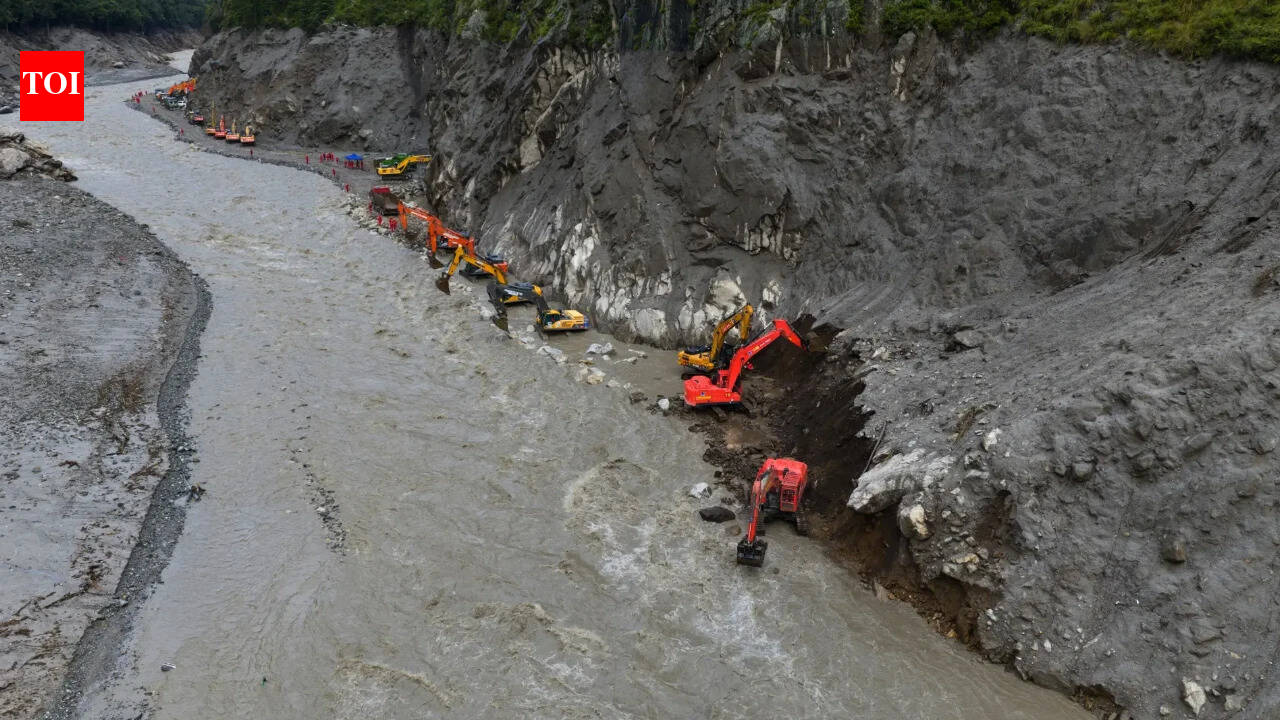
A catastrophic glacier collapse on the Nepal-China border has resulted in hundreds of deaths and thousands missing, exposing critical gaps in cross-border data sharing. Experts warn that unchecked Himalayan infrastructure development is exacerbating the vulnerability of the region to such climate-driven disasters.
The Himalayan Crisis: A Border-Spanning Catastrophe
The catastrophic events of August 26, triggered by a massive glacier collapse along the Nepal-China border, have claimed hundreds of lives and left thousands missing, including a significant number of Indian nationals. Current reports from Nepali authorities indicate a staggering toll, with 903 confirmed dead and 4,247 individuals still unaccounted for. Among the missing are 933 workers trapped within hydropower project tunnels, highlighting the severe human cost of industrial activity in high-risk zones. On the Chinese side, Gyirong County has reported 16 fatalities and 546 missing persons, underscoring the cross-border nature of this environmental disaster.
The Failure of Transboundary Data Sharing
This tragedy has exposed a dangerous void in regional cooperation: the lack of robust, real-time cross-border disaster data sharing between Nepal and China. In the complex geography of the Himalayas, where watersheds and glacial systems transcend political borders, the absence of a unified warning mechanism leaves downstream populations dangerously exposed. The scale of the missing persons tally suggests a failure in early warning systems, which are essential for managing the volatile risks posed by glacial lake outbursts and sudden flood events.
Infrastructure Development and Ecological Fragility
Geo-scientist C.P. Rajendran of the National Institute of Advanced Studies has issued a stark warning regarding the regional infrastructure boom. Governments across the Himalayan belt have been aggressively pursuing projects including dams, tunnels, railways, and highways. According to Rajendran, these projects are often executed with insufficient regard for ecological consequences, leading to destabilized slopes and reduced river efficiency. This development spree is systematically undermining the natural resilience of the Himalayan landscape.
Historical Context: A Pattern of Disaster
This event is not an isolated anomaly but rather part of a recurring pattern of climate-induced catastrophes in the region. It bears significant comparison to previous disasters such as the 2013 Kedarnath floods and the 2021 Chamoli and Raini floods in Uttarakhand. These historical precedents demonstrate that the combination of unstable mountainous terrain and rapid, poorly planned human intervention creates a volatile environment where small climatic triggers can lead to mass casualty events.
The Future of Himalayan Sustainability
Moving forward, the Nepal-China border disaster must serve as a foundational case study for regional policy reform. If governments continue to prioritize rapid infrastructure expansion over rigorous geological and environmental impact assessments, the frequency and severity of such disasters are likely to rise. Future trends suggest a critical need for integrated disaster management, stricter zoning laws, and a move toward climate-resilient engineering that respects the delicate, shifting geology of the world's youngest mountain range.
Conclusion
The human toll of the August 26 disaster is a grim testament to the risks of ignoring environmental constraints in the Himalayas. As the search for the missing continues, the international community must focus on establishing transparent, data-driven cooperation across borders. Without a fundamental shift in how infrastructure is planned and governed in the high-altitude regions, the Himalayas will remain a zone of extreme vulnerability, where the intersection of human ambition and climate volatility produces recurring, preventable loss.