Micron (MU) Unveils Breakthrough Memory Product. It Says Much About the Memory Market
Source Entity
Yahoo Finance
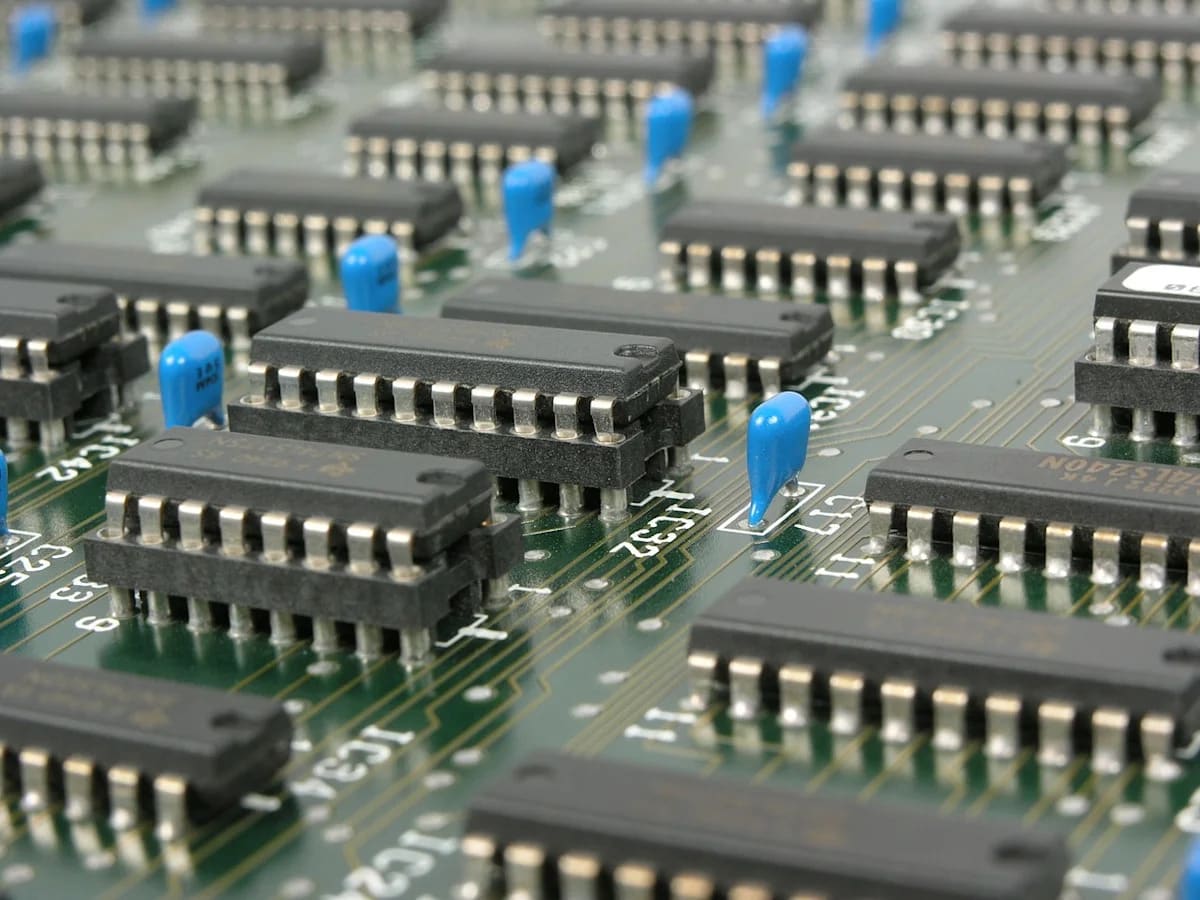
Micron has debuted the world's first 512GB DDR5 RDIMM server memory module, offering significant performance gains and power efficiency. This breakthrough marks a shift in data center architecture by enabling higher capacity and lower energy consumption.
Micron's Breakthrough in Server Memory Technology
On September 15, Micron Technology, Inc. (NASDAQ:MU) announced a landmark achievement in semiconductor engineering with the demonstration of the world’s first 512GB DDR5 RDIMM memory module designed specifically for servers. This innovation represents a critical leap forward in how data centers handle massive computational loads. By integrating higher density into a single module, Micron is addressing the growing physical and thermal constraints faced by modern server architectures, setting a new benchmark for the industry.
Technical Capabilities and Performance Gains
The technical specifications of this new module are particularly noteworthy. Capable of reaching speeds up to 9,200 MT/s, the 512GB RDIMM is engineered to push the boundaries of bandwidth for data-intensive applications. Furthermore, the module facilitates a total capacity of 12TB of DDR5 DRAM within a standard 24-slot dual-socket server configuration. This density is essential for environments that demand rapid access to immense datasets, such as large-scale cloud computing and high-performance computing (HPC) clusters.
Efficiency as a Competitive Advantage
Beyond raw performance, Micron has prioritized power efficiency, a critical metric for enterprise sustainability and operational cost management. The 512GB module operates at a power consumption level of just 16 watts. When compared to the 44.2 watts required by four 128GB modules to achieve equivalent capacity, Micron’s design provides a reduction in power usage of over 60%. This efficiency gain is not merely an incremental improvement; it is a significant reduction in the total cost of ownership (TCO) for data center operators who are increasingly focused on energy-efficient infrastructure.
Impact on Analytics and Data Workloads
The performance improvements extend directly to real-world application benchmarks. Micron reports that the new module delivers up to 1.4 times higher performance compared to previous 256GB DDR5 configurations in specific analytics workloads. This capability allows organizations to process complex queries and model training tasks more rapidly, effectively reducing the time-to-insight for data-driven businesses. As artificial intelligence and machine learning models grow in complexity, such hardware acceleration becomes indispensable.
Future Trends in the Memory Market
This announcement serves as a bellwether for the broader memory market, signaling a shift toward higher-capacity, lower-power solutions. As the industry moves away from legacy configurations that require more physical modules—and thus more power and space—to reach high-capacity targets, single-module solutions like Micron’s will likely become the standard for next-generation server builds. The ability to consolidate memory density while simultaneously lowering thermal output will be a defining feature of the next decade of data center evolution.
Conclusion
Micron’s successful demonstration of the 512GB DDR5 RDIMM is a testament to the ongoing innovation in the semiconductor sector. By simultaneously enhancing speed, capacity, and energy efficiency, the company is positioning itself to lead the infrastructure requirements for the next generation of computing. As these modules reach wider adoption, they will undoubtedly play a pivotal role in shaping the efficiency and performance standards of the global server market.