Revisit policy of banning social, political groups in J&K: Mirwaiz Umar Farooq
Source Entity
India Latest News: Top National Headlines Today & Breaking News | The Hindu
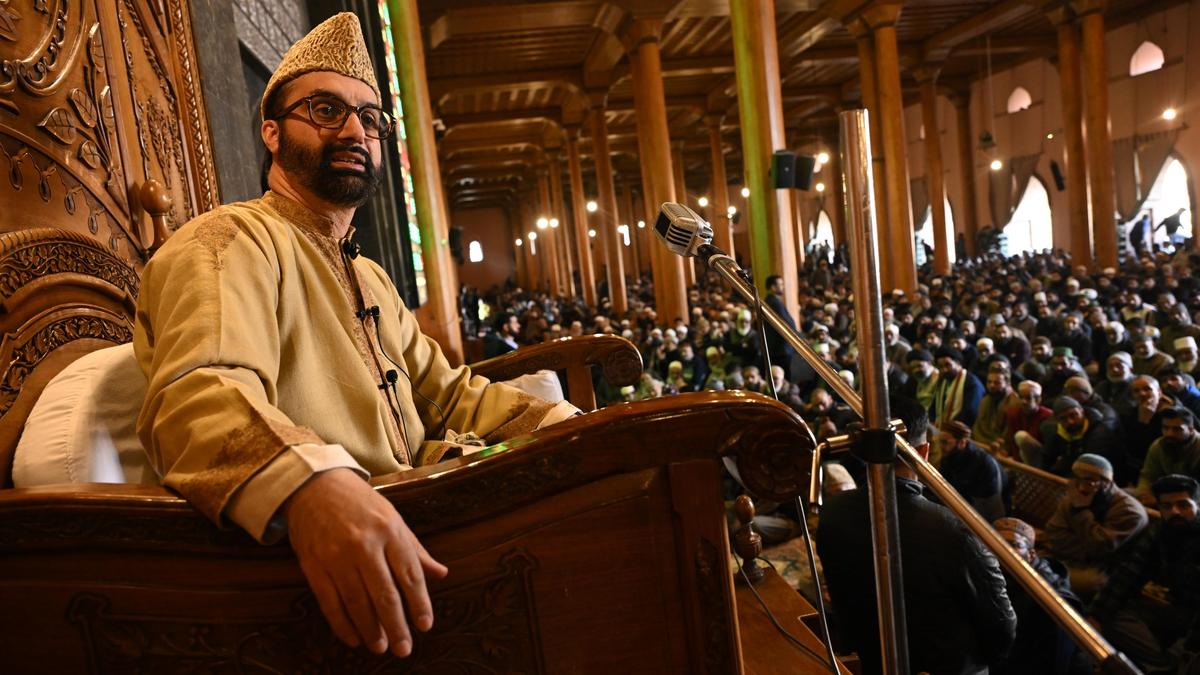
Mirwaiz Umar Farooq has urged the Indian government to reconsider its policy of banning social and political organizations in Jammu and Kashmir. This follows comments from former Jamaat-e-Islami chief Ghulam Muhammad Bhat, who signaled a legal push to lift bans on his group to foster stability.
The Call for Political Re-engagement in Jammu and Kashmir
Kashmir’s chief cleric, Mirwaiz Umar Farooq, has issued a significant appeal to the central government, urging a shift in the current policy regarding the prohibition of various social and political entities within Jammu and Kashmir. Speaking on September 8, 2026, the Mirwaiz emphasized that the foundation of a sustainable political process in the region cannot be established through the exclusion of authentic voices or the promotion of politically convenient alternatives.
The Context of the Jamaat-e-Islami Ban
The Mirwaiz’s statement comes in direct response to a public declaration by Ghulam Muhammad Bhat, the former amir (chief) of the banned Jamaat-e-Islami (JeI). Mr. Bhat recently released a video message aimed at distancing the organization from certain political factions, while simultaneously announcing an intent to pursue legal avenues to challenge the existing government ban. This development highlights a potential shift in how legacy organizations are attempting to navigate the current legal and political landscape under the restrictions imposed by New Delhi.
Addressing the Climate of Intimidation
A core component of the Mirwaiz's argument is the tangible impact of these bans on the local population. He explicitly highlighted that the policy of banning organizations is accompanied by widespread harassment and intimidation. By calling for an end to these practices, he is advocating for a more permissive political environment where civil society organizations can function without the constant threat of state-sanctioned suppression, which he views as a necessary prerequisite for genuine peace and stability.
Challenges to Sustainable Political Processes
The Mirwaiz’s critique touches upon a fundamental tension in Kashmir’s political evolution: the struggle between top-down security policies and the organic growth of political participation. He argues that replacing established or influential voices with 'convenient alternatives' undermines the legitimacy of the political process. This perspective suggests that long-term stability is contingent upon the inclusion of diverse, even if challenging, viewpoints rather than the engineering of a controlled political narrative.
Future Implications for Regional Stability
The intersection of the JeI’s legal challenge and the Mirwaiz’s public intervention suggests that there is a growing push for a recalibration of New Delhi’s strategy. If the government chooses to engage with these calls for review, it could mark a transition toward a more inclusive approach to regional governance. Conversely, a refusal to revisit these policies may continue to foster a sense of alienation among groups that seek to operate within legal frameworks but currently find themselves sidelined by sweeping prohibitions. The coming months will likely determine whether these calls for dialogue lead to a substantive policy shift or remain as rhetorical appeals in a complex political environment.
Verification Required?