Model Routing Is Simple. Until It Isn’t.
Source Entity
Hugging Face - Blog
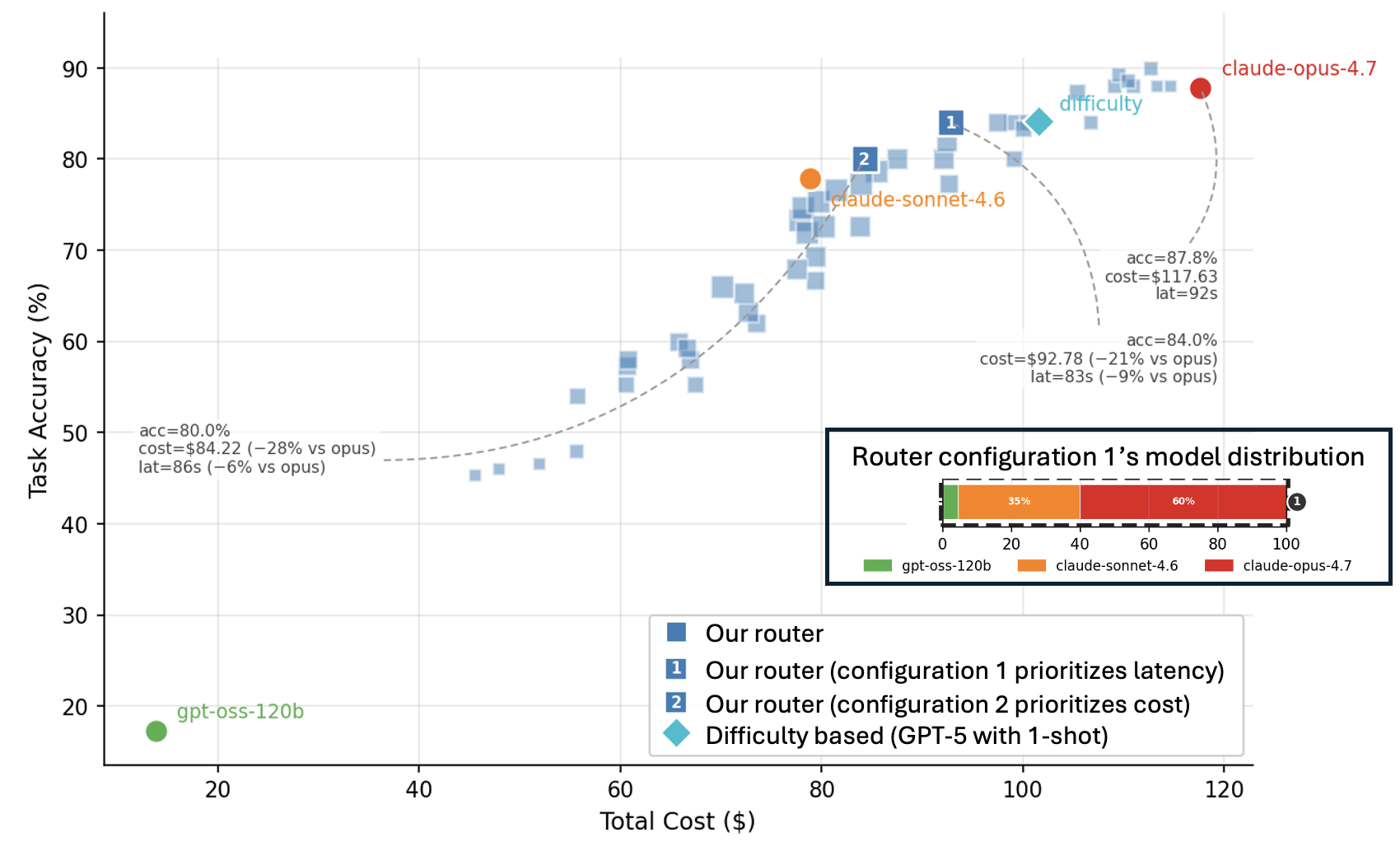
An analysis of the technical and operational challenges associated with model routing in AI agents, specifically the balance between cost-efficiency and output quality.
The Paradox of Model Routing in Enterprise AI
Model routing represents a critical architectural decision for organizations deploying Large Language Model (LLM) agents at scale. At its surface, the concept is an exercise in economic optimization: the goal is to direct simple, routine queries to smaller, faster, and cheaper models (such as distilled versions or specialized SLMs), while reserving high-reasoning, expensive frontier models for complex tasks. This tiered approach aims to drastically reduce token expenditure and latency, ensuring that the enterprise does not 'overspend' compute on trivial requests.
The Illusion of Simplicity
Initially, implementing a router seems straightforward. Developers often employ a basic classifier—sometimes a keyword-based system or a lightweight prompt-based evaluator—to categorize incoming requests. If a request is identified as a 'simple' task, such as a greeting or a basic data retrieval, it is routed to a low-cost model. However, the 'simplicity' of this approach vanishes when the nuance of human language enters the equation. The primary challenge lies in the precision of the routing logic; a misclassification that sends a complex reasoning task to a cheap model results in a 'hallucination' or a failure in logic, directly impacting the end-user experience.
The Router's Dilemma: Overhead and Latency
As the routing logic becomes more sophisticated to avoid the aforementioned failures, a new problem emerges: the 'Router's Dilemma.' If the router itself becomes a complex model to ensure high accuracy, it introduces its own latency and cost overhead. When the time and compute spent deciding which model to use approach the cost of simply using the expensive model for every request, the economic benefit of routing is neutralized. This creates a technical tension where the system must be 'smart enough' to route correctly but 'lean enough' to remain an optimization rather than a bottleneck.
Strategic Implications for Enterprise Scaling
From a broader strategic perspective, model routing is a prerequisite for the sustainable scaling of AI agents. As enterprises move from prototypes to production, the cost of API calls for millions of users becomes a significant operational expense (OpEx). The move toward a routed architecture reflects a shift in the industry from 'model-centric' thinking (finding one model that does everything) to 'system-centric' thinking (orchestrating a fleet of models). This transition allows companies to maintain high performance while keeping their margins viable, provided they can solve the reliability gap in their routing layers.
Future Trends: Dynamic and Semantic Routing
Looking forward, the industry is likely to move toward dynamic routing and semantic caching. Rather than static rules, future routers will likely use embeddings to map the 'semantic space' of a request, comparing it against a database of previously solved problems to determine the most efficient model path. We can also expect the rise of 'cascading' architectures, where a request starts with the cheapest model and is automatically 'escalated' to a more powerful model only if the initial output fails a confidence check or a validation step.
Conclusion
While the headline 'Model Routing Is Simple. Until It Isn’t' captures the frustration of many AI engineers, it highlights a necessary evolution in AI orchestration. The transition from simple routing to sophisticated, high-precision orchestration is where the real competitive advantage lies for enterprise AI. Success requires a rigorous understanding of the trade-offs between latency, accuracy, and cost, ensuring that the routing layer serves as an accelerator rather than a point of failure.