UPSC Key: Bishkek Declaration, Form 7, INS Nipun, and Distinguished Jurist
Source Entity
Raveena Baneta, Roshni Yadav
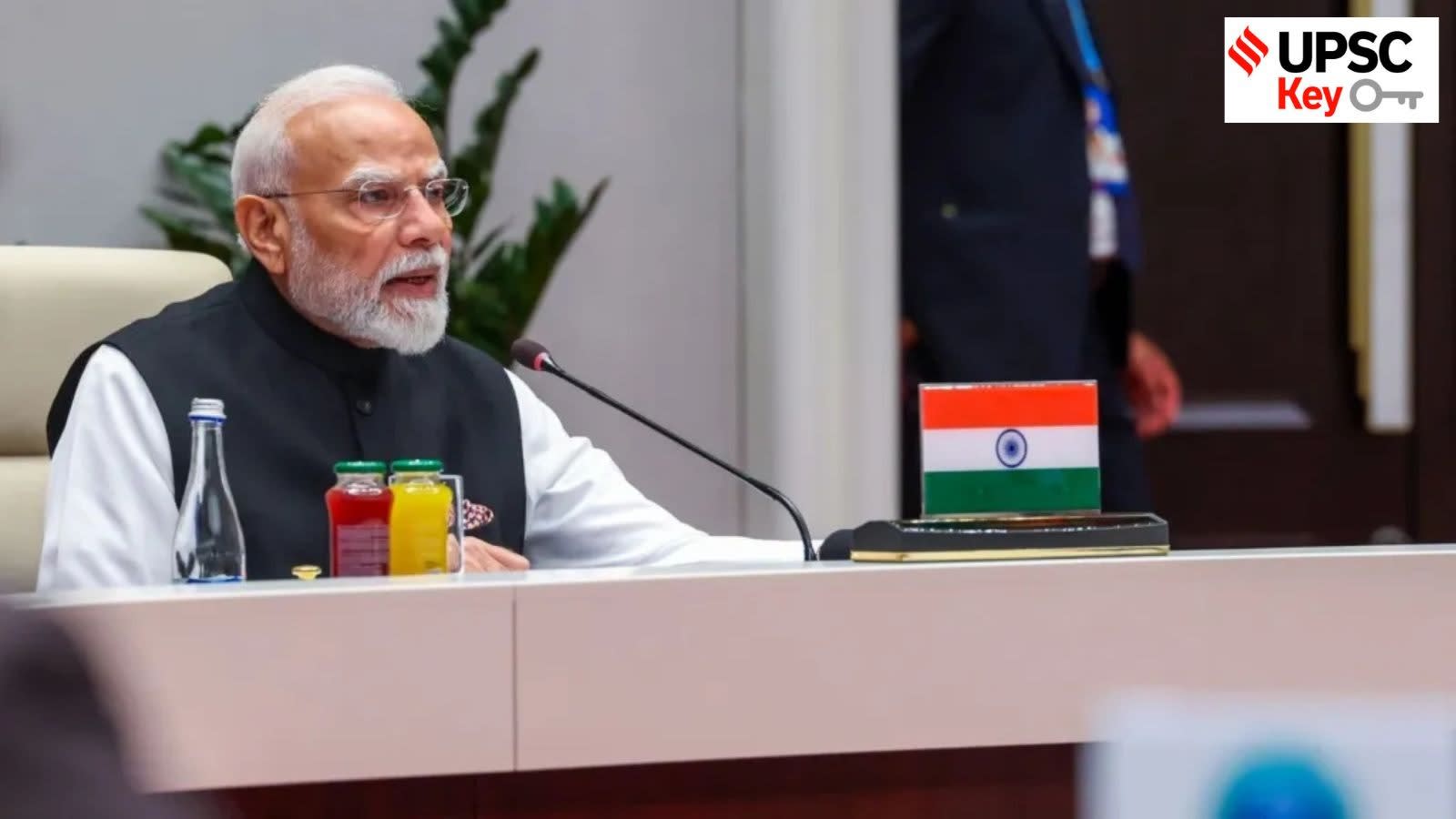
Prime Minister Modi has utilized the SCO summit to urge leaders from Russia and Iran to pursue peace in ongoing global conflicts. He emphasized a shift from endless war to cessation of hostilities while navigating complex trade and geopolitical partnerships.
India's Diplomatic Pivot: Advocating for Global Stability
At the recent Shanghai Cooperation Organization (SCO) summit in Bishkek, Prime Minister Narendra Modi has emerged as a central mediator, engaging in high-stakes bilateral discussions with both Russian President Vladimir Putin and Iranian President Masoud Pezeshkian. These meetings underscore India’s consistent foreign policy stance: that the current era is not one of war and that long-term global stability is incompatible with prolonged military conflict.
Addressing the Russia-Ukraine Conflict
During his meeting with President Vladimir Putin, Prime Minister Modi reiterated India’s firm commitment to peace, explicitly calling for a transition from an "endless war" to an "end of war." This rhetoric builds upon his long-standing position, first articulated in 2022, that solutions to modern conflicts cannot be found on the battlefield. By emphasizing that every day of continued violence represents a setback for humanity, India is positioning itself as a moral voice for cessation, even as it navigates the complexities of maintaining energy and trade relationships in the face of international sanctions.
Iran, Chabahar, and Regional Maritime Security
In parallel, the dialogue with Iranian President Masoud Pezeshkian focused on the critical intersection of economic cooperation and maritime security. The leaders reaffirmed their commitment to the development of the Chabahar port, a vital link in India’s regional connectivity strategy. By discussing the importance of maritime freedom and the protection of commercial shipping, both nations signaled a shared interest in insulating regional trade from the broader volatility currently gripping West Asia.
The Strategic Balancing Act
India’s dual approach—urging Russia toward peace while deepening economic ties with Iran—highlights the country's strategic autonomy. Despite the looming threat of US sanctions regarding Russian oil and the broader geopolitical tensions in West Asia, India continues to advocate for civilian safety and the protection of essential infrastructure. This approach reflects a pragmatic realism that seeks to balance national economic interests with the global necessity of stability.
Future Implications for Global Diplomacy
As the war in Ukraine enters its fifth year, the pressure on global leaders to find a diplomatic off-ramp is intensifying. PM Modi’s direct appeals serve to keep the conversation centered on peace rather than escalation. Looking ahead, India’s role as a potential bridge-builder is likely to grow, provided it can maintain its delicate balance between its traditional partners and its stated commitment to a rules-based international order.
Conclusion
In summary, the meetings in Bishkek represent a significant moment in Indian diplomacy. By publicly urging the cessation of hostilities in Ukraine and reinforcing economic and maritime security partnerships with Iran, Prime Minister Modi has clearly signaled that India intends to play an active, constructive role in steering the global community away from perpetual conflict and toward a framework of sustainable peace.
Multiple Citing Sources