"We Respect Other Forms Of Worship": RSS Chief Mohan Bhagwat In Ujjain
Source Entity
NDTV News Search Records Found 1000
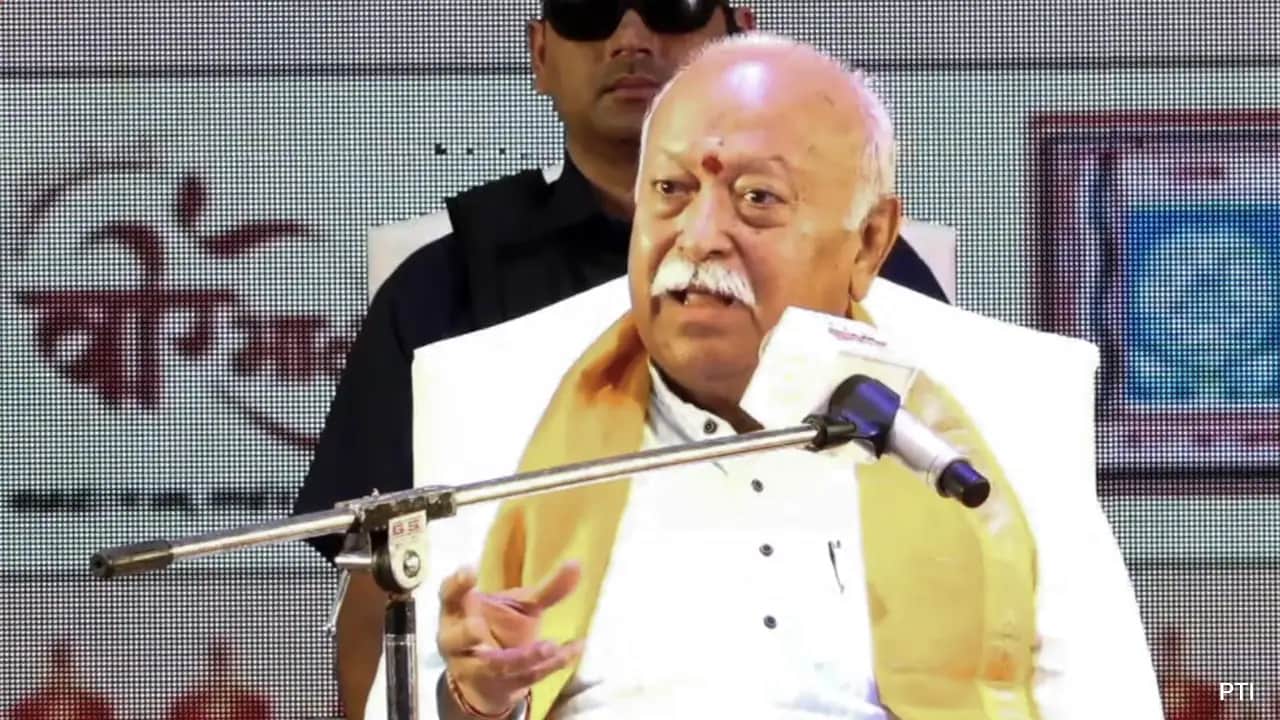
RSS Chief Mohan Bhagwat cautioned youth in Ujjain against ego and arrogance, emphasizing that global forces operate beyond individual control. He also challenged the Western definition of secularism, arguing that India's traditional values better reflect its cultural ethos.
Addressing Ego and Humility: The Ujjain Address
At the recent 'Yuva Dharma Sansad' held in Ujjain, Madhya Pradesh, Rashtriya Swayamsevak Sangh (RSS) chief Mohan Bhagwat addressed a gathering of young people with a message centered on the dangers of ego. Bhagwat articulated that a common misconception among modern individuals is the belief that they possess total agency over their surroundings and that events must unfold according to their personal desires. By using the metaphor of the Sun—which continues its natural cycle regardless of human belief or intervention—he reminded the youth that human influence is finite and subject to the natural order of rise and fall.
The Philosophical Critique of Modernity
Beyond the psychological warning against arrogance, Bhagwat used the platform to offer a critique of modern sociopolitical constructs. He explicitly labeled 'secularism' as a Western concept that does not align with India’s historical and traditional understanding of the relationship between religion and society. This statement highlights a core tenet of the RSS ideology, which seeks to distinguish between Western-imported frameworks and indigenous Indian traditions. By framing secularism as a foreign construct, the organization aims to promote a narrative that India's unique historical adherence to 'dharma' is a more suitable guide for its social cohesion.
Respect for Diversity in Worship
Despite his critique of secularism as a Western import, Bhagwat emphasized a pluralistic approach to religious practice within the Indian context. He urged the youth to maintain a sense of respect for their own chosen forms of worship while simultaneously honoring the practices of others. This nuance is significant, as it attempts to reconcile the RSS's focus on cultural identity with the practical necessity of maintaining harmony in a diverse nation. The message suggests that social stability in India is best achieved through mutual respect rather than the enforcement of abstract, foreign legalistic definitions of secularism.
Socio-Political Implications for Youth
By directing these remarks specifically to a 'Yuva Dharma Sansad' (Youth Religious Parliament), Bhagwat is actively shaping the discourse for the next generation of Indian leaders and citizens. The emphasis on humility and the rejection of ego serves as a behavioral framework intended to guide youth away from radicalization or entitlement. This approach posits that an understanding of one's place in the broader cosmic and historical order will foster a more disciplined and responsible citizenry.
Historical Context and Future Trends
Historically, the RSS has consistently advocated for a definition of Indian identity that is deeply rooted in 'Hindutva' or cultural nationalism. Bhagwat’s comments in Ujjain are a continuation of this long-standing objective to redefine national discourse by centering it on Indian tradition rather than Western democratic norms. Looking forward, we can expect the organization to continue distancing itself from Western political terminology, instead promoting indigenous concepts of 'dharma' as the primary mechanism for managing India's complex socio-religious landscape. This ideological positioning will likely remain a central point of debate in India's ongoing political and intellectual discourse.
Verification Required?