Mortgage rates hit highest level in 3 weeks, weakening demand further
Source Entity
US Top News and Analysis
Mortgage rates have climbed to a three-week high, leading to a decline in both purchase and refinance application volumes. This trend reflects ongoing volatility in the housing market as borrowing costs continue to exert downward pressure on demand.
The Impact of Rising Mortgage Rates on Housing Demand
Recent data indicates that the United States housing market is facing renewed headwinds as mortgage interest rates climbed to their highest levels in three weeks. This upward shift in borrowing costs has directly translated into a contraction in loan application volume, as reported by the Mortgage Bankers Association. The average contract interest rate for a 30-year fixed-rate mortgage rose to 6.78%, up from 6.77% the previous week, accompanied by an increase in associated points.
The Sensitivity of Refinancing to Rate Hikes
Refinance applications have proven to be the most responsive segment of the market regarding these fluctuations, experiencing a 2% decline over the week. Historically, homeowners are highly sensitive to marginal shifts in interest rates, as the financial incentive to refinance diminishes significantly when rates remain elevated. The fact that these applications are currently 17% lower than the same period last year underscores a broader trend of market stagnation for those looking to tap into home equity or lower their monthly debt obligations.
Broader Implications for the Real Estate Market
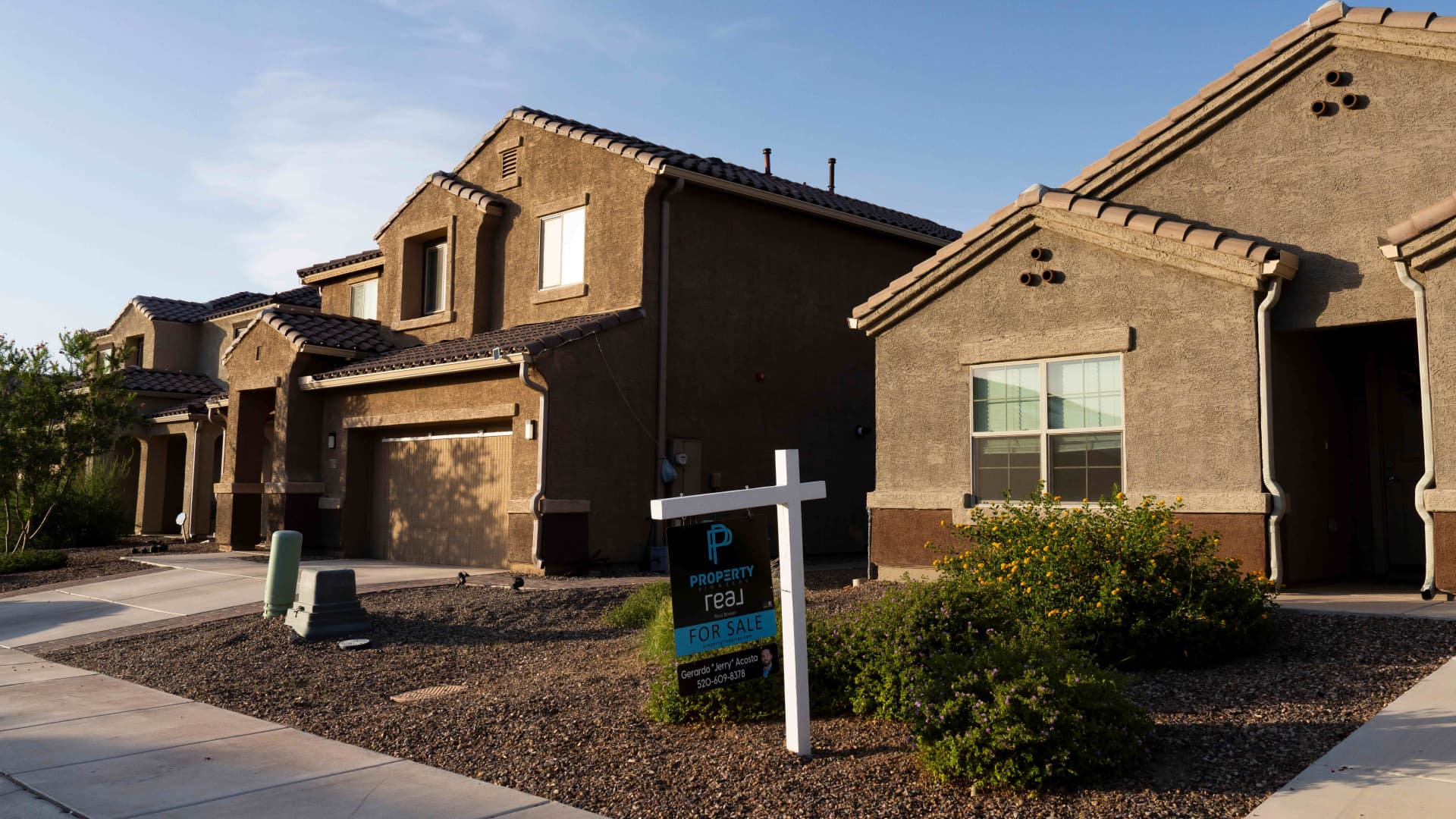
Beyond the raw numbers, the cooling of mortgage demand reflects a cautious consumer base grappling with the 'lock-in effect,' where existing homeowners are reluctant to sell their properties and lose the lower interest rates they secured in previous years. This supply-side constraint, coupled with the rising cost of new loans, creates a challenging environment for prospective buyers. The presence of 'For Sale' signs, such as those observed in Marana, Arizona, serves as a visual indicator of a market where inventory exists but transaction velocity is being throttled by the cost of capital.
Analyzing the Financial Mechanics
It is essential to note that the rise in rates is not merely a nominal change; the increase in points—from 0.65 to 0.66—adds to the upfront cost of securing a loan. For many borrowers, this compounding of higher interest rates and higher origination costs creates a double barrier to entry. As the Mortgage Bankers Association's seasonally adjusted index shows a 1% total drop in application volume, it becomes clear that the market is struggling to find a floor amidst persistent economic uncertainty.
Future Trends and Market Outlook
Looking ahead, the trajectory of the housing market will likely remain tethered to interest rate policy and broader inflationary trends. If rates continue to linger near or above current levels, we can expect a continued softening in purchase demand. Experts suggest that until there is a sustained downward movement in rates, the market will likely see reduced activity, as both buyers and sellers remain in a holding pattern. The persistence of these high rates suggests that the recovery of the housing sector will be a slow, iterative process rather than a swift rebound.