MP Parameswaran, Known For Controversial 'Fourth World' Theory, Dies At 91
Source Entity
NDTV News Search Records Found 1000
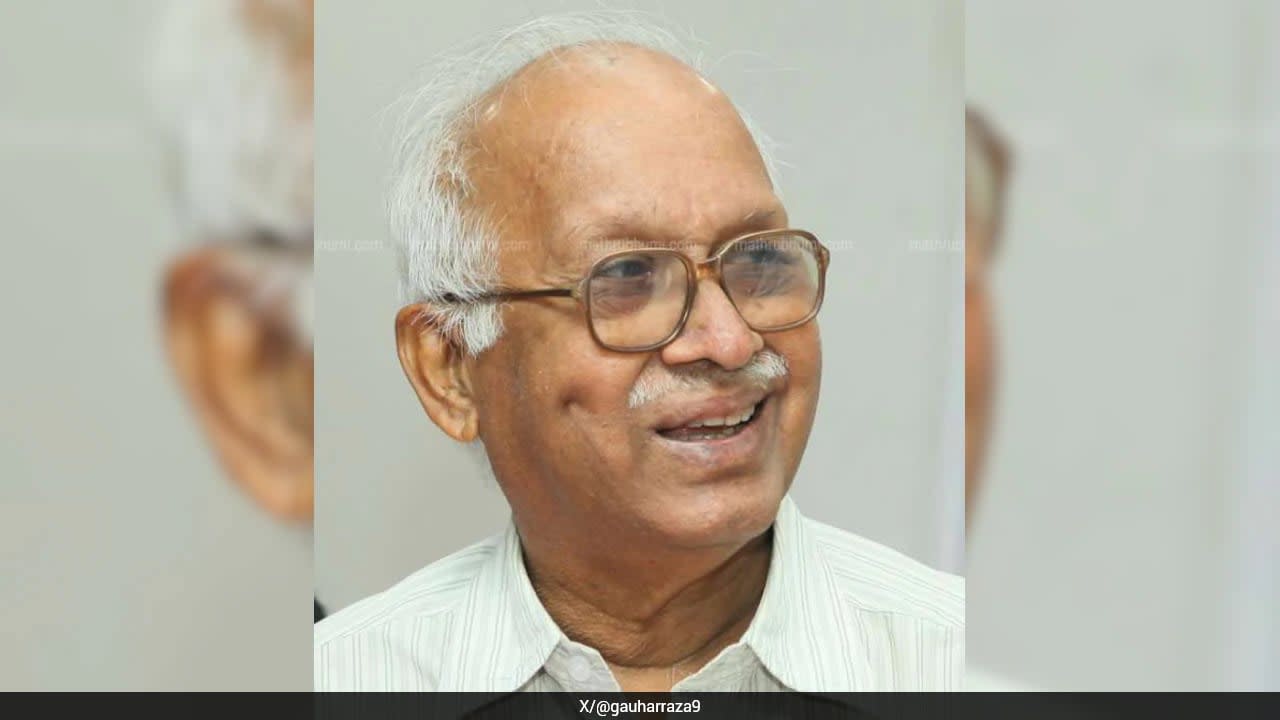
Renowned nuclear scientist, writer, and former CPI(M) theorist M.P. Parameswaran has passed away in Thrissur at the age of 92. He was a pivotal figure in the Kerala Sasthra Sahithya Parishad and gained significant notoriety for his controversial 'fourth world' theory, which led to his 2004 expulsion from the party.
The Legacy of M.P. Parameswaran: A Life of Science and Ideology
The passing of M.P. Parameswaran at the age of 92 marks the end of a multifaceted career that bridged the worlds of hard science and radical political theory. Born in 1935 in Thrissur, Kerala, his intellectual journey took him from the rigorous halls of the Bhabha Atomic Research Centre (BARC), where he served from 1957 to 1975, to the forefront of Kerala's popular science movements.
Scientific Foundations and KSSP Involvement
Parameswaran’s academic credentials were formidable, rooted in an engineering degree from Thiruvananthapuram and a PhD in Nuclear Engineering from the Moscow Power Institute. However, his lasting impact on Indian society was perhaps most felt through the Kerala Sasthra Sahithya Parishad (KSSP). As one of its earliest and most prominent members, he helped champion the goal of bringing scientific temper to the masses, blending his technical expertise with a commitment to social progress.
The 'Fourth World' Controversy
Perhaps the most defining, and divisive, chapter of his life was the development of his 'fourth world' theory. This intellectual framework, which sought to redefine social structures and political organizing, sparked intense debate within the Communist Party of India (Marxist). The friction caused by these radical ideas eventually culminated in his expulsion from the CPI(M) in February 2004, highlighting the tension between orthodox party line and independent intellectual inquiry.
A Prolific Intellectual Output
Beyond his political and scientific activism, Parameswaran was a dedicated writer. He authored numerous books in both Malayalam and English, effectively disseminating his ideas on science, technology, and social governance. His work served as a bridge between the academic community and the public, reflecting a lifelong endeavor to make complex socio-political concepts accessible.
Broader Implications and Historical Context
Parameswaran's life serves as a case study for the evolution of the Indian Left’s relationship with intellectuals. His transition from a mainstream nuclear scientist to a revolutionary theorist mirrors the complex trajectory of Kerala’s socio-political landscape over the last half-century. His life underscores the volatility of combining scientific rationalism with grassroots political activism in a deeply ideological climate.
Conclusion
As we reflect on his death in August 2026, the legacy of M.P. Parameswaran remains a subject of significant interest. Whether viewed as an iconoclast or a revolutionary, his contribution to the public discourse in Kerala and his dedication to the popularization of science ensure that his influence will continue to be debated and analyzed by scholars of Indian political and scientific history for years to come.
Multiple Citing Sources
Verification Required?