‘Straight out of Hollywood disaster movie’: Fire in Mumbai Coastal Road tunnel, no casualties but a jam, many questions
Source Entity
Latest News: Today's Latest News Headlines from India & World | Hindustan Times | Hindustan Times
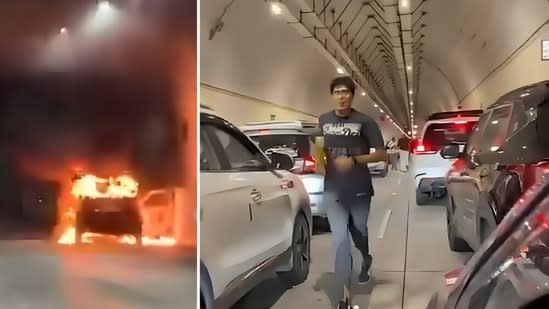
A vehicle fire in the Mumbai Coastal Road tunnel caused significant traffic congestion and sparked safety concerns, although no casualties were reported.
Incident Report: Vehicle Fire in Mumbai Coastal Road Tunnel
In a scene described by witnesses as being "straight out of a Hollywood disaster movie," a car caught fire within the tunnel of Mumbai's newly developed Coastal Road. While the incident fortunately resulted in no casualties, it triggered immediate chaos, leading to massive traffic jams and raising critical questions regarding the safety protocols and emergency preparedness of one of the city's most ambitious infrastructure projects.
The Anatomy of the Incident and Immediate Impact
The fire broke out suddenly, filling the confined space of the tunnel with thick smoke and creating a high-stress environment for commuters. In tunnel environments, the "chimney effect" can often exacerbate the spread of smoke, leading to disorientation and panic among drivers. The resulting traffic jam was not merely a consequence of the vehicle blockage but also a result of the sudden halt in traffic flow as drivers reacted to the visibility issues. The psychological impact of a fire in a subterranean or enclosed passage is significantly higher than an open-road accident, which explains the dramatic comparisons to cinema disaster films.
Critical Analysis of Tunnel Safety Infrastructure
This event brings the technical specifications of the Mumbai Coastal Road's tunnel safety systems into sharp focus. Modern tunnels are typically equipped with several layers of protection, including:
- Ventilation Systems: High-capacity jet fans designed to push smoke in a specific direction to allow for safe evacuation.
- Fire Suppression: Integrated hydrants and automated sensors to alert control rooms the moment a temperature spike is detected.
- Emergency Exits: Clearly marked egress points that allow commuters to escape to a safe zone without returning through the traffic jam.
The fact that this incident caused a significant jam and sparked "many questions" suggests a potential gap between the installation of these systems and their operational efficiency during a real-world crisis.
Broader Implications for Urban Infrastructure
Mumbai's shift toward tunnels to alleviate surface-level congestion represents a broader trend in global urban planning. However, the reliance on these "bottlenecks" creates a high-risk scenario where a single vehicle failure can paralyze an entire transport artery. This incident serves as a case study in the fragility of high-efficiency transit corridors. If a minor car fire can cause such disruption, the city must evaluate its response time for emergency services entering the tunnel and the effectiveness of the traffic management systems used to divert vehicles before they enter the hazard zone.
Historical Context and Future Safety Trends
Historically, tunnel fires have been some of the most lethal transit accidents globally due to smoke inhalation and trapped vehicles. While this specific event in Mumbai was non-lethal, it echoes the necessity for stringent "life safety" audits. Moving forward, we can expect a push toward smarter infrastructure, such as AI-driven thermal imaging cameras that can detect overheating engines before a fire even erupts, and more robust public communication systems (via digital signage) to warn drivers in real-time.
Conclusion: A Wake-Up Call for Coastal Road Management
Ultimately, while the lack of casualties is the most important outcome, the Mumbai Coastal Road tunnel fire is a cautionary tale. It highlights the thin line between a modern engineering marvel and a potential trap. To maintain public trust in these new transit routes, authorities must provide transparent reports on how the fire was extinguished and what systemic improvements will be made to ensure that a future incident does not escalate from a traffic jam into a tragedy.
Verification Required?