Ram Madhav writes | Opposition has no answer for Narendra Modi’s 25-year record
Source Entity
Ram Madhav
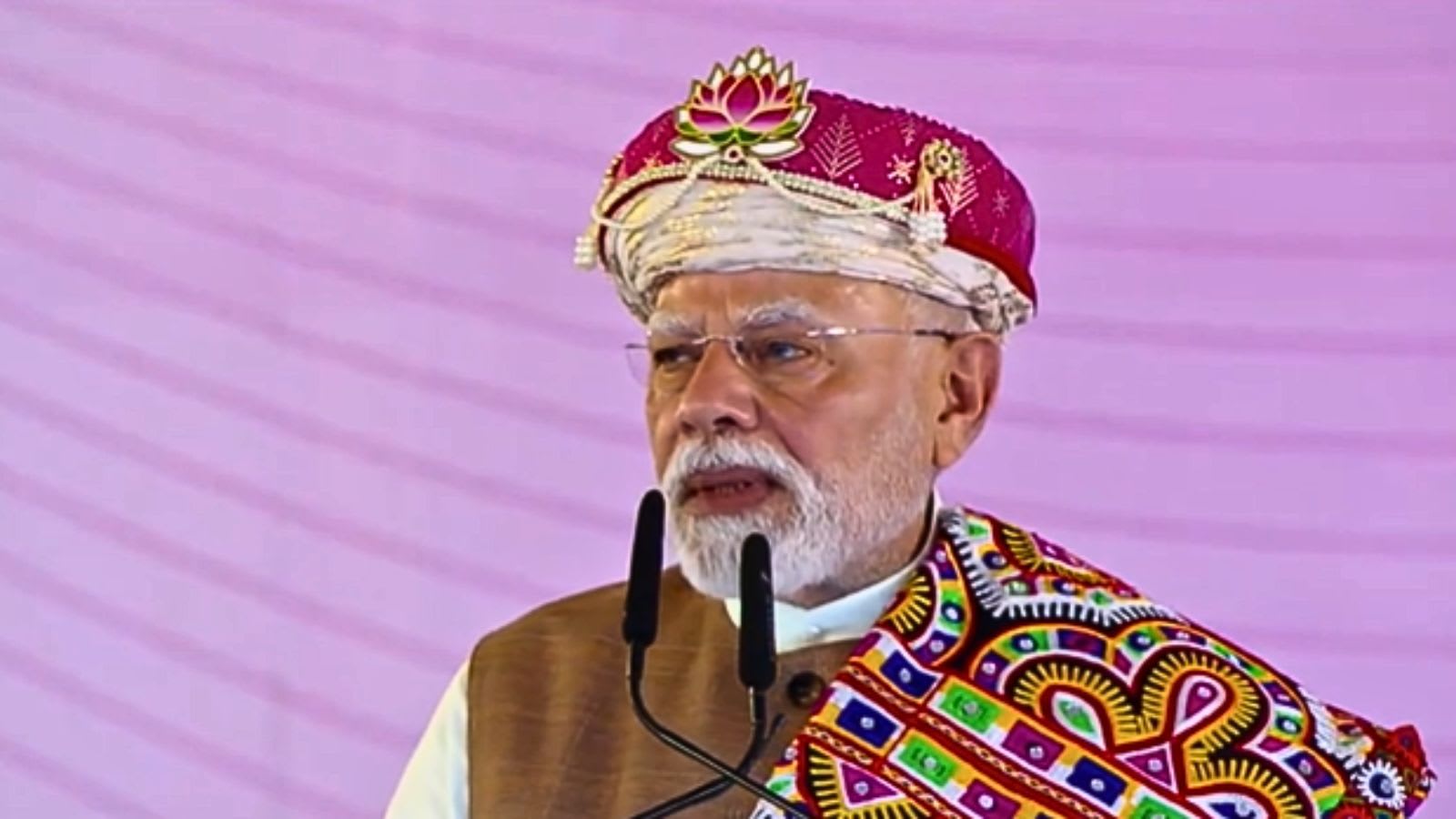
Narendra Modi has completed 25 years in continuous executive office, spanning his tenure as Gujarat's Chief Minister and India's Prime Minister. This milestone highlights a shift in Indian political leadership from dynastic succession to grassroots political success.
A Quarter-Century of Executive Leadership
October 7, 2024, marks a significant milestone in Indian political history: Narendra Modi has completed 25 years in continuous executive office. This tenure began on October 7, 2001, when he assumed the role of Chief Minister of Gujarat, a position he held until May 21, 2014. Subsequently, he transitioned to the national stage, serving as the Prime Minister of India since May 26, 2014. This duration of uninterrupted service is unprecedented for a leader in a major liberal democracy, setting a new benchmark for political longevity.
The Shift from Inheritance to Grassroots Politics
Political analysts contrast Modi’s ascent with the historical trajectory of the Nehru-Gandhi dynasty. While leaders like Jawaharlal Nehru, Indira Gandhi, and Rajiv Gandhi secured mandates through inheritance-based political structures, Modi’s career is defined by his climb through the party apparatus. By winning successive electoral battles without the benefit of familial political capital, Modi has fundamentally altered the narrative of leadership in India, moving away from the dynastic politics that defined the post-independence era.
Comparing Electoral Mandates
Historical context reveals the rarity of Modi’s electoral success. Previous leaders, including Indira Gandhi and A.B. Vajpayee, faced significant electoral losses that interrupted their tenures. Indira Gandhi, despite her 1967 and 1971 victories, suffered a defeat in 1977. Similarly, Vajpayee’s consecutive wins in 1998 and 1999 concluded with a loss in 2004. Modi’s ability to maintain executive power for 25 years suggests a unique level of electoral resilience and a sustained mandate that differentiates him from his predecessors.
Governance as a Tool for Social Change
Central to Modi’s political longevity is his redefined approach to governance, summarized by the mantra 'Sabka Saath, Sabka Vikas, Sabka Vishwas, Sabka Prayas.' The focus has been on transforming the lives of ordinary citizens by providing basic necessities that were previously absent. For many, this has meant the delivery of tangible goods—electricity, piped drinking water, cooking gas cylinders, and sanitation facilities—which are framed not as abstract statistics, but as essential improvements to the quality of life.
Future Implications and Political Strategy
Looking ahead, the opposition's struggle to counter this 25-year record highlights a significant challenge in the current political landscape. By prioritizing direct service delivery, Modi has created a new standard for what the electorate expects from governance. As the political discourse continues to evolve, the emphasis on 'solutions-oriented' politics is likely to remain a central theme, pressuring future leaders to demonstrate similar tangible results to secure and maintain public trust.
Conclusion
In summary, the 25-year milestone is more than just a chronological achievement; it represents a transformation in how power is exercised and perceived in India. From his early days in Gujarat to his current tenure as Prime Minister, Modi’s career has been characterized by a consistent effort to address the basic needs of the poor, fundamentally reshaping the expectations of the Indian voter and defining the modern era of the nation's governance.