NASA, for the time being, is unable to move the space station's large robotic arm
Source Entity
Eric Berger
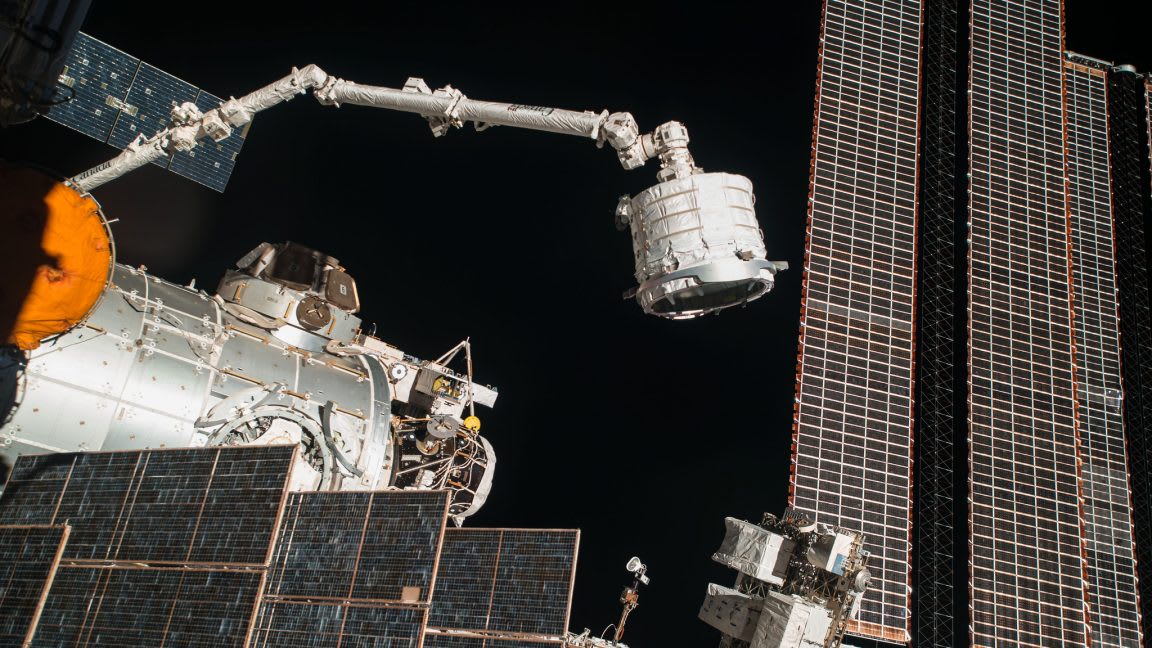
NASA is currently investigating technical issues involving the International Space Station's Canadarm2 following a routine maneuver. Engineers are working to determine if the malfunction stems from data or software errors.
Technical Challenges Aboard the ISS: Canadarm2 Operations
The Role of Canadarm2
The International Space Station (ISS) relies heavily on the Canadarm2, a 58-foot-long robotic arm provided by the Canadian Space Agency. This sophisticated piece of engineering is essential for station maintenance, capturing visiting cargo vehicles, and assisting astronauts during spacewalks. Its unique ability to perform a "walk-off" maneuver—moving like an inchworm by attaching its ends to different points on the station—makes it a versatile and critical component of the orbiting laboratory's infrastructure.
The Recent Operational Incident
During a recent routine walk-off maneuver, the Canadarm2 and its associated mobile transporter, which facilitates movement along the station’s main truss, encountered operational difficulties. While the exact nature of the malfunction remains under investigation, the event has prompted NASA to halt further movements of the arm. This pause is a standard safety protocol, ensuring that no further stress is placed on the hardware until the root cause is identified.
Investigation into Data and Software
NASA officials are currently evaluating the situation, with initial assessments focusing on potential data or software-related anomalies. Because the arm relies on a complex digital interface to coordinate its movements and communicate with the station's central systems, a minor software glitch or a data transmission error could easily disrupt its precise mechanical functions. Engineers are working to isolate whether the issue is transient or indicative of a deeper systemic failure.
The Complexity of Space Maintenance
Operating robotics in a microgravity environment presents unique challenges that differ significantly from terrestrial engineering. The Canadarm2 is subject to extreme thermal cycling and radiation, which can affect electronic components over time. The current investigation reflects the high level of caution required when managing equipment that is vital to the safety of the crew and the longevity of the ISS mission.
Implications and Future Outlook
For the time being, the robotic arm remains stationary as teams analyze telemetry data to restore full functionality. While NASA has indicated that the problem may be temporary, the incident serves as a reminder of the fragility of human-made structures in low Earth orbit. As the ISS continues to age, the reliability of its primary robotic assets remains a top priority for mission planners to ensure the station can continue its scientific objectives uninterrupted.
Conclusion
While the current operational pause is concerning, it remains a controlled situation. The expertise of the ground crews investigating the software and data pathways provides a clear path toward resolution. As the investigation continues, the focus remains on restoring the arm to its full operational capacity to support future station maintenance and logistics.