In 2025, scientists poured 16,500 gallons of pink lye into the ocean; early results show the water absorbed more carbon
Source Entity
Latest News: Todays Latest News Headlines from India & World | Hindustan Times | Hindustan Times
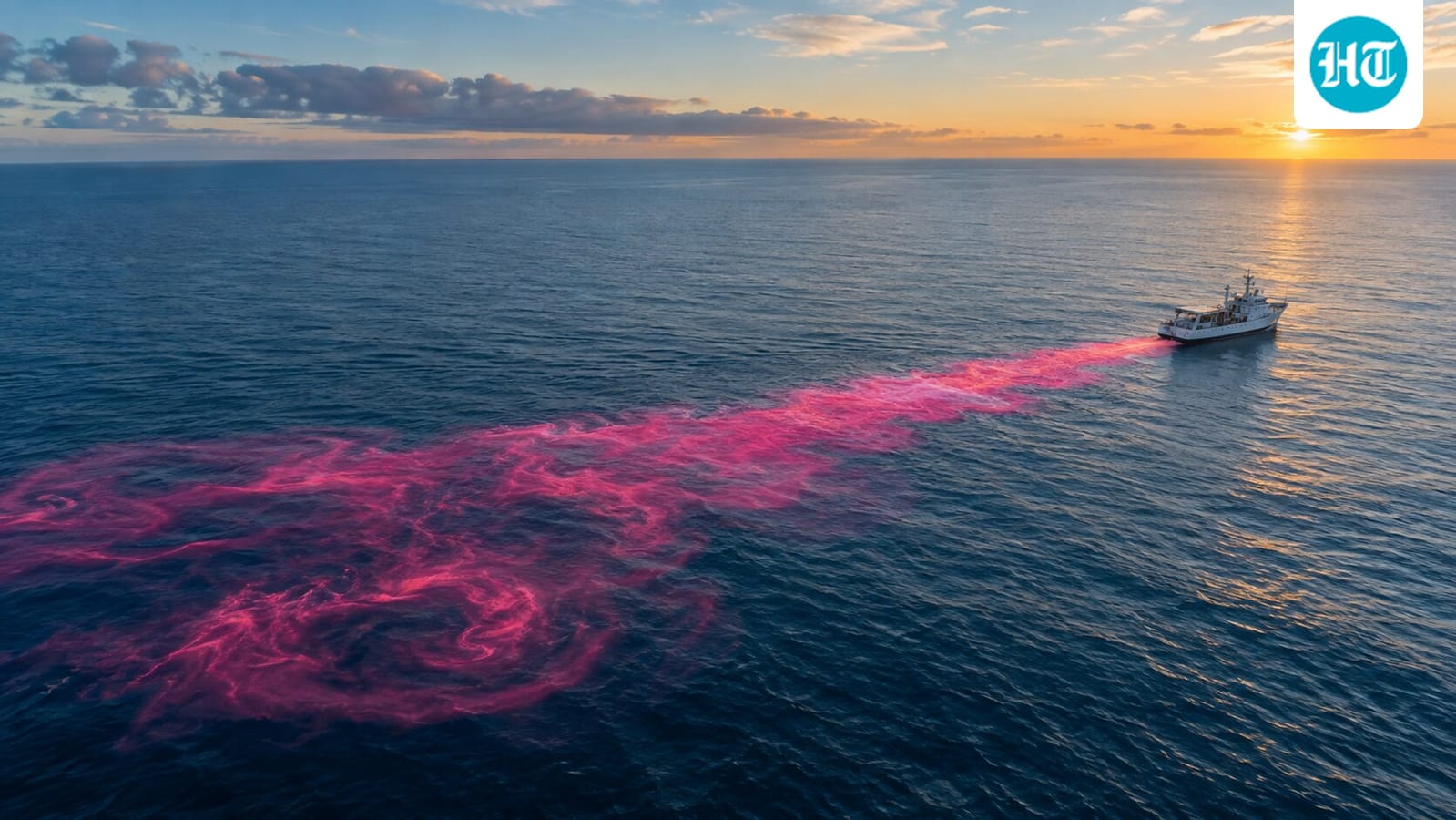
Scientists successfully conducted an ocean alkalinity enhancement trial in the Gulf of Maine by releasing 16,500 gallons of purified lye. The experiment aimed to increase carbon absorption, with initial findings indicating no harm to marine life.
Ocean Alkalinity Enhancement: A New Frontier in Climate Mitigation
In a landmark environmental experiment conducted in 2025, researchers released 16,500 gallons of highly purified pink lye into the Wilkinson Basin of the Gulf of Maine. This trial, the first of its kind permitted by the Environmental Protection Agency (EPA), represents a significant step in testing Ocean Alkalinity Enhancement (OAE) as a viable strategy to combat global warming. By introducing an alkaline substance into the seawater, scientists aim to alter the ocean's chemistry to increase its capacity to absorb atmospheric carbon dioxide, potentially mitigating the impacts of climate change.
The Mechanics of the Wilkinson Basin Trial
The operation involved the controlled release of the lye over a six-hour period from a vessel operating in federal waters. To ensure accurate tracking and data collection, the team utilized Rhodamine Water Tracer—a compound that appears as a vibrant pink hue when diluted in seawater. This allowed the researchers to maintain a visual and physical lock on the treated patch of water, facilitating precise monitoring of how the alkaline plume interacted with the surrounding marine environment. The choice of highly purified lye, a substance commonly used in municipal water treatment to balance pH levels, was intentional to ensure minimal contamination risk.
Scientific Context and Historical Backing
This experiment did not emerge in a vacuum; it is the culmination of years of theoretical research and policy evaluation. In 2022, the National Academies of Sciences, Engineering, and Medicine published a comprehensive report analyzing six potential methods for large-scale carbon removal from the ocean. The committee explicitly identified alkalinity enhancement as a candidate for further exploration, provided it is conducted with rigorous safety and environmental standards. This 2025 trial serves as a direct, real-world application of those recommendations.
Environmental Safety and Marine Impact
The most critical concern for any geoengineering project is the potential for ecological disruption. Preliminary results from the Gulf of Maine trial are promising, showing that local marine life sampled in the vicinity of the treated patch exhibited no signs of harm. By utilizing a substance that is already standard in water chemistry management, the researchers sought to prevent the introduction of toxic pollutants. However, the scientific community remains cautious, emphasizing that these early findings are just the beginning of a long-term assessment process.
Broader Implications for Global Climate Strategy
The ocean serves as the planet's largest natural carbon sink, absorbing a massive percentage of the carbon dioxide generated by human activity. While this absorption has historically slowed the pace of global warming, it has also led to ocean acidification, which threatens marine ecosystems. By artificially enhancing the ocean's ability to absorb carbon, scientists hope to create a dual-benefit scenario: reducing atmospheric CO2 levels while potentially stabilizing seawater pH.
Future Trends and Challenges
As the world looks toward 2030 and beyond, the scalability of such projects will become the central focus. If further trials continue to demonstrate safety and efficacy, the international community may look to expand OAE programs globally. However, the path forward requires a delicate balance between urgent climate intervention and the necessity for extreme caution to prevent unintended long-term ecological consequences. The success of the 2025 Gulf of Maine trial provides a foundational data set that will inform future regulatory frameworks and scientific methodologies in the fight against climate change.
Verification Required?