Marxist to Hindutva: How NCERT history book rows mirror a battle for India’s past
Source Entity
Vikas Pathak
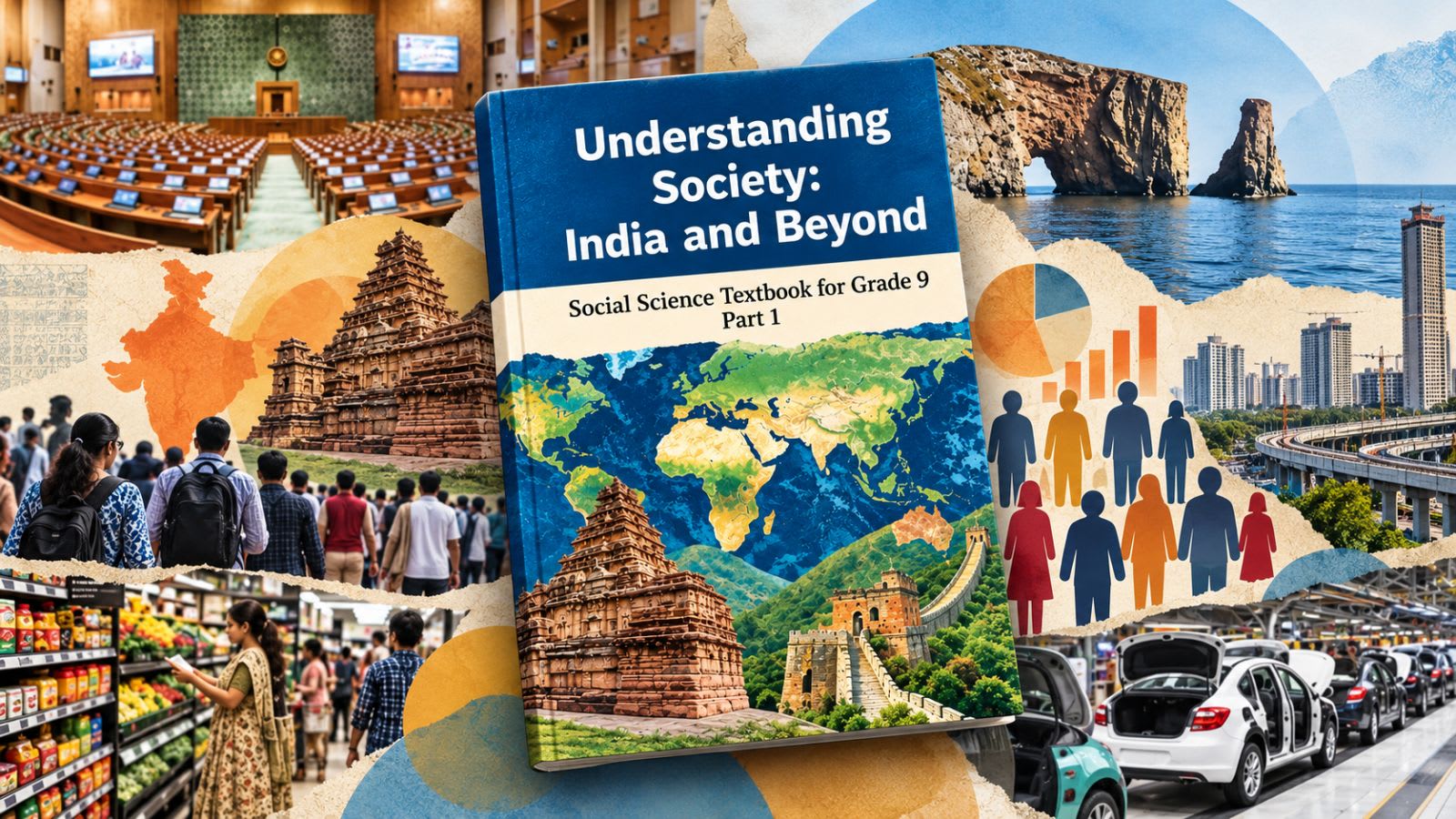
NCERT's new Class 9 textbook, 'Understanding Society – India and Beyond,' shifts its historical focus from composite culture to local resistance against medieval rulers. This change signals a broader ideological realignment in Indian educational historiography.
The Ideological Shift in Indian Historiography
The recent release of the NCERT Class 9 social science textbook, Understanding Society – India and Beyond, has ignited a significant debate regarding the pedagogical approach to medieval Indian history. By centering the narrative on the resistance offered by local kings against the Delhi Sultans and the Mughals, the new curriculum marks a departure from previous decades of historical discourse that emphasized the synthesis of Indo-Islamic influences. This shift reflects a deliberate move to re-evaluate the medieval era through the lens of indigenous resistance rather than cultural integration.
Moving Away from the 'Composite Culture' Model
For many years, Indian history textbooks were characterized by a focus on the 'composite culture' that emerged during the medieval period. This framework analyzed how Islamic and indigenous traditions blended to form a unique socio-cultural fabric. However, the current NCERT revision prioritizes the conflicts and friction between local rulers and foreign dynasties. By providing only a cursory mention of the historical alliances between the Mughals and Rajput princes, the text de-emphasizes the nuance of political pragmatism that defined medieval Indian statecraft, choosing instead to highlight narratives of confrontation.
The Battle for National Identity
This transition in textbook content is not merely an academic exercise; it is a manifestation of a broader ideological struggle over India’s historical identity. History in India has long been a contested space where competing visions of nationhood seek validation. By reframing the medieval period, the current educational mandate suggests that the historical memory of the nation should be anchored in the resilience of local sovereignty rather than the acceptance of external administrative structures.
Implications for Pedagogical Standards
Critics argue that this reductionist approach risks oversimplifying complex historical realities. By downplaying cooperative alliances, students may gain an incomplete understanding of how medieval power dynamics actually functioned. History requires a multi-dimensional analysis; when textbooks lean heavily into a singular narrative of 'resistance,' they potentially obscure the intricate diplomatic and social interdependencies that allowed these civilizations to function for centuries.
Future Trends in Educational Policy
Looking ahead, it is likely that this trend of 'decolonizing' or 're-indigenizing' the curriculum will continue to face intense scrutiny from academic circles and political stakeholders. As the NCERT continues to update its materials, the tension between traditional academic historiography and contemporary ideological narratives will likely remain a hallmark of Indian education policy. Educators must now navigate the challenge of presenting these new standards while maintaining the critical inquiry necessary for a comprehensive understanding of the past.
Conclusion: The Persistent Search for Truth
Ultimately, the revision of the Class 9 textbook highlights the power of educational institutions to shape collective memory. Whether this shift represents a necessary correction or a problematic narrowing of historical perspective remains a subject of intense debate. As India continues to define its place in the modern world, the battle over its past serves as a crucial indicator of the country's evolving socio-political landscape.