NEET UG 2026 recorded responses released at neet.nta.nic.in; NTA opens OMR challenge window
Source Entity
TOI Education
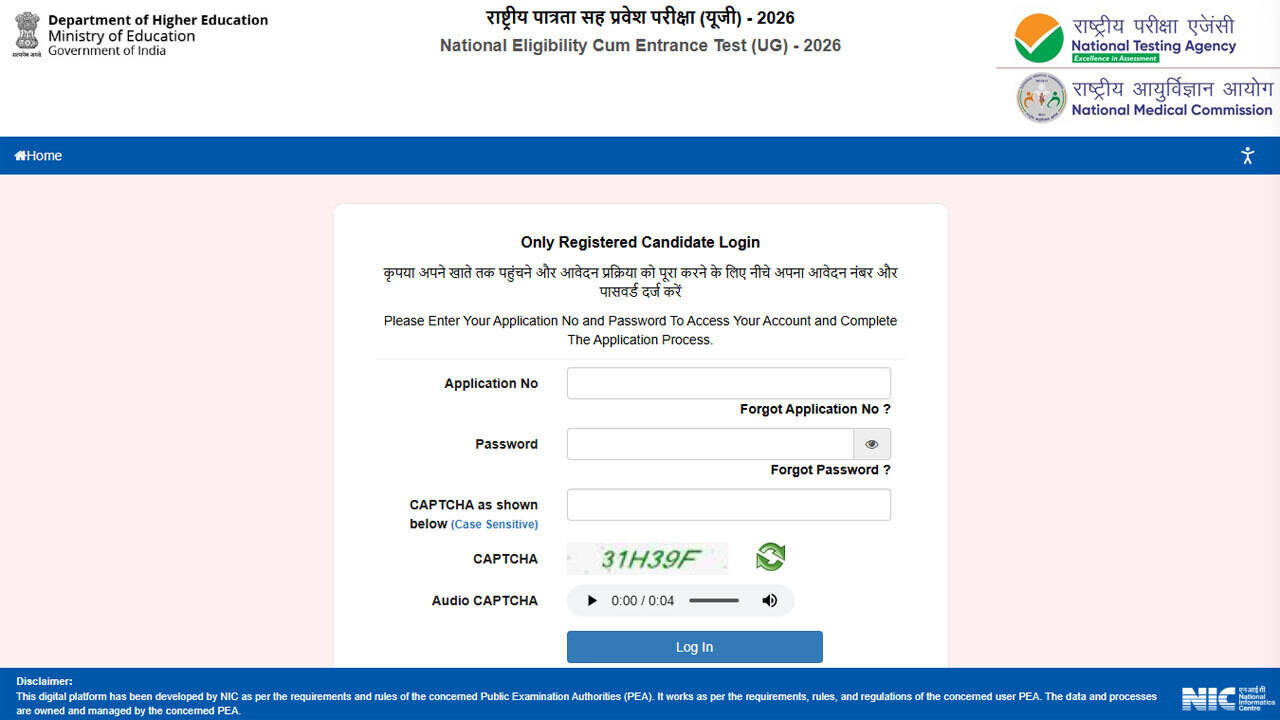
The National Testing Agency has released the scanned OMR answer sheets and recorded responses for NEET UG 2026 re-examination candidates. Applicants can review their records and raise online objections against recorded responses until 11.00 am on July 15, 2026, by paying a processing fee of Rs 200 per challenge. NTA has clarified that the answer key challenge process has already ended, and no further objections against the answer key will be accepted.
NTA Opens OMR Challenge Window for NEET UG 2026 Re-examination
The National Testing Agency (NTA) has officially released the scanned OMR answer sheets and recorded responses for candidates who appeared in the NEET UG 2026 re-examination. This critical phase of the examination cycle allows aspirants to verify that their responses were accurately captured by the NTA's optical marking recognition systems. Candidates are granted a specific window to review their records and lodge formal objections against any discrepancies in their recorded responses until 11:00 AM on July 15, 2026. To maintain the integrity of the process and deter frivolous claims, the NTA has implemented a processing fee of Rs 200 for each challenge raised.
Understanding the Distinction: Recorded Responses vs. Answer Keys
A pivotal aspect of this announcement is the NTA's explicit clarification that the window for challenging the answer key has already closed. It is essential for candidates to understand the technical difference between these two processes. While an answer key challenge disputes the correctness of the official solution provided by the NTA, a recorded response challenge disputes whether the NTA correctly read the marks the student made on their OMR sheet. By closing the answer key window and opening the recorded response window, the NTA is shifting the focus from the academic validity of the questions to the administrative accuracy of the data entry and scanning process.
Historical Context and the Quest for Transparency
The release of scanned OMR sheets has historically been a point of contention in India's high-stakes entrance examinations. In previous years, candidates often alleged that scanning errors or technical glitches led to the misreading of bubbles, significantly impacting their final ranks. Given that NEET is the sole gateway to MBBS and BDS courses in India, where a difference of a single mark can result in a shift of thousands of rank positions, the demand for transparency is immense. The proactive release of these sheets is a measure to mitigate legal disputes and provide candidates with a sense of fairness and accountability.
Broader Implications for Medical Aspirants
For the millions of students competing for limited government medical seats, this challenge window represents a final opportunity to ensure their hard work is accurately reflected in the results. The financial barrier of Rs 200 per challenge serves as a filter, ensuring that only those with genuine discrepancies engage with the system, thereby preventing the NTA's review board from being overwhelmed. However, the tight deadline—ending mid-morning on July 15—places significant pressure on candidates to act quickly, highlighting the high-stress environment that characterizes the Indian competitive exam ecosystem.
Future Trends in Examination Administration
Looking ahead, the recurring need for OMR challenge windows suggests a potential shift toward Computer-Based Testing (CBT) for even the largest scale examinations. While OMR is cost-effective for millions of candidates, it is prone to physical errors such as smudge marks or improper shading. The industry trend is moving toward digital interfaces where responses are recorded in real-time, eliminating the need for a post-exam 'scanning' phase and the subsequent challenge windows. Until such a transition occurs for NEET, the OMR challenge process remains a vital safety valve for candidate rights.
Summary of Key Deadlines and Requirements
In summary, candidates for the NEET UG 2026 re-examination must act swiftly to secure their scores. The window is open exclusively for recorded responses, not the answer key. With a deadline of July 15, 2026, at 11:00 AM and a fee of Rs 200 per challenge, the process is designed to be a targeted correction mechanism. This step is fundamental in ensuring that the subsequent merit list is based on an error-free collation of candidate data.