Everest veterans, mountain guides enter choked hydropower tunnel to rescue 6
Source Entity
VISHANT AGARWALA
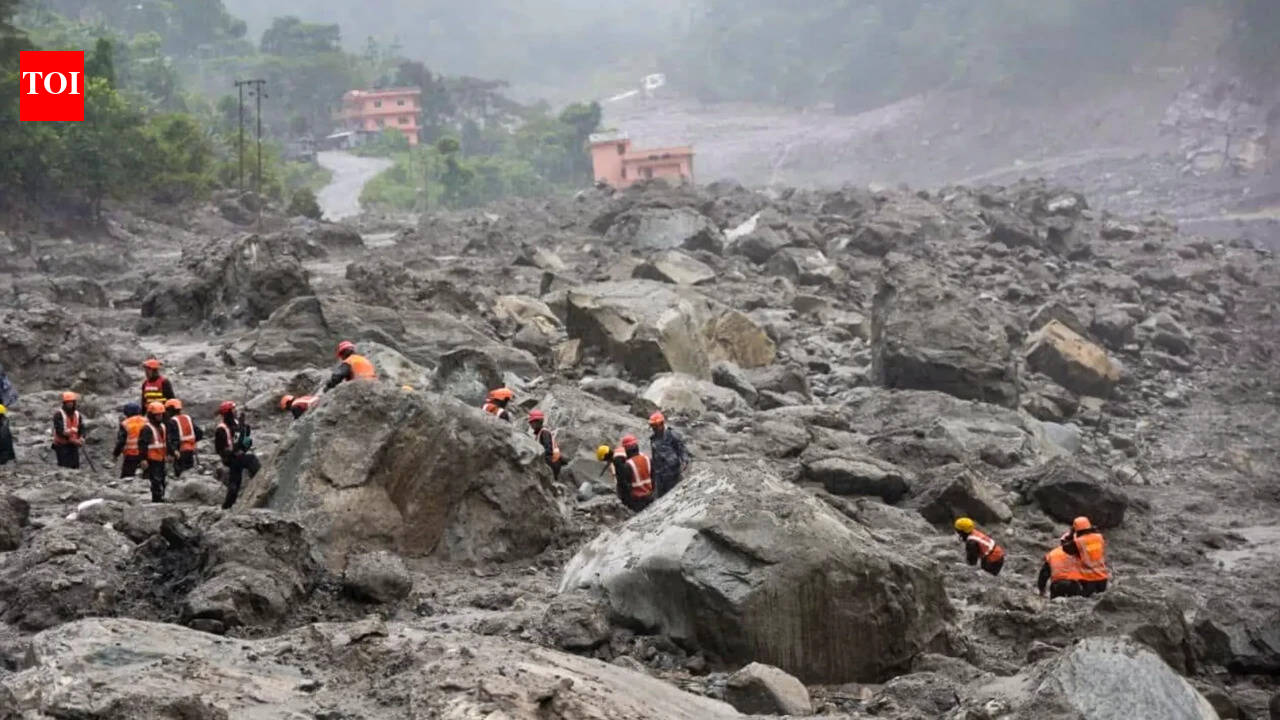
Devastating flash floods in Nepal have left over 900 people missing, including a US-based Indian couple, as rescue operations intensify at key hydropower sites. India is actively providing technical and relief assistance to aid in the search for survivors amid the ongoing disaster.
The Human Cost of Nepal's Catastrophic Flooding
A tragic humanitarian crisis is unfolding in Nepal following severe flash floods that have left hundreds missing and hundreds more dead. Among those caught in the devastation are Deepak and Madhu Ahuja, a US-based couple of Indian origin, who were participating in a pilgrimage to Kailash Mansarovar. The couple, who were traveling with the Isha Sacred Walks group, went missing near an immigration center on the Nepal-China border, leaving their family in Lucknow in a state of profound uncertainty as rescue efforts continue.
Scale of the Disaster
The scope of the catastrophe extends far beyond individual pilgrimages. Official reports indicate that the death toll has climbed to 810 across Nepal and Tibet, with over 900 individuals still unaccounted for. The disaster has hit critical infrastructure particularly hard, with the Upper Trishuli-3A hydropower project becoming a central focus for rescue teams. The Independent Power Producers' Association Nepal has reported that hundreds of workers across nine different projects remain missing, highlighting the vulnerability of industrial sites in flood-prone mountainous terrain.
Heroism Amidst Chaos
While the situation remains dire, there are accounts of remarkable resilience. Local reports have highlighted the efforts of school administrators who successfully evacuated 900 children in minutes, though the tragedy was underscored by the loss of two staff members during the evacuation process. These stories of survival emphasize the rapid onset of the floods, which left little time for organized emergency responses in remote regions.
International Response and Rescue Operations
Rescue operations are now being led by the Nepalese Army, which is utilizing advanced technical equipment to probe the tunnel systems at the Upper Trishuli-3A project. Rescuers have successfully located the tunnel's crown head and are working to widen access points to deploy personnel with oxygen supplies. Recognizing the severity of the situation, India has stepped in to provide crucial technical and relief assistance, underscoring the deep geopolitical and humanitarian ties between the two nations.
Future Implications and Challenges
As the search intensifies, the Nepalese government and international observers face the daunting challenge of managing disaster recovery in complex, high-altitude environments. The government has cautioned against relying on fluctuating casualty figures, noting the difficulty in tracking individuals across rugged border regions. This event serves as a stark reminder of the increasing vulnerability of infrastructure projects to extreme weather events, a trend that will likely necessitate more stringent climate-resilient engineering in future hydropower developments across the Himalayas.
Concluding Summary
The ongoing disaster in Nepal represents one of the most significant environmental challenges in the region's recent history. With rescue teams racing against time to reach those trapped in tunnels and remote border areas, the focus remains on locating survivors while providing support to the families of the missing. The collaborative efforts between Nepal and India are vital in the immediate term, while the long-term recovery will require a comprehensive reassessment of disaster management protocols in the region.
Multiple Citing Sources