Nepal floods: Bank vaults full of cash washed away; police struggle to secure them
Source Entity
KALYAN DAS
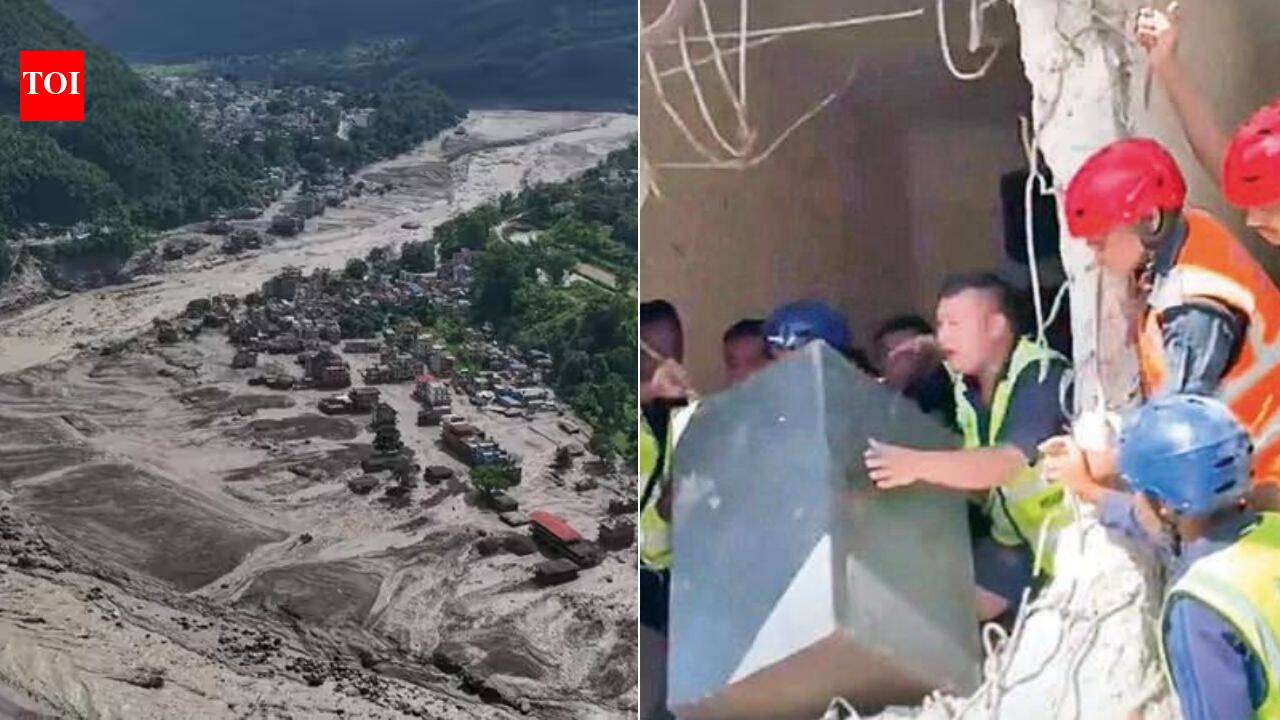
Nepal is grappling with a dual crisis following devastating floods: the loss of bank vaults containing significant assets and a severe challenge in identifying deceased victims. Indian forensic teams are currently assisting Nepalese authorities by utilizing advanced DNA technology to process remains and provide closure to grieving families.
The Dual Crisis: Disaster Recovery and Forensic Challenges in Nepal
Nepal is currently confronting the aftermath of catastrophic flash floods that have left the nation in a state of humanitarian and economic distress. Beyond the tragic loss of life, the disaster has created a unique security challenge: the disappearance of at least 20 bank vaults containing substantial amounts of cash and valuables. These vaults, swept away from regions including Rasuwa, Dhading, and Chitwan, represent a significant loss of financial infrastructure and present a risk of illicit exploitation if not recovered by law enforcement.
Security Priorities Amidst Humanitarian Tragedy
DIG Abi Narayan Kafle has emphasized that while the primary focus of the Nepal Police remains the rescue and search operations for those still missing, the security of these financial assets is a critical secondary concern. The logistical difficulty of securing these vaults is compounded by the widespread damage to infrastructure, which has hindered access to affected areas. Maintaining law and order in regions where the physical landscape has been fundamentally altered by the deluge is an immense task for local authorities, who are stretched thin by the scale of the disaster.
International Cooperation in Victim Identification
In a display of regional solidarity, India has deployed specialized forensic teams to assist Nepal in the arduous process of identifying flood victims. The death toll, which includes a high number of mutilated bodies, has overwhelmed local capacity. A 19-member Indian delegation, comprising experts from the National Forensic Sciences University (NFSU) and the Central Forensic Sciences Laboratory (CFSL), is currently working in coordination with the Nepal Police and the Tribhuvan University Teaching Hospital.
Leveraging Advanced DNA Technology
The identification effort is being led by experts like Bhargav Patel, who brings experience from previous disaster victim identification (DVI) efforts. By collecting biological samples from both the deceased and surviving family members, the team is utilizing advanced DNA analysis to provide definitive identifications. This scientific approach is crucial for families who are currently unable to claim their loved ones due to the physical condition of the remains, offering a necessary pathway toward closure.
Broader Implications and Future Trends
This event highlights the increasing necessity for cross-border disaster management protocols within South Asia. As climate change continues to increase the frequency and intensity of extreme weather events in the Himalayan region, the vulnerability of critical infrastructure—such as financial repositories—becomes more apparent. Future disaster preparedness will likely need to integrate more resilient storage solutions and pre-arranged, multi-national forensic response teams to handle the complex aftermath of such large-scale natural disasters.
Conclusion
The ongoing efforts in Nepal represent a complex intersection of emergency management, financial security, and forensic science. While the recovery of lost bank vaults is essential for economic stability, the immediate priority remains the restoration of dignity to the victims through rigorous identification processes. The collaborative efforts between Indian forensic specialists and Nepalese authorities demonstrate the vital importance of international cooperation in the face of overwhelming environmental crises.
Multiple Citing Sources