Ice-rock avalanche may have triggered Nepal flash flood, say scientists
Source Entity
Nikhil Ghanekar
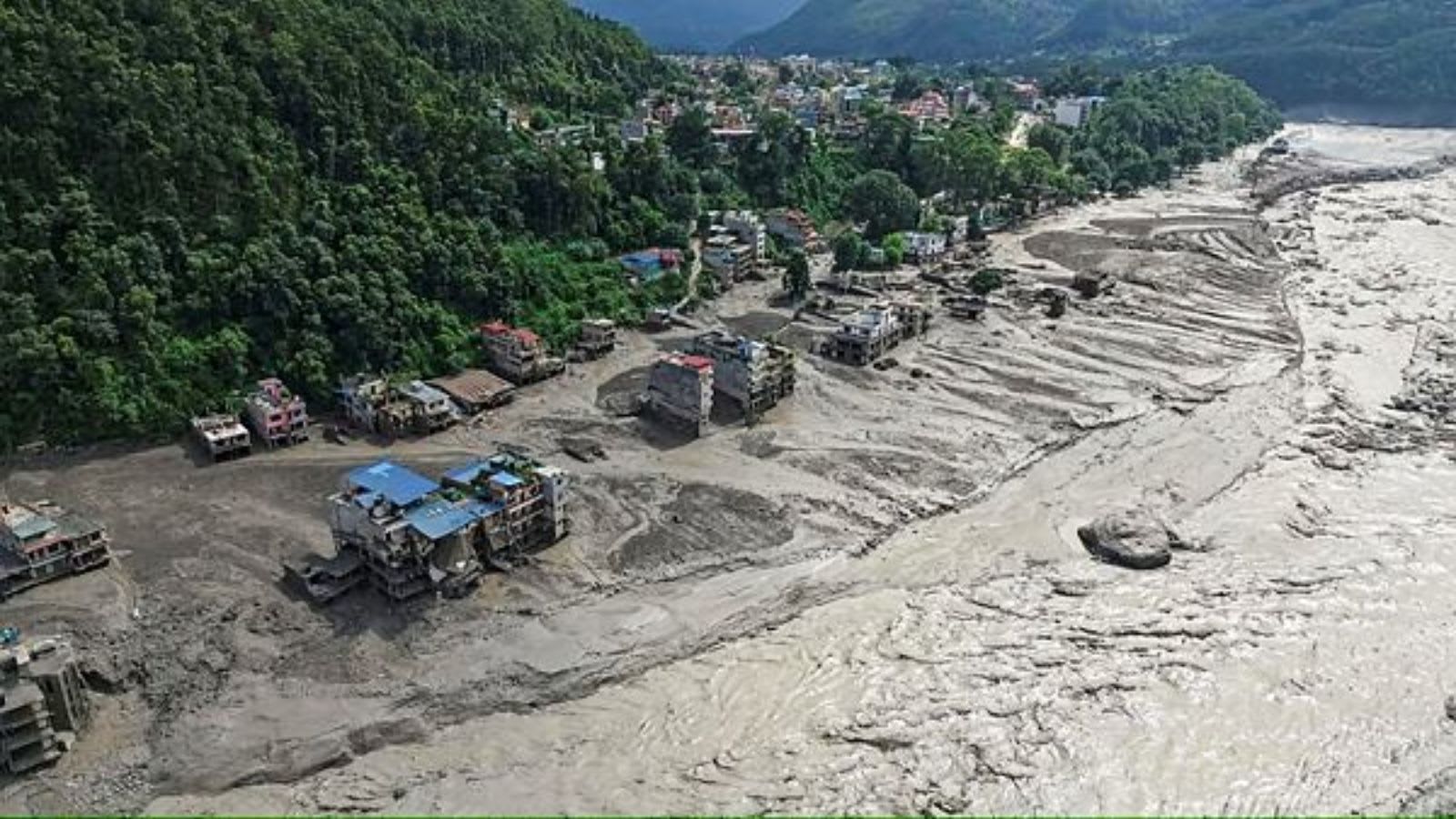
A suspected ice-rock avalanche in the Himalayas has triggered devastating flash floods on the Nepal-Tibet border, leading to casualties and missing persons. Indian authorities in Uttar Pradesh and Bihar are on high alert due to the risk of rising water levels in cross-border rivers.
Himalayan Flash Floods: A Geopolitical and Environmental Crisis
The Trigger: Scientific Investigation into High-Altitude Hazards
Recent events on the Nepal-Tibet border have highlighted the volatile nature of the Hindu Kush Himalaya (HKH) region. Scientists from the International Centre for Integrated Mountain Development (ICIMOD), in collaboration with institutions in Nepal and China, are currently investigating whether an ice-rock avalanche from a high-altitude area initiated the catastrophic flash flood. This event serves as a stark reminder of the instability inherent in glaciated mountain ranges, where climate-induced thawing can lead to sudden, massive releases of water, sediment, and boulders into river systems like the Bhote Koshi and Trishuli.
Downstream Impact and Regional Vulnerability
The flash flood, occurring approximately 200 kilometers north of the Indian border, has left a trail of destruction, including submerged houses in Nepal's Rasuwa and Nuwakot districts. The scale of the disaster is significant, with dozens of fatalities reported and nearly 400 tourists—including 105 Indian nationals—still missing. The rapid movement of debris-laden water through mountain valleys underscores the extreme vulnerability of communities situated along these vital transboundary river corridors.
Cross-Border Implications for India
The disaster has necessitated an immediate regional response, putting authorities in the Indian states of Uttar Pradesh, Bihar, and Uttarakhand on high alert. The concern is two-fold: the direct impact of the initial surge and the secondary risk posed by the potential opening of barrage gates in Nepal to manage the excess flow. Rivers such as the Gandak, Ghaghara, Rapti, and Kosi are primary conduits for this water, and any sudden increase in volume threatens to exacerbate flooding risks for millions of residents in northern India.
Managing Transboundary Water Resources
The connection between the Trishuli and Bhote Koshi rivers and their downstream counterparts in India illustrates the critical need for robust transboundary water management. As these rivers traverse international borders, the current crisis highlights the necessity for real-time information sharing between Nepal, China, and India. Managing the flow through barrage gates is a delicate balancing act that requires precise coordination to prevent infrastructure failure and minimize downstream civilian impact.
Future Trends in High-Altitude Disaster Mitigation
Looking ahead, the incident underscores the urgent need for enhanced monitoring of glacial and periglacial environments. As global temperatures rise, the frequency of ice-rock avalanches and glacial lake outburst floods (GLOFs) is expected to increase. Strengthening the early warning systems operated by organizations like ICIMOD will be paramount in providing downstream communities with the critical minutes or hours needed to evacuate, thereby reducing the loss of life in future high-altitude hydrological events.
Conclusion: A Call for Regional Solidarity
While the search and rescue operations continue in the affected districts of Nepal, the broader focus remains on stabilizing the river systems and preparing for potential secondary flooding in India. The unfolding situation requires continued cooperation across borders to address both the immediate humanitarian crisis and the long-term environmental challenges posed by the evolving landscape of the Hindu Kush Himalaya.
Multiple Citing Sources