New Cyber-OSINT model released
Source Entity
Hacker News
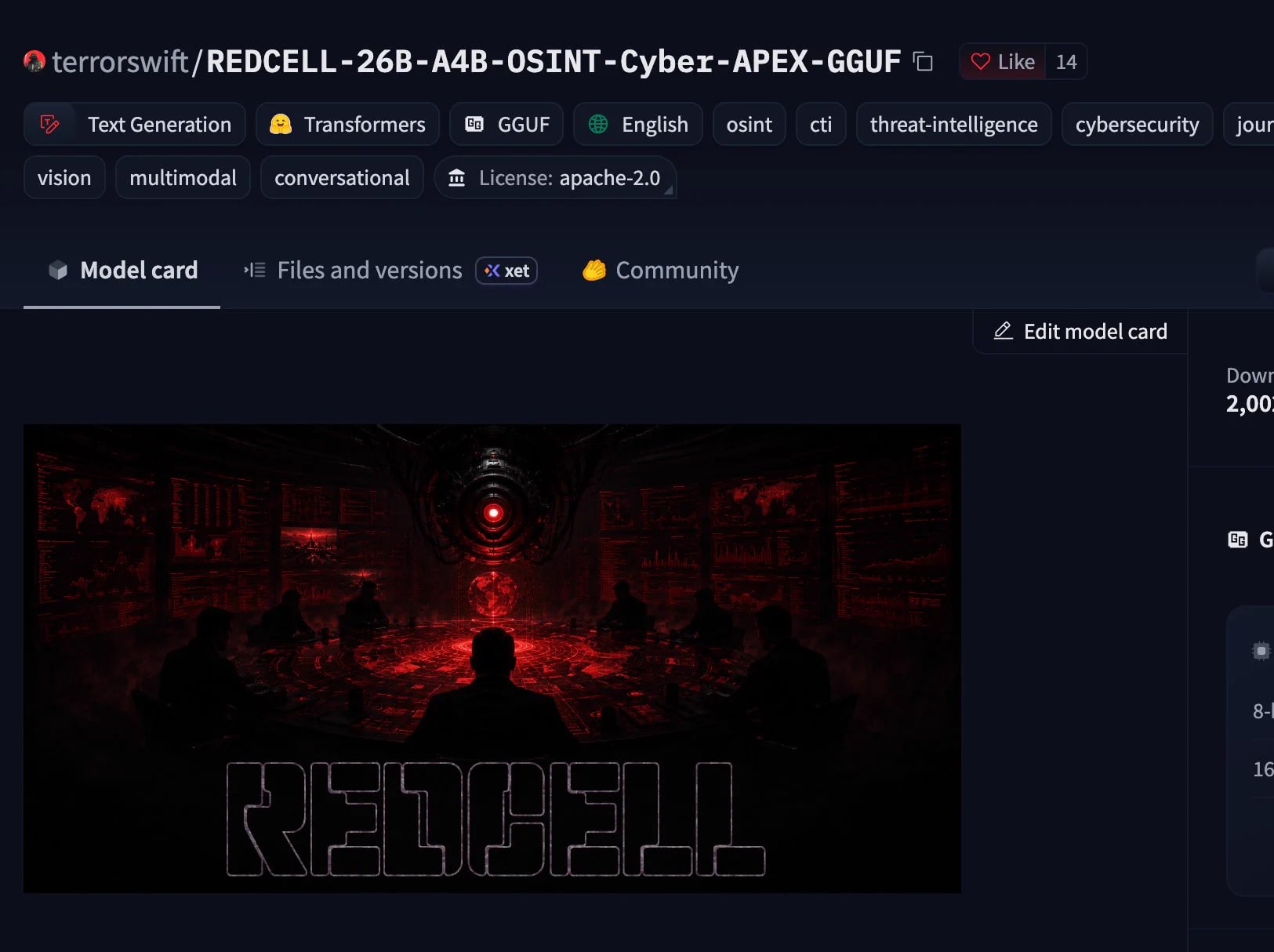
A new 7B parameter cyber-security model has been released, capable of running locally on 8GB GPUs. Unlike existing prompt-based security tools, this model is specifically fine-tuned for offensive and defensive DevOps and cyber operations.
The Emergence of Specialized Cyber-Security LLMs
The landscape of artificial intelligence in cybersecurity is undergoing a significant transformation with the release of a new 7B parameter model specifically engineered for cyber-security and DevOps workflows. Unlike previous iterations of security-focused AI, which largely relied on system prompting—essentially guiding a general-purpose model to behave like a security assistant—this new model represents a fundamental shift. It is a dedicated fine-tune, meaning its underlying weights have been adjusted through extensive training on specialized cyber and DevOps datasets, allowing for deeper integration into technical environments.
Hardware Accessibility and Local Deployment
One of the most disruptive aspects of this release is its hardware-agnostic design. By maintaining a 7B parameter count, the model is optimized to run locally on consumer-grade hardware, specifically requiring only 8GB of VRAM. This democratizes access to sophisticated security intelligence, allowing individual developers, small security teams, and researchers to perform complex tasks without the latency, cost, or data privacy risks associated with cloud-based API calls. This local-first approach is critical for sensitive environments where data exfiltration is a primary concern.
Advanced Contextual Windows and Technical Depth
Technical versatility is further bolstered by the model's architectural capabilities, featuring a 32K native context window that can be extended to 131K via YaRN (Yet another RoPE extension). This capacity allows the model to ingest massive codebases, extensive log files, and complex infrastructure-as-code configurations in a single prompt. For security professionals, this means the ability to analyze entire repositories for vulnerabilities or correlate long-form system logs that were previously too large for standard models to process in a single pass.
Bridging Offensive and Defensive Capabilities
By incorporating both offensive and defensive datasets into its post-training phase, the model provides a dual-purpose utility. In a defensive capacity, it can assist in threat hunting, automated incident response, and vulnerability remediation. Conversely, for authorized red-teaming, it serves as a force multiplier, automating the identification of exploitable logic errors or misconfigurations. This symmetry allows security practitioners to simulate adversary tactics effectively, thereby hardening their own defenses against real-world threats.
Implications for the Future of DevOps
The integration of this model into the CI/CD pipeline signals a new standard for 'Security by Design.' As DevOps teams face increasing pressure to deploy code rapidly, the ability to have a locally-running, fine-tuned agent review commits for security flaws in real-time is invaluable. Looking ahead, we can expect a trend toward more domain-specific models that move away from generalist chatbots toward specialized, high-performance tools that operate within the localized, private infrastructure of modern enterprise networks.