New monkey species with orange lips found 'hiding' in DRC forest
Source Entity
BBC News
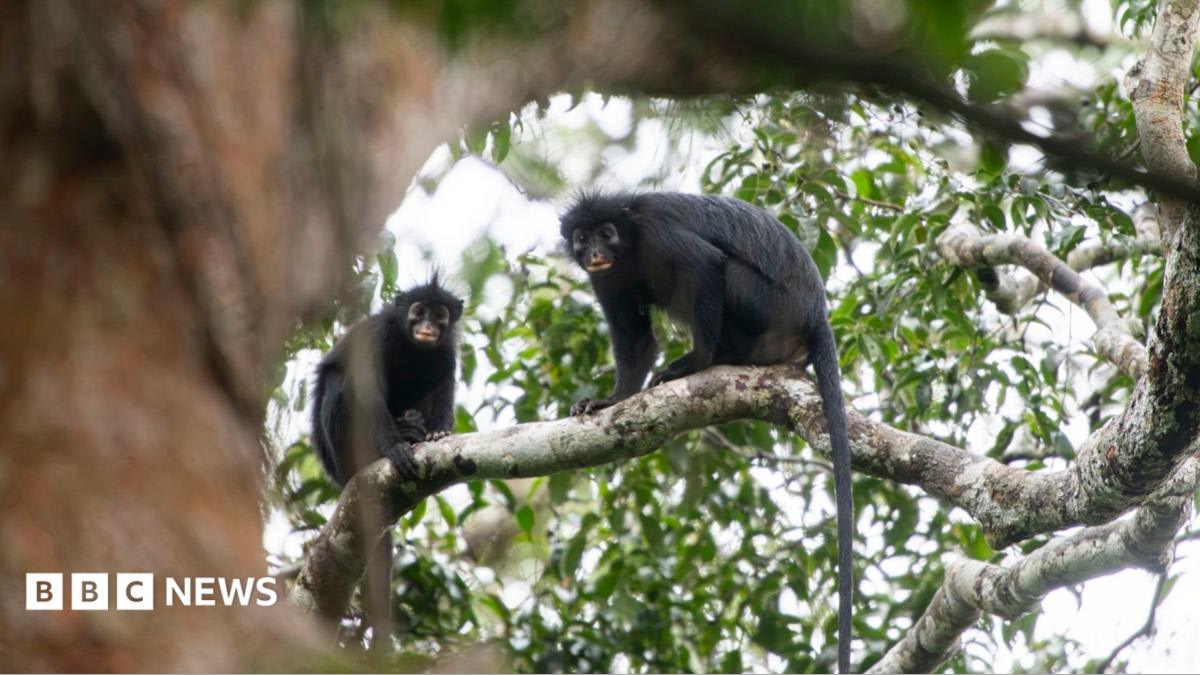
Scientists have discovered a new species of monkey featuring distinctive orange lips in the dense forests of the Democratic Republic of the Congo, underscoring the vast, untapped biodiversity of the Congo Basin.
A Rare Glimpse into the Unknown: The Discovery of the Orange-Lipped Monkey
In a remarkable breakthrough for primatology, scientists have identified a new species of monkey characterized by striking orange lips, discovered deep within the forests of the Democratic Republic of the Congo (DRC). The discovery has been described by the research team as an "amazing feeling," capturing the raw excitement of encountering a sentient creature that has remained virtually unknown to the global scientific community until now. This event serves as a poignant reminder that despite the digital mapping of the globe, the Earth still harbors significant biological secrets within its most remote wildernesses.
The Biological Significance of Morphological Traits
The most distinguishing feature of this new species—its orange lips—is likely more than just a visual curiosity. In primate evolution, vivid facial coloration often serves as a critical tool for social signaling, mate selection, and species recognition. Similar to the vibrant colors seen in mandrills, these orange pigments may signal dominance or reproductive health within the group. By analyzing these physical traits, biologists can better understand the evolutionary pressures that shaped this species, allowing them to determine how it diverged from its closest relatives and how it adapted to the specific ecological niche it occupies in the DRC.
The Congo Basin: A Bastion of Undiscovered Biodiversity
The fact that a primate species could remain "hidden" for so long is a testament to the sheer scale and density of the Congo Basin. As the second-largest rainforest in the world, the DRC's terrain is characterized by an impenetrable canopy and extreme remoteness, which creates isolated pockets of habitat. These "islands" of forest often lead to allopatric speciation, where populations are geographically separated and evolve independently. This discovery reinforces the theory that the Congo Basin is likely home to numerous other undocumented mammals, insects, and plants that have yet to be cataloged by modern science.
The Challenge of Cryptic Species and Modern Taxonomy
This discovery highlights the ongoing challenge of identifying "cryptic species"—animals that look nearly identical to known species but are genetically distinct. The process of describing this new monkey likely involved a combination of field observation and rigorous morphological analysis. In the modern era, such discoveries are often validated through DNA sequencing, which allows scientists to pinpoint exactly when the orange-lipped monkey branched off from its ancestors. This taxonomic clarity is essential for creating an accurate map of primate phylogeny and understanding the broader history of mammalian evolution in Africa.
Conservation Implications in a Fragile Ecosystem
While the discovery is a cause for celebration, it also brings an immediate sense of urgency regarding conservation. The DRC is currently facing severe threats from illegal logging, artisanal mining, and the expansion of agricultural land. When a species is discovered, it often reveals that the animal is already endangered due to habitat fragmentation. The identification of this monkey provides a critical scientific basis for arguing for the expansion of protected areas. Without formal recognition as a distinct species, these animals cannot be included in international conservation treaties or receive the legal protections necessary to prevent their extinction.
Future Trends in Biodiversity Exploration
Looking forward, the discovery of the orange-lipped monkey suggests a trend toward the use of more advanced technology in biodiversity surveys. The integration of eDNA (environmental DNA) sampling—where scientists analyze water or soil for genetic traces—and high-resolution satellite imagery will likely accelerate the discovery of other hidden species in the DRC. As researchers move from traditional trekking to tech-integrated exploration, we can expect a surge in the identification of specialized species that exist in small, isolated populations.
Summary
The discovery of the orange-lipped monkey in the Democratic Republic of the Congo is a milestone that bridges the gap between historical exploration and modern conservation science. It underscores the critical importance of preserving the Congo Basin, not only for the species we know but for the many others that remain hidden. This find serves as a catalyst for further research into primate social structures and a clarion call for more aggressive environmental protections in one of the world's most biodiverse regions.