‘Unidentified’ vehicle menace: NHAI wants police to man barrier-less toll booths
Source Entity
Dheeraj Mishra
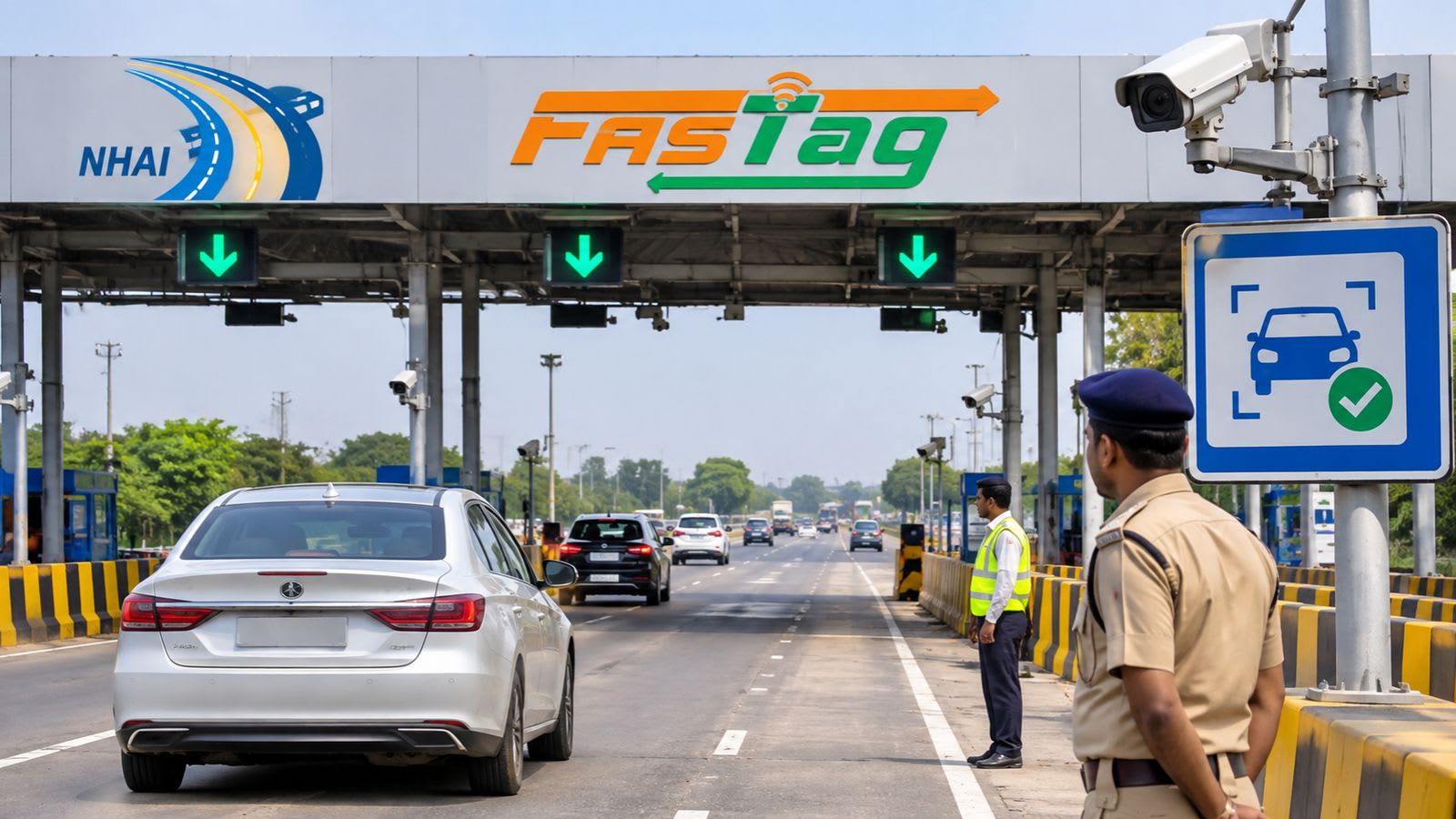
The NHAI is seeking police assistance at barrier-less toll plazas to combat widespread toll evasion. Drivers are increasingly concealing or tampering with license plates and FASTags to bypass automated payment systems.
The Crisis of Toll Evasion at India’s Barrier-less Plazas
The National Highway Authority of India (NHAI) is currently facing a significant operational challenge at its seven experimental barrier-less toll plazas. As the country transitions toward Multi-Lane Free Flow (MLFF) technology, designed to streamline traffic and reduce congestion, a subset of motorists has exploited the lack of physical barriers to bypass toll payments entirely. By tampering with or obscuring their vehicle identification, these drivers have created a fiscal and enforcement loophole that the NHAI is now struggling to close.
Defining the ‘Unidentified’ Vehicle Phenomenon
At the heart of the issue are what authorities term “unidentified” vehicles. These are automobiles that pass through toll gantries with obscured, fake, or missing license plates, or those that have deliberately manipulated their FASTag devices to remain unreadable by sensors. Because these plazas lack physical gates to stop non-compliant vehicles, the system effectively loses revenue every time such a vehicle passes, leading to thousands of instances of evasion as recently highlighted in media reports.
The Necessity of Human Intervention
The NHAI’s request for the deployment of police and transport department officials marks a pivot from a purely technological enforcement model to a hybrid approach. While the MLFF system relies on overhead cameras and sensors, these tools are rendered ineffective when the primary data points—the registration plate and the RFID tag—are intentionally hidden. The presence of law enforcement is intended to act as a deterrent and to provide the legal authority to intercept vehicles that are actively evading toll obligations.
Broader Implications for Infrastructure Funding
This issue holds significant weight for the financial sustainability of India’s highway network. Toll revenue is a primary source of funding for the maintenance, expansion, and debt servicing of national highways. If a significant volume of traffic continues to bypass payments through systemic evasion, it could jeopardize the viability of the toll-operate-transfer (TOT) model and other public-private partnerships. Ensuring compliance is not merely a matter of revenue collection; it is essential for the long-term health of India’s transport infrastructure.
Future Trends and Technological Evolution
As India continues to modernize its road network, the battle between enforcement technology and malicious evasion will likely intensify. The current reliance on police deployment is a stop-gap measure; future trends may involve more sophisticated AI-driven analytics that can identify vehicle characteristics beyond just tags and plates, or stricter legislative penalties for those caught tampering with vehicle identification. The success of the current seven pilot plazas will be critical in determining whether the government accelerates the nationwide rollout of barrier-less technology or scales back in favor of more secure, albeit slower, traditional tolling methods.