‘Who is buying ₹4 crore homes?’: Noida man stunned after property hunt exceeds his ₹1 crore budget
Source Entity
Latest News: Today's Latest News Headlines from India & World | Hindustan Times | Hindustan Times
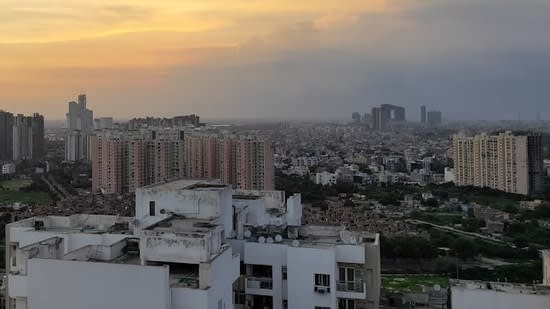
A Noida man was shocked to find that even a ₹1 crore budget could not secure him a suitable home.
The Affordability Crisis: Analyzing Noida's Real Estate Surge
The recent account of a Noida resident who found his ₹1 crore budget entirely insufficient for a home purchase serves as a poignant microcosm of the broader economic shift occurring within the National Capital Region (NCR). For many years, a budget of ₹1 crore was considered a substantial sum capable of securing a premium apartment in a well-developed sector. However, the shock expressed by this individual—questioning who is buying homes priced at ₹4 crore—highlights a dramatic decoupling of property prices from the average middle-class income level.
The Mechanics of the Price Leap
The jump from a ₹1 crore expectation to a ₹4 crore reality is not an isolated anomaly but a result of aggressive market appreciation. This surge is driven by a combination of high demand for luxury housing and a strategic pivot by developers. In recent years, real estate firms in Noida have shifted their focus from 'affordable' or 'mid-segment' housing toward 'luxury' and 'ultra-luxury' projects. By offering larger floor plans, high-end amenities, and gated community security, developers have successfully pushed price ceilings higher, effectively pricing out the traditional middle-class buyer who previously formed the backbone of the market.
Infrastructure as a Catalyst
Several critical infrastructure developments have anchored this price hike. The anticipation surrounding the Noida International Airport at Jewar has created a speculative frenzy, driving up land values not just near the airport, but across the entire city. Furthermore, the expansion of the Metro network and the improvement of arterial roads connecting Noida to Delhi and Greater Noida have increased the desirability of the region. When infrastructure improves, land becomes a scarcer resource, and in a high-demand environment, this scarcity is directly translated into the exorbitant price tags mentioned in the report.
The Socio-Economic Impact on the Middle Class
The implications of this trend are severe for the urban professional. As the 'entry-level' for a decent home moves toward the ₹2-4 crore range, the dream of homeownership for the middle class is becoming an impossibility. This leads to a growing 'renter class'—professionals who earn well but cannot save fast enough to keep pace with the compounding growth of real estate prices. This disparity creates a socio-economic gap where property ownership is increasingly reserved for high-net-worth individuals (HNIs) and investors, rather than end-users who actually intend to live in the homes.
Investment Speculation vs. End-User Utility
A critical question raised by the Noida man—"Who is buying these homes?"—points toward the role of investment speculation. A significant portion of these ₹4 crore properties are likely being purchased by investors as assets rather than residences. In the Indian market, real estate is often viewed as a safer hedge against inflation than equities. This speculative buying creates an artificial demand loop: investors buy to flip or rent, which drives prices up, which in turn attracts more investors, leaving the genuine home seeker stunned and stranded.
Future Outlook and Market Sustainability
Looking ahead, the sustainability of this price trajectory is debatable. While infrastructure growth provides a fundamental basis for appreciation, a market cannot rely solely on luxury buyers and speculators indefinitely. There is a looming risk of a price correction if the gap between average salaries and property costs becomes too wide to bridge. However, in the short term, as long as corporate hubs continue to expand in Noida and the Jewar airport moves toward completion, prices are likely to remain elevated, further pushing the middle class toward the peripheries of the city.
Conclusion
The frustration of the Noida resident is a symptom of a systemic shift in the NCR property market. The transition from a balanced housing ecosystem to one dominated by luxury valuations reflects broader trends of gentrification and speculative investment. Unless there is a renewed focus on mid-segment housing, the 'shock' experienced by this buyer will become the standard experience for millions of aspiring homeowners.
Verification Required?