This is the world's most advanced robotic servicing satellite—that we know about
Source Entity
Stephen Clark
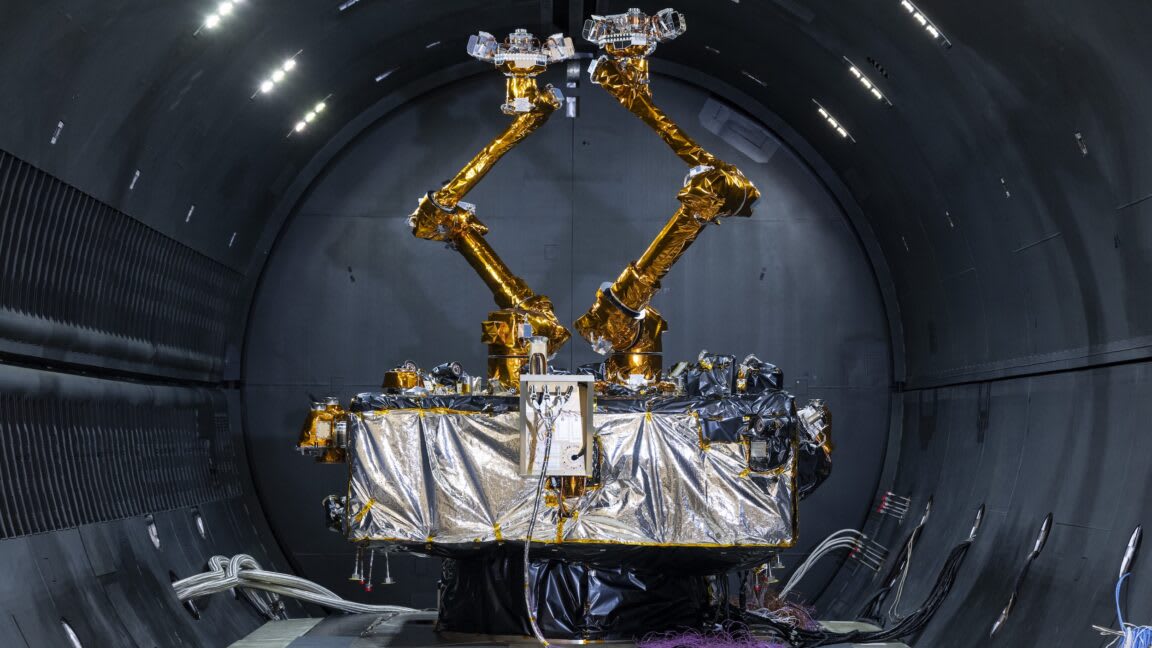
Northrop Grumman has launched the Mission Robotic Vehicle (MRV) via a SpaceX Falcon 9 to perform satellite servicing in geosynchronous orbit. This decade-long mission aims to pioneer advanced robotic maintenance in space, marking a significant step for orbital sustainability.
A New Frontier in Orbital Maintenance
Northrop Grumman recently achieved a milestone in space logistics with the successful launch of its Mission Robotic Vehicle (MRV) from the Cape Canaveral Space Force Station. Carried by a SpaceX Falcon 9 rocket, the spacecraft represents a sophisticated leap in satellite servicing capabilities. Equipped with two flexible robotic arms, the MRV is designed to operate in the challenging environment of geosynchronous orbit, an area that is notoriously difficult to access and maneuver within.
The Mechanics of the Mission
The launch also included three small, independent propulsion pods, which were deployed alongside the MRV within an hour of liftoff. These components are essential for the mission's success, providing the necessary infrastructure to support the MRV's complex operations. The transition from the initial elliptical drop-off orbit to a circular orbit located over 22,000 miles (nearly 36,000 kilometers) above the equator is a year-long process, highlighting the precision required in modern orbital mechanics.
Overcoming the Challenges of Geosynchronous Space
Operating at such extreme altitudes presents significant technical hurdles. As noted by industry experts, the tasks involved in robotic satellite servicing are inherently difficult, requiring immense precision and reliability. The MRV’s ability to perform autonomous or teleoperated maintenance could fundamentally change how we manage aging or malfunctioning assets in space, potentially extending the operational life of expensive hardware that would otherwise be considered 'dead' weight.
Strategic Implications for Space Sustainability
By enabling in-orbit servicing, Northrop Grumman is addressing the growing issue of orbital debris and the finite nature of satellite resources. If the MRV succeeds in its decade-long mandate, it could establish a blueprint for future commercial space repair, reducing the need for costly replacement launches. This shifts the paradigm from 'disposable' satellites to a model of sustainable orbital infrastructure.
Future Trends and Outlook
The success of this mission will likely influence future government and private sector investments in space robotics. As the geosynchronous belt becomes increasingly congested, the ability to repair, refuel, or relocate satellites will become a cornerstone of space commerce. The MRV serves as a high-stakes test case for the viability of these advanced services, proving that the technology to maintain our assets in the stars is no longer just a theoretical concept, but an active, flying reality.