Nvidia-backed Fireworks hits $17.5 billion valuation as companies pursue cheaper AI models
Source Entity
US Top News and Analysis
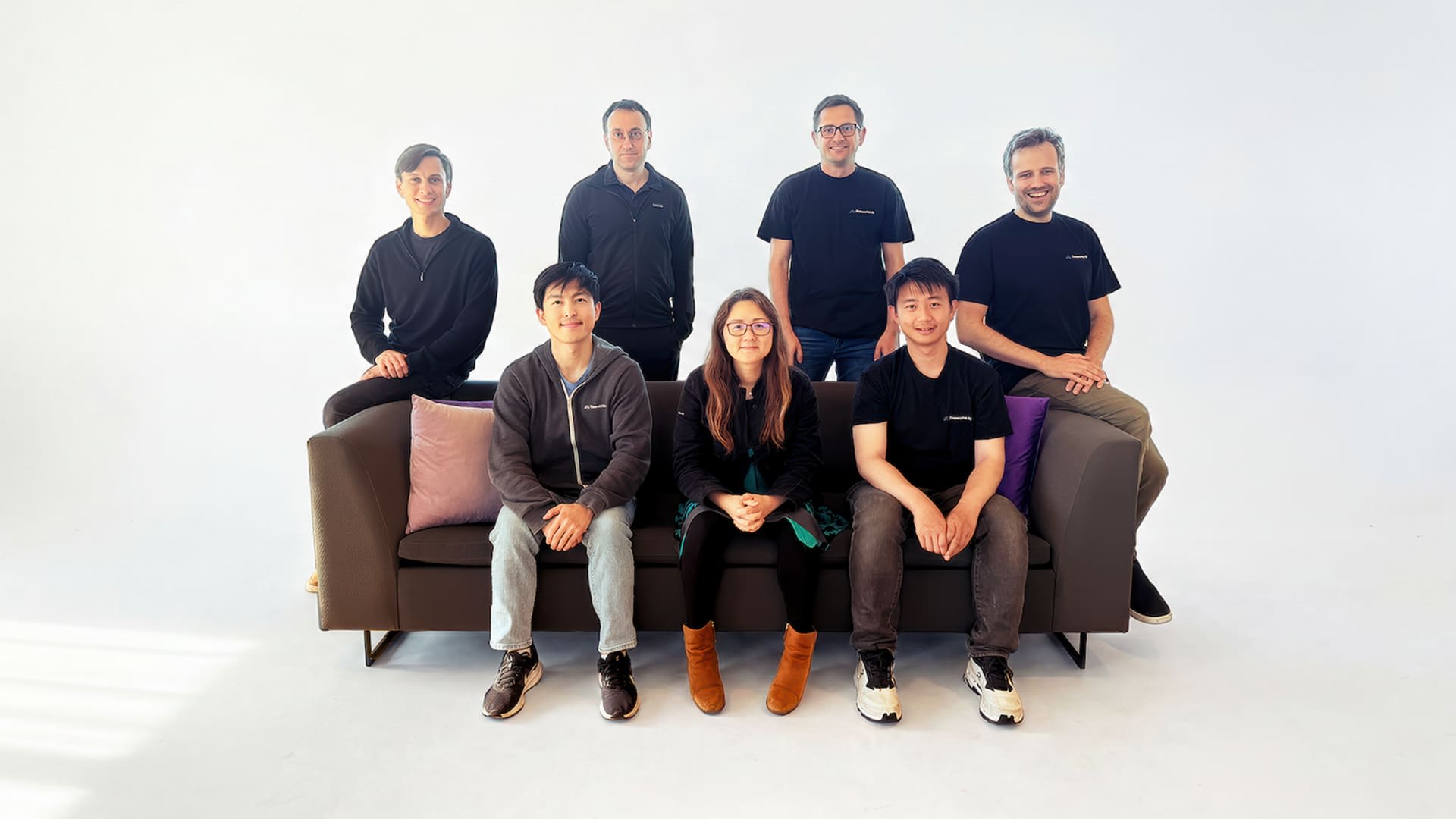
Nvidia-backed Fireworks AI has achieved a $17.5 billion valuation, reflecting a strategic shift toward offering cost-effective AI model deployment as companies move away from expensive, high-compute LLMs.
The Rise of Efficiency: Analyzing Fireworks AI's $17.5 Billion Valuation
Fireworks AI has reached a staggering $17.5 billion valuation, a milestone that signals a pivotal shift in the artificial intelligence landscape. Backed by industry titan Nvidia, the company's valuation surge is not merely a reflection of investor hype, but a response to a growing market demand for efficiency and cost-reduction in AI deployment. As the initial gold rush of massive, general-purpose Large Language Models (LLMs) matures, the industry is transitioning from a phase of 'capability at any cost' to 'performance at scale,' where the cost of inference becomes the primary bottleneck for enterprise adoption.
Diversification Beyond Cursor
Historically, Fireworks AI's growth was heavily intertwined with the success of Cursor, a specialized AI-powered coding startup. While this initial partnership provided a strong foundation and a high-volume use case, relying on a single primary revenue stream presented a significant concentration risk. The recent valuation jump highlights Fireworks' successful pivot toward a diversified client base. By expanding its reach to various industries, Fireworks has demonstrated that its infrastructure is not just a niche tool for developers, but a versatile platform capable of supporting a wide array of commercial AI applications.
The Economic Pivot to 'Cheaper AI'
The core driver behind Fireworks' growth is the industry-wide pursuit of 'cheaper AI.' While frontier models like GPT-4 or Claude 3 offer immense power, their operational costs—specifically the compute required for every single token generated—are often prohibitively expensive for high-volume enterprise tasks. Fireworks focuses on providing high-performance inference for smaller, more efficient, or open-source models. This trend reflects a broader historical pattern in technology where, after an initial period of expensive innovation, the market optimizes for efficiency to enable mass-market penetration.
The Strategic Synergy with Nvidia
Nvidia's backing of Fireworks is a calculated strategic move. As the primary provider of the H100 and B200 GPUs that power the AI revolution, Nvidia has a vested interest in ensuring that its hardware is used as efficiently as possible. Fireworks AI optimizes the software layer that sits atop Nvidia's hardware, reducing latency and lowering the cost per request. By supporting companies that make AI more affordable to run, Nvidia effectively expands the total addressable market for its chips; the more companies that can afford to deploy AI, the more GPUs Nvidia can sell.
Broader Implications for the AI Ecosystem
This valuation suggests that the 'moat' for AI companies is shifting. In the early stages of the generative AI boom, the moat was the size of the dataset and the sheer number of parameters in a model. Now, the moat is becoming the efficiency of the deployment pipeline. Companies that can offer 'near-frontier' performance at a fraction of the cost will likely dominate the enterprise sector. We are seeing the emergence of a tiered AI economy: ultra-expensive models for complex reasoning and highly optimized, affordable models for the millions of routine tasks that power modern business operations.
Future Trends and Predictions
Looking forward, Fireworks AI is well-positioned to lead the charge in the adoption of Small Language Models (SLMs) and specialized vertical AI. As enterprises move away from 'one-size-fits-all' models in favor of fine-tuned, task-specific agents, the demand for flexible and low-cost inference platforms will only increase. We can expect Fireworks to further integrate with hardware-level optimizations, potentially creating a seamless loop between Nvidia's silicon and their own orchestration layer to push the boundaries of tokens-per-second per dollar.
Conclusion
The $17.5 billion valuation of Fireworks AI is a bellwether for the next era of artificial intelligence. It confirms that the market is now prioritizing economic sustainability over raw scale. By diversifying its revenue away from early partners like Cursor and aligning itself with the efficiency goals of both Nvidia and the broader enterprise market, Fireworks is capitalizing on the inevitable transition toward affordable, scalable, and accessible AI.