NVIDIA Cosmos-H-Dreams: Bringing Real-Time Generative Simulation to Surgical Robotics
Source Entity
Hugging Face - Blog
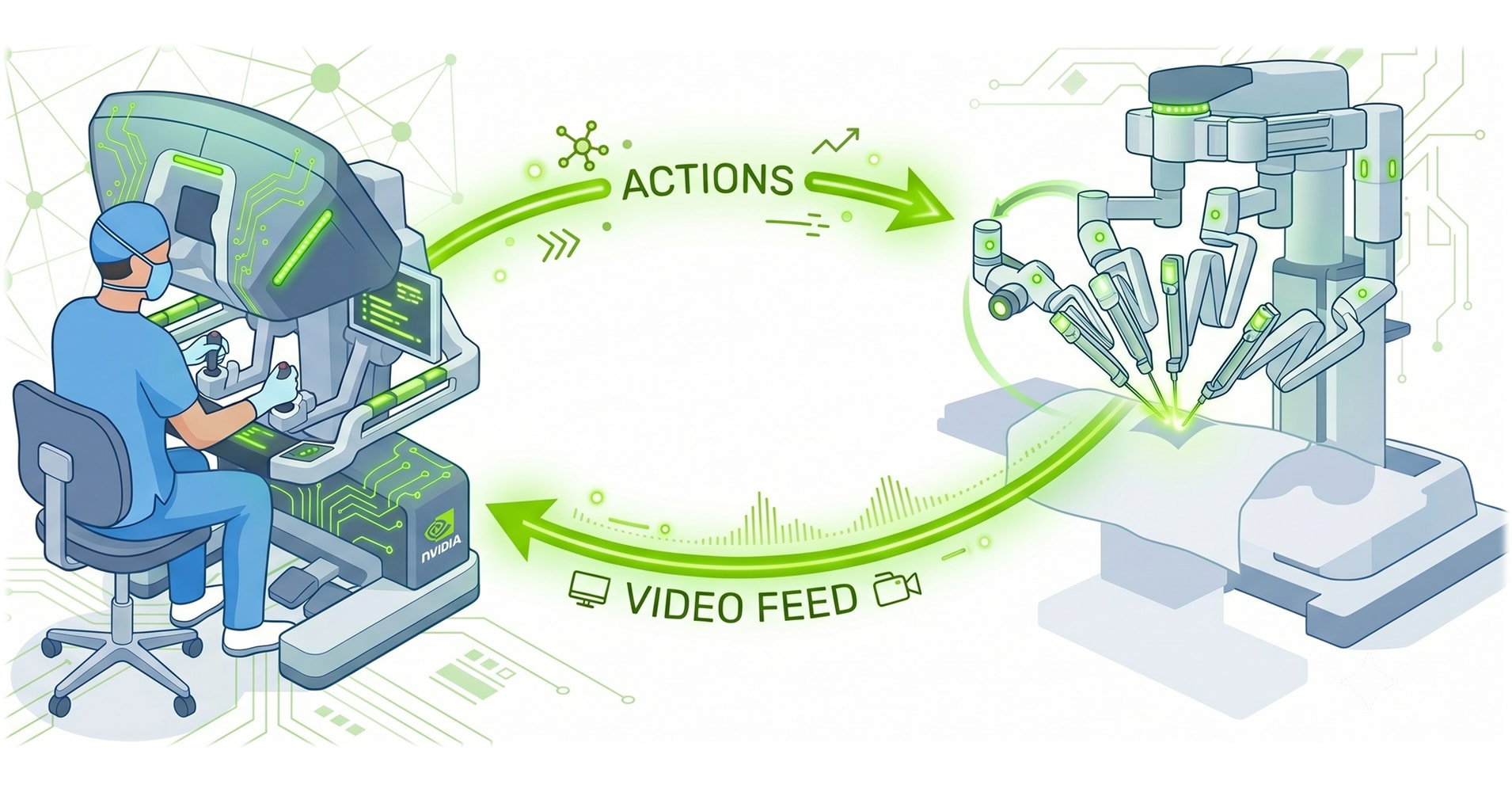
NVIDIA has introduced Cosmos-H-Dreams, a generative simulation platform designed to accelerate the development of vision-language-action policies in surgical robotics. By utilizing world foundation models, the system overcomes the limitations of traditional physical simulators in modeling complex, deformable surgical environments.
Revolutionizing Surgical Robotics with Generative Simulation
NVIDIA’s introduction of the Cosmos-H-Dreams platform marks a significant paradigm shift in the field of surgical robotics. As the industry transitions from simple teleoperation toward autonomous, vision-language-action policies, the necessity for high-fidelity training environments has never been greater. Traditionally, training these robotic systems relied on physical platforms that are not only prohibitively expensive but also logistically difficult to scale due to the slow nature of experimental reproduction and the high risk of damaging sensitive instruments or biological material.
The Limitations of Traditional Simulation
Historically, roboticists have relied on conventional simulators to mitigate the risks associated with physical testing. However, these tools often fall short when tasked with replicating the chaotic, high-fidelity nature of an operating room. Surgical environments are characterized by complex variables such as deformable tissue, specular surfaces, and unpredictable occlusions caused by surgical tools or smoke. Manually modeling these interactions has proven to be an insurmountable hurdle for traditional software engineering, limiting the progress of AI-driven surgical agents.
The Power of World Foundation Models
Cosmos-H-Dreams represents a departure from manual, rule-based simulation. By leveraging world foundation models, NVIDIA is moving toward a generative approach where the system learns the physics and visual properties of a surgical scene autonomously. This allows for the creation of synthetic environments that are far more representative of real-world complexity than those generated by human programmers. This shift is critical for developing AI policies that are robust enough to handle the nuanced, unpredictable nature of human anatomy.
Implications for Future Surgical Autonomy
The integration of vision-language-action policies, supported by generative simulation, suggests a future where surgical robots can perform tasks with greater precision and safety. By training these models in the Cosmos-H-Dreams environment, developers can iterate on algorithms at speeds impossible in physical labs. This acceleration is likely to shorten the development lifecycle for next-generation surgical assistants, potentially lowering the barrier to entry for advanced robotic surgery adoption in hospitals globally.
Conclusion and Future Trends
As we look toward the future, the convergence of generative AI and robotics will likely become the standard for medical innovation. The ability to simulate high-stakes medical procedures with extreme accuracy will not only improve the efficacy of robotic systems but also play a vital role in training and certification for surgeons. NVIDIA's Cosmos-H-Dreams is a foundational step in this evolution, signaling a move toward a more autonomous and data-driven era of surgical intervention.